Blue Beetle Sets the Bar for DC’s New Movie Era
By Sabina Graves
This week, DC Studios starts anew with Blue Beetle, officially kicking off the James Gunn and Peter Safran-led superhero slate in earnest with the studio’s strongest film in quite a while.
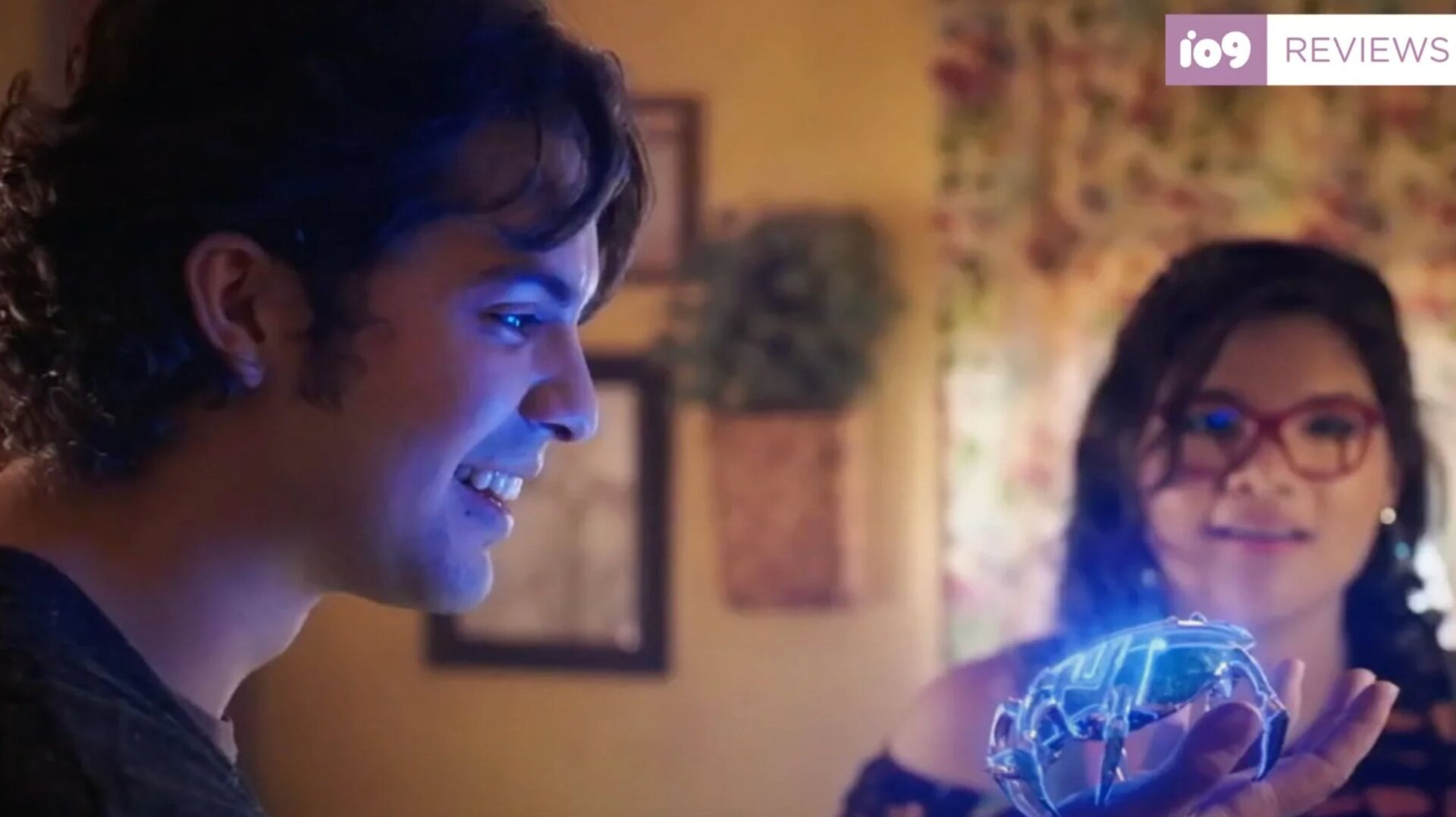
Directed by Ángel Manuel Soto, Blue Beetle is a bombastic blast that evokes ‘90s-style action and offers a heartfelt origin for a hero the next era of DC moviemaking really needs. A total breath of fresh air—or a sigh of relief—for Warner Bros., its latest attempt at a DC Studios franchise universe lands a strong debut for a new generation. Starting with Gareth Dunnet-Alcocer’s adaptation of Jaime Reyes’ Blue Beetle run is a smart move; the relatively unknown DC hero works perfectly as a gateway into the new worlds of James Gunn’s Gods and Monsters.
Xolo Maridueña (Cobra Kai) is a star in the making leading Soto’s superhero debut. The sheer optimism of Maridueña’s Jaime Reyes as he returns to Palmera City from Gotham’s School of Law with a degree that doesn’t get him the job he expected is instantly relatable, as he discovers that slip of paper his family worked so hard to help him get won’t help them back. With gentrifying corporations at their door and a home on the line, Jaime steps up to help his family by any means possible. Even if that means being a pool boy at the Kord estate, owned by Palmera City’s resident corporate tech overlord Victoria Kord (Susan Sarandon), who’s running her brother Ted Kord’s (the mysteriously missing Blue Beetle) company with aspirations to acquire more global resources for the “greater good.” Yeah, like that’s not a red flag when people say they’re trying to use all the money for a greater good that benefits them, yet also happens to displace marginalized people.