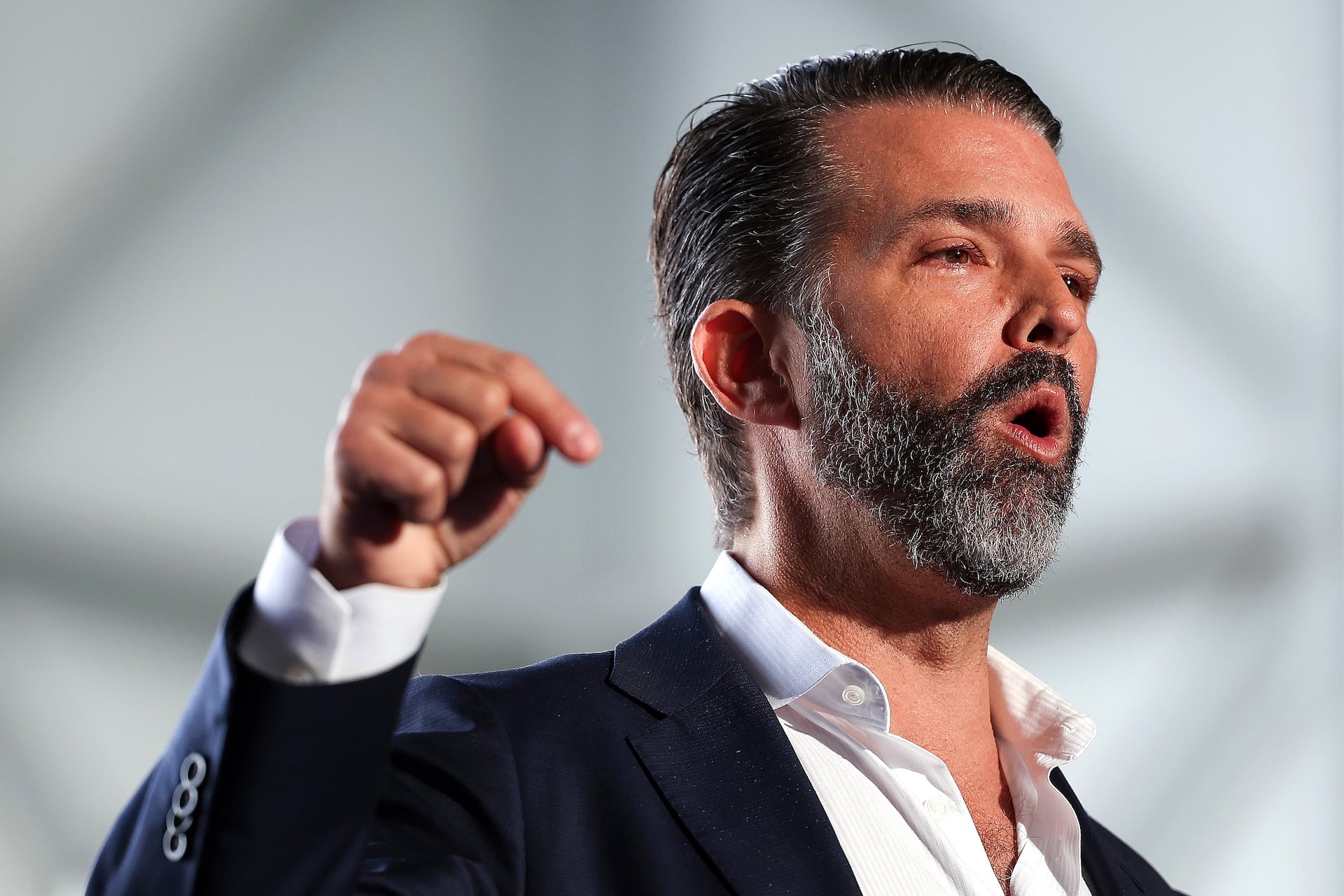
Kalshi, the world’s largest prediction market, has dropped Donald Trump Jr. as an advisor. The president’s son joined Kalshi as a strategic adviser in January 2025, shortly before his father’s return to the White House. He joined rival Polymarket’s advisory board that August, when his venture capital firm, 1789 Capital, invested in the company.
Relations between Kalshi and the junior Trump reportedly cooled after his Florida-based venture capital firm 1789 Capital led a new round of funding for Polymarket in late August.
“We have mutually agreed to end Don’s advisory role after his firm’s significant investment in a competitor this past summer,” a Kalshi spokesperson told Gizmodo over email. “We are grateful for his contributions in helping us market Kalshi to more customers.”
The company stressed that it’s been discussing this move internally since August, when 1789’s investment in Polymarket became known publicly. But the timing still raises plenty of questions about whether Kalshi may be trying a different approach to fighting regulators with a shift in the political headwinds.
It’s unclear why Kalshi would wait over two months after news of 1789’s investment to suddenly break ties. One possibility is that Kalshi no longer feels quite so protected by the Trump regime, which radically reshaped the Commodity Futures Trading Commission (CFTC) to favor prediction markets after he returned to power. The agency has spent much of the year defending prediction markets against state regulators, but its own investigation into Kalshi suggests that protection has limits.
Numerous states have sued Kalshi, alleging that it is operating an illegal gambling business. Utah has even brought criminal charges against the company and its co-founders, Tarek Mansour and Luana Lopes Lara. The CFTC has been filing lawsuits against states to protect its authority over prediction markets, effectively shielding companies like Kalshi and Polymarket from state regulators. But there have been recent signs that federal protection doesn’t necessarily mean freedom from federal enforcement.
It’s been quite a week for the prediction markets in the wake of the election. News broke Tuesday that the CFTC may bring charges against Kalshi for failing to inform the agency about new products in the works, according to Politico. On Wednesday, CNBC reported that Kalshi called the conflict with the CFTC a “procedural error.” Thursday, the New York Times reported that traditional exchanges are livid with the CFTC for allowing Kalshi to accept bets on the movement of stocks and cryptocurrencies that bettors don’t own.
Democrats swept the House and Senate in the midterm elections last week in a shift that could have serious consequences for the regulation of prediction markets. Kalshi CEO Tarek Mansour donated $44,300 to the Democratic Senatorial Campaign Committee while donating over $500,000 to the Republican equivalents, according to FEC records. But he did give to individual House races, with plenty of money going to Democrats.
There’s a political shift coming when the new House and Senate are seated in January. The question will be how dramatic that shift may be and whether companies that have been hiding behind the Trump regime can adapt quickly enough to come out on top.