Around 90% of the 2017 Women’s March Would Have Been Exposed to Facial Recognition
These last two more recent marches occurred just five and four years ago respectively meaning the facial recognition they would experience in 2022 may look awfully similar to what protestors actually faced on the ground. In 2017, an estimated 400,000 women marched through lower Manhattan voicing support for legislation and policies benefiting women and the LBGTQ community, among others. The massive march, which occurred in tandem in Washington D.C. and other cities was seen largely as a rebuke of then recently elected President Donald Trump.
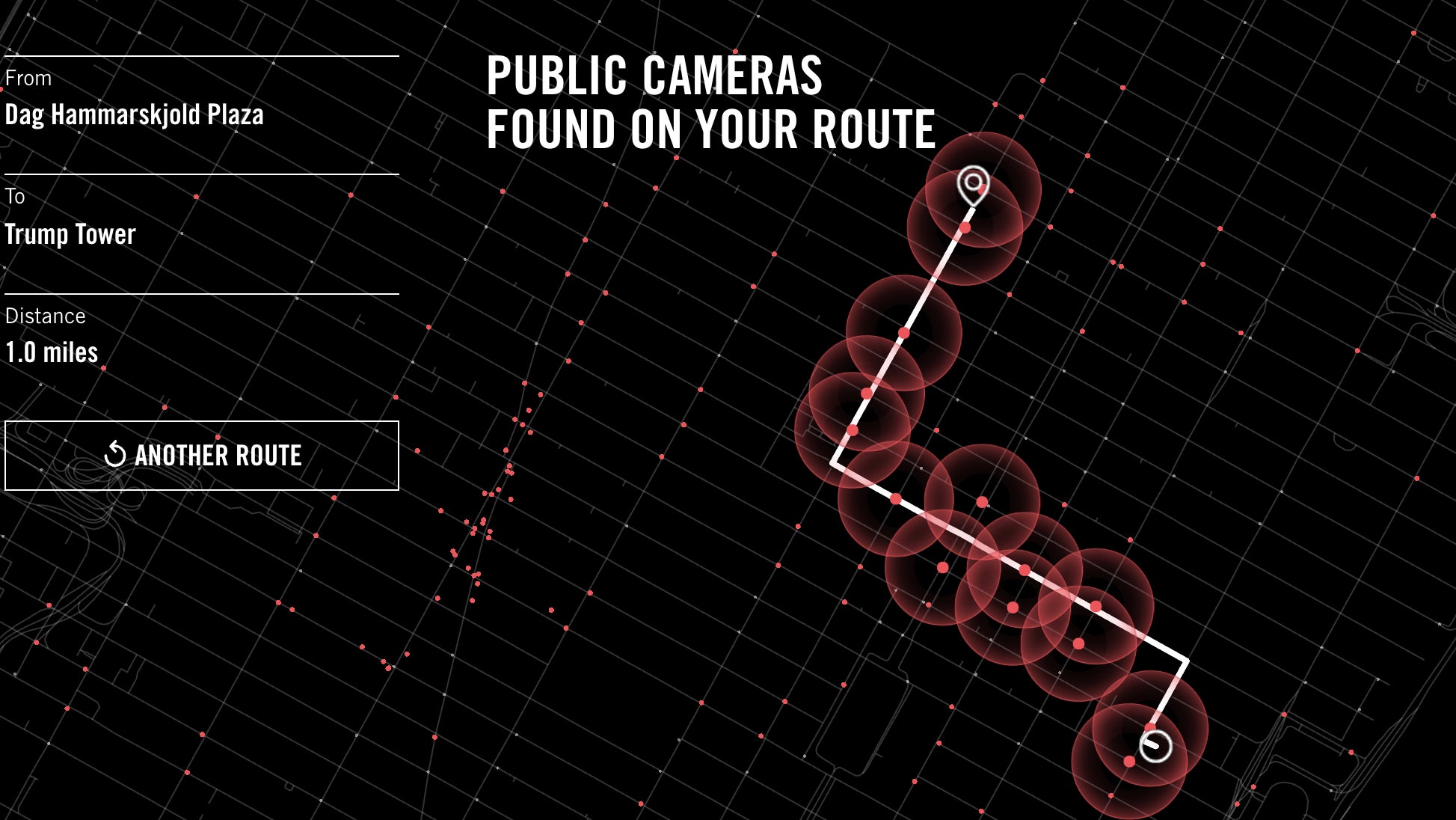
The demonstrators marched from Dag Hammarskjold Plaza, just north of the United Nations building, about one mile north to Trump Tower. If conducted today, around 90% of that route would have been exposed to facial recognition, with dense clusters of public cameras lining just about every intersection from start to finish.