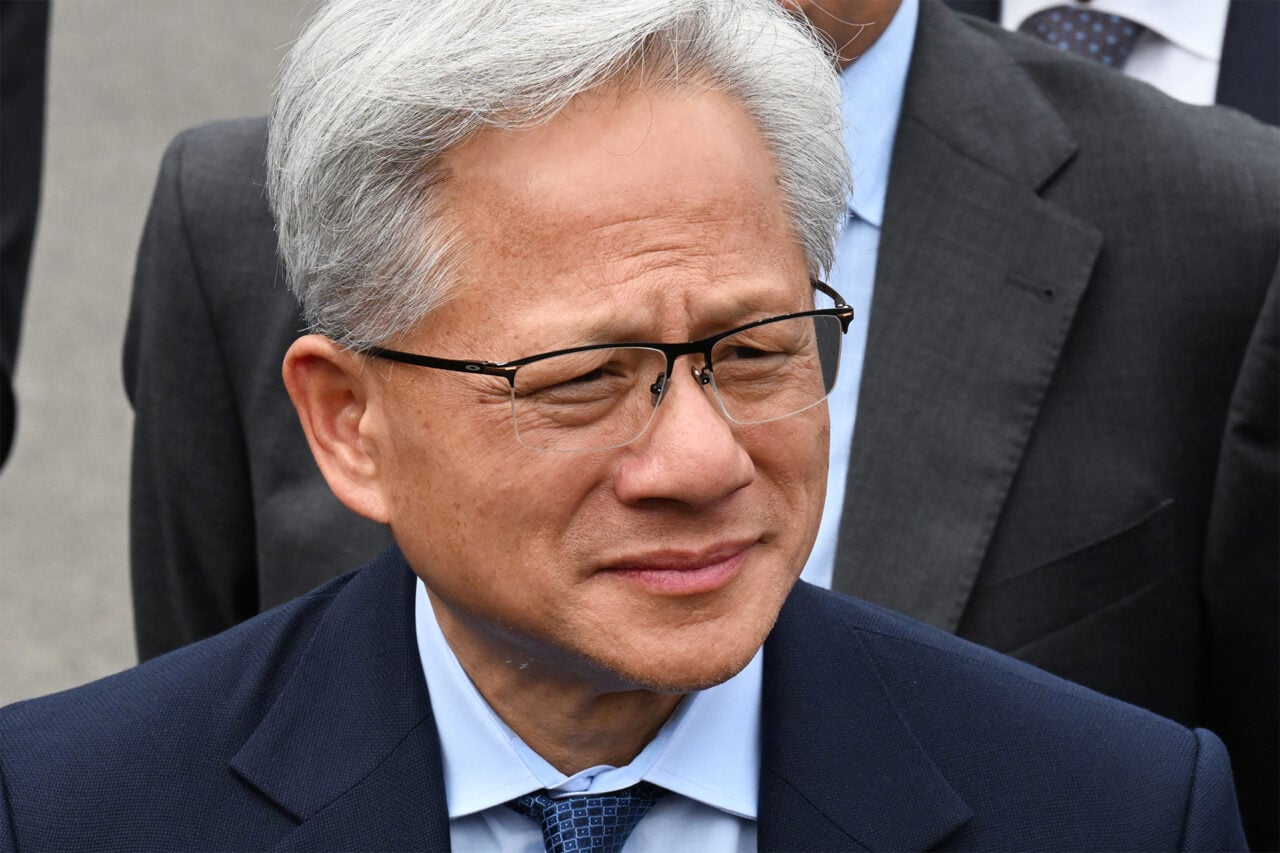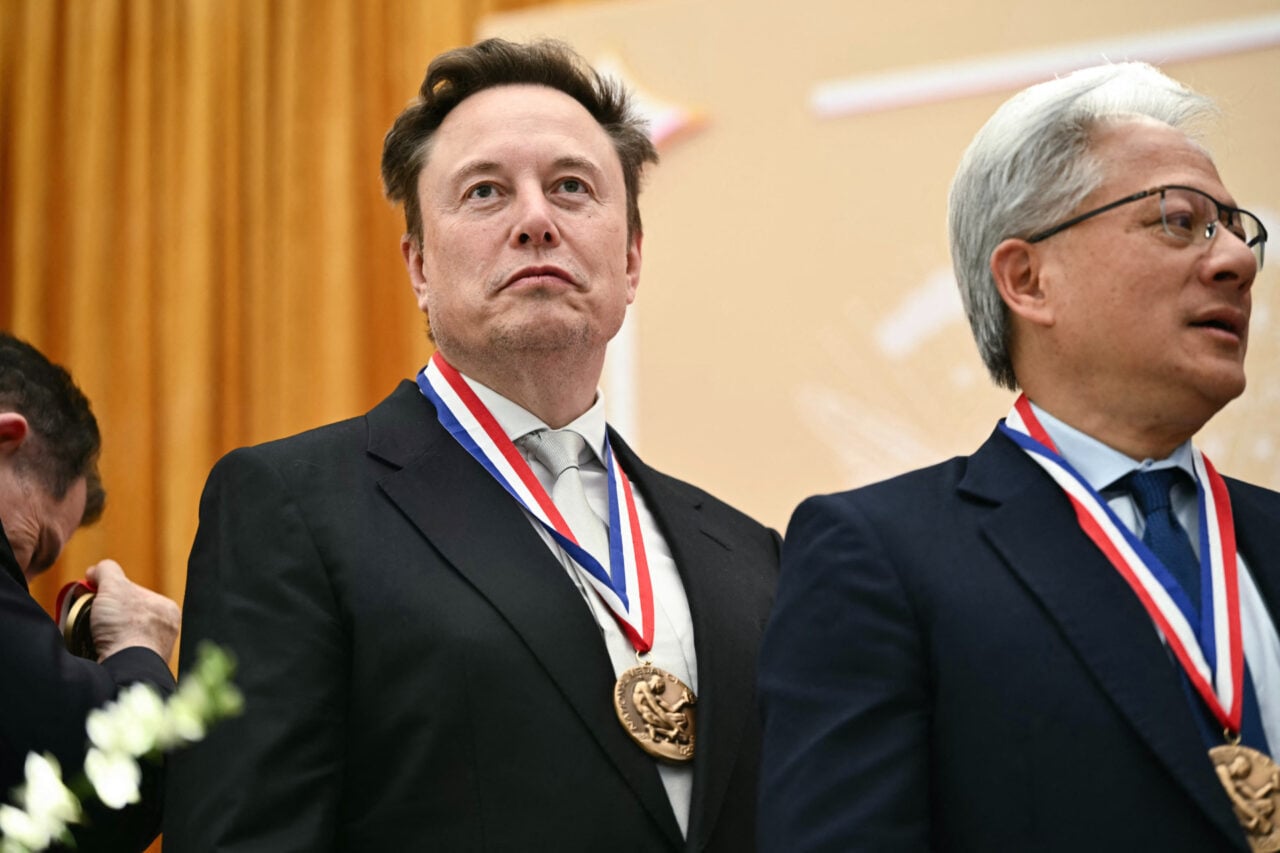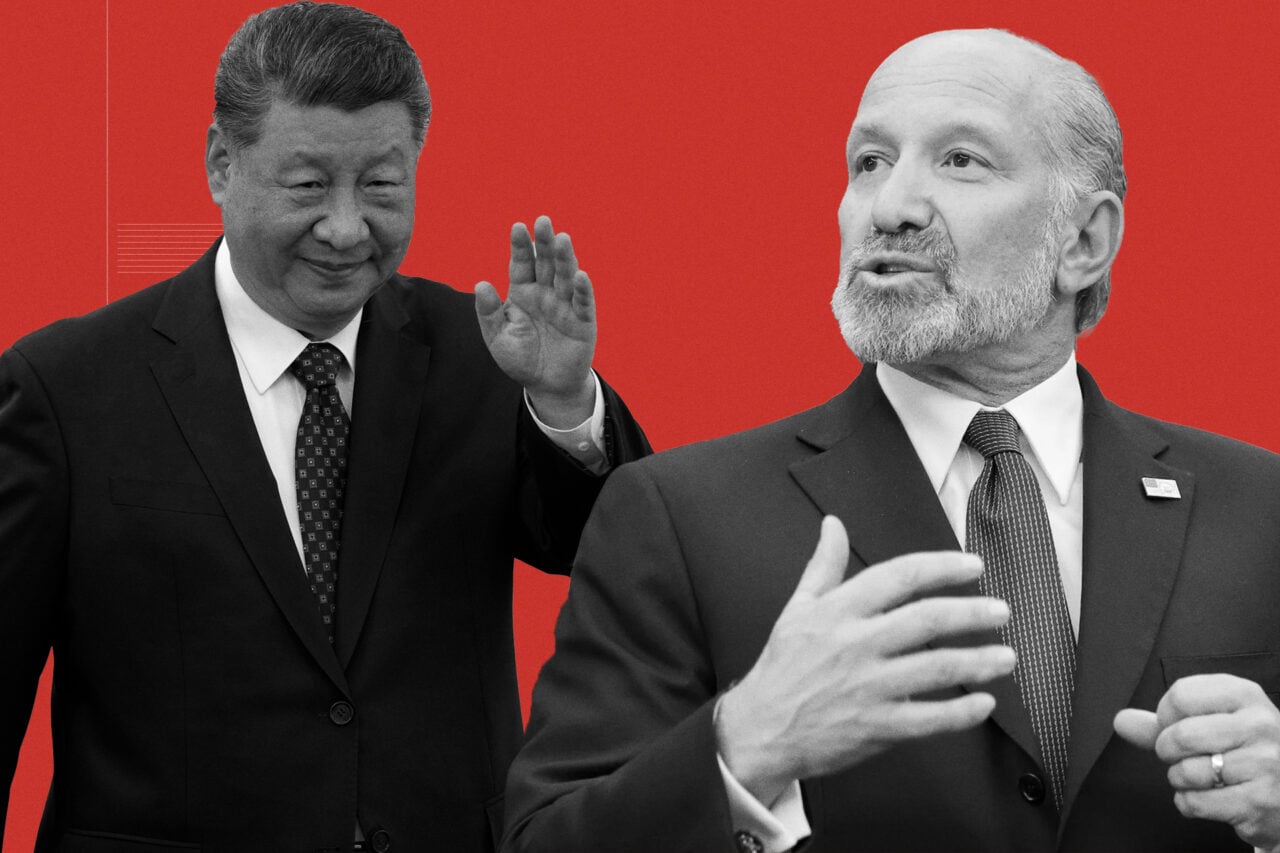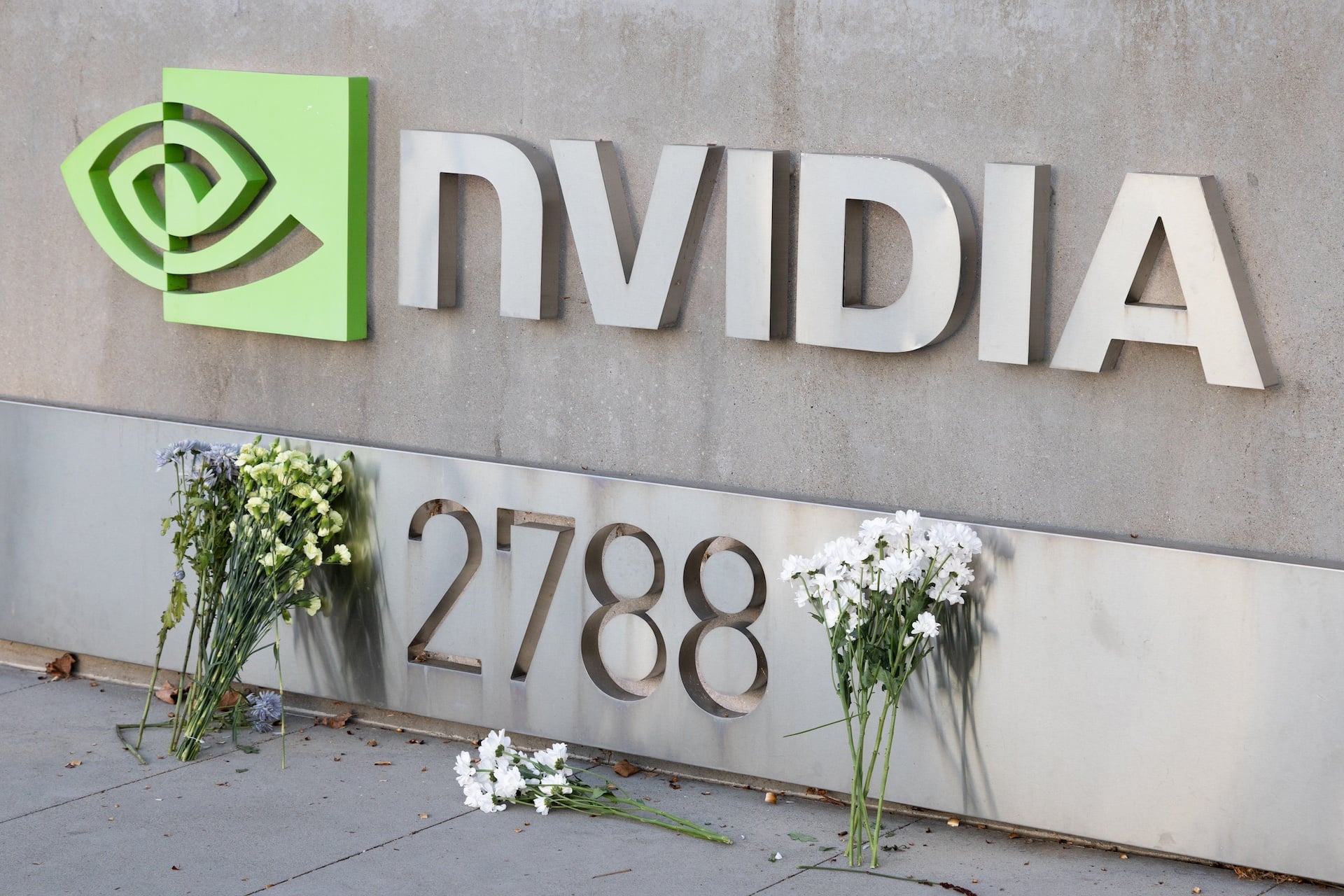
Right now, just about everyone in Silicon Valley and Washington is contemplating something that not so long ago was unthinkable: Nvidia without Jensen Huang.
Huang will be remembered in many ways: as an innovator, a savvy and sometimes cutthroat entrepreneur, a charismatic leader, a political confidante—and now, as a philanderer and disgraced ex-CEO who may very well have jeopardized national security by being honeypotted by a suspected Chinese spy. His resignation on Thursday, following reports of multiple extramarital affairs, has plunged the company he cofounded over thirty years ago and turned into a financial powerhouse into disarray. Nvidia shares plunged by 14% Thursday morning, erasing around $601 billion in value. And though the shares have since recovered somewhat, the chipmaker’s future—and by extension, that of the entire tech industry—is very much up in the air. What’s not uncertain is this: his successor has a difficult road ahead of her.
Nvidia’s board of directors announced Thursday morning that Colette Kress, the company’s longtime chief financial officer, would replace Huang as interim CEO. She’ll continue in her role as CFO and executive vice president until a permanent successor to Huang has been named, according to the board, which added that the company would be vetting both internal and external candidates for the role. “Colette has helped lead Nvidia through a period of extraordinary growth and has a deep understanding of our business, customers, operations and financial position,” Harvey Jones, the newly-appointed chair of Nvidia’s board of directors, said in a statement. “The Board has full confidence in Colette and the leadership team, and we expect the company’s operations, customer commitments and product roadmap to continue without interruption.”
Following multiyear stints at Microsoft and Cisco, Kress joined Nvidia in September 2013, according to her LinkedIn page, after reportedly being hired directly by Huang. In the ensuing years, and especially after the 2022 release of ChatGPT transformed AI from an academic curiosity into a cultural and economic juggernaut, Nvidia’s growth went stratospheric. The company recorded just a hair over $1 billion of revenue in the third quarter of 2013; in the same period last year, its revenue was $57 billion. It’s currently the second most valuable company in the world, after Apple, even after losing a sum greater than the GDP of Denmark this morning.
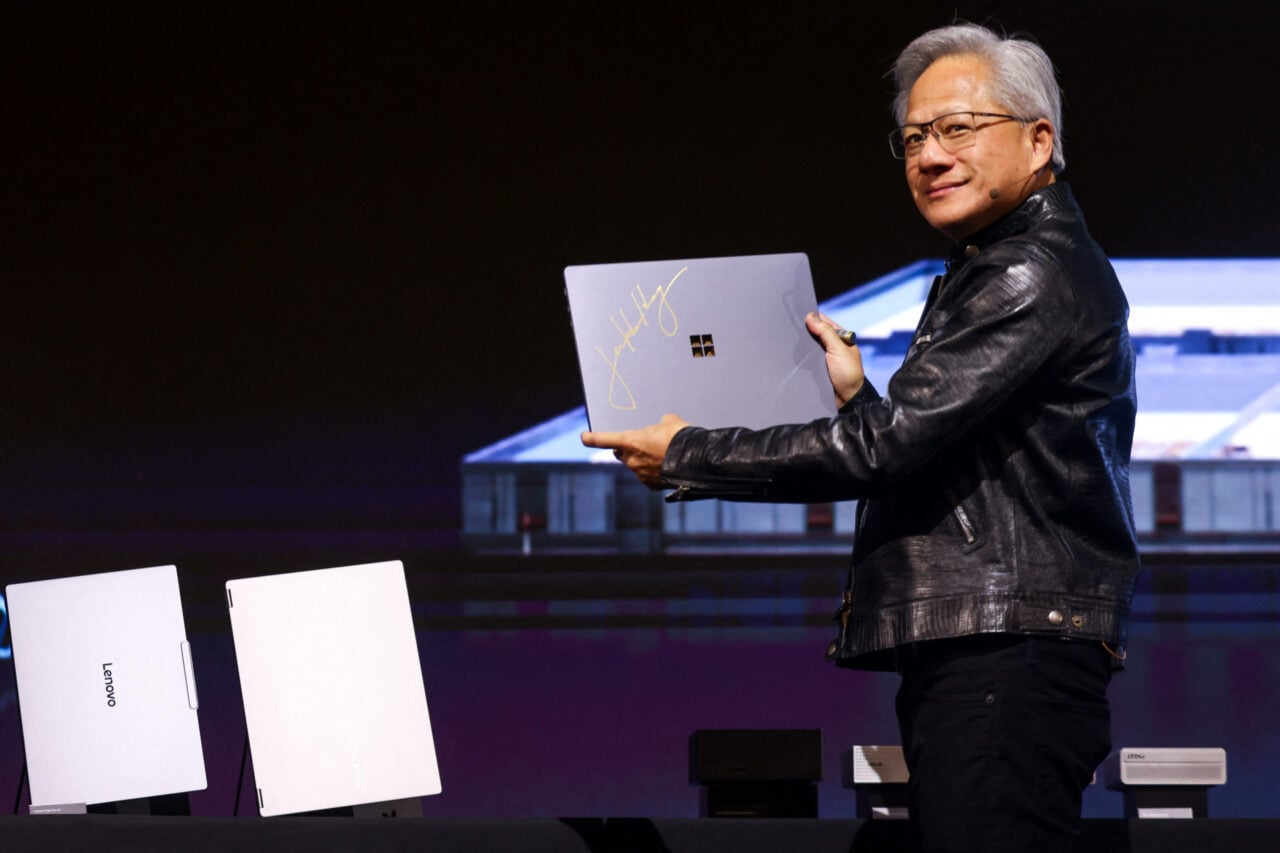
As CFO, Kress had the rosy job of telling Nvidia’s investors, and the rest of the world, about the company’s soaring growth. “We had a good year last year, and I think we’re going to have another great year… in terms of returning capital to [shareholders],” Kress said during an onstage event alongside Huang during Nvidia’s GTC conference in San Jose earlier this year. That may have been a factor in the board’s decision to appoint her interim CEO: In one earnings call after another, Kress has delivered sunny news to Nvidia’s investors—and if there’s one thing investors could use right now, it’s a little sunny reassurance. She also contrasts sharply with Huang’s characteristic flashiness, with his apparently limitless supply of exotic leather jackets and frequent appearances at state dinners. During their one-and-a-half-hour onstage appearance at the San Jose Nvidia conference, Huang spoke the vast majority of the time, occasionally standing up to point at visual aids; Kress, for the most part, sat quietly with a slight smile on her face.
In her new role as interim CEO, Kress will have to do more than provide upbeat financial reports: she’ll also be dealing with congressional scrutiny, which is likely to intensify when Democrats take control of Congress in January after promising a crackdown on a tech industry that’s enjoyed significant leeway for the past two years.
“We need a classified briefing made available to members of Congress, as it relates to the Nvidia situation, and to the extent that our national security has been compromised,” House minority leader Hakeem Jeffries told reporters on Thursday, after it was announced that Huang had resigned. “The American people deserve answers, and we’re going to work to make sure that happens.” Republican lawmakers have also demanded testimony from Huang himself, who has reportedly agreed to appear before Congress before Thanksgiving.

The Department of Justice is also reportedly investigating Nvidia for potential antitrust violations and conducting separate probes into Megaspeed and Supermicro—companies linked to Alice Huang, the suspected Chinese spy with whom Huang admitted to having an extramarital affair. Nvidia’s overseas business could also take a hit if the Commerce Department takes action to close the so-called “remote access window,” through which Chinese companies can access advanced Nvidia computing power via third-party cloud providers in other countries, potentially circumventing U.S. restrictions on chip exports.
Huang may have stepped down, but Nvidia’s woes are far from over, and plenty of people are going to be looking for someone to blame. Suddenly, Kress’s role seems a lot less rosy.