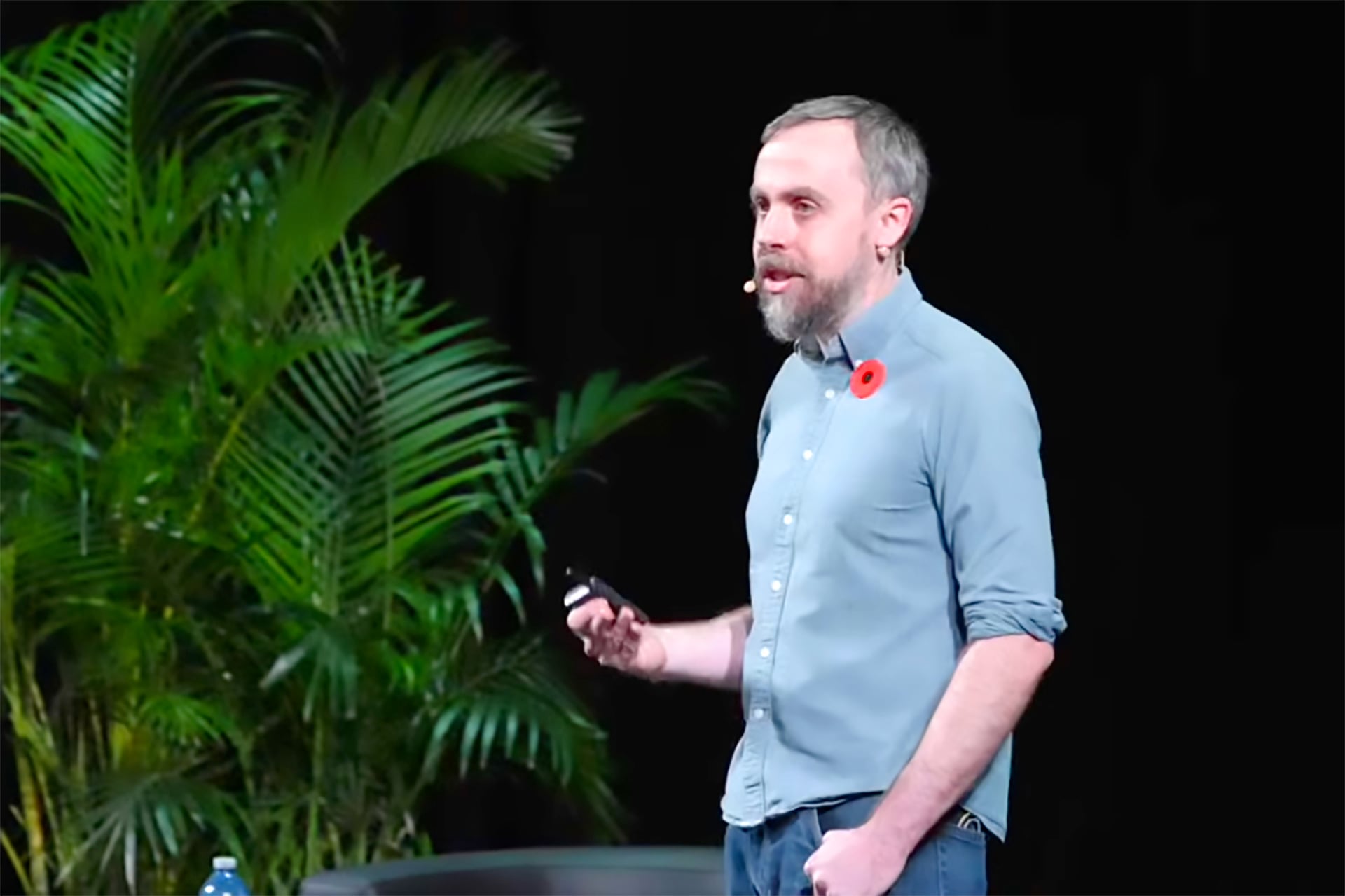
The top three causes of death in the United States are heart disease, cancer, and unintentional injuries. But according to Paul Christiano, a member of the OpenAI Foundation’s board and its Safety and Security Committee, artificial intelligence could soon become a deadlier threat than any of them.
While speaking at The Hinton Lectures 2026, hosted by “godfather of AI” Geoffrey Hinton, Paul Christiano told the audience, “For most people in this room, the most likely reason they will die is because of an AI accident,” which is the kind of thing that, when someone says it, you kinda want to ask them why they are continuing to build the death machine.
Now, maybe that is specific to people working in the AI industry; it might make sense that more exposure would raise the risk (though it’s not like AI is a toxic gas or something). But it’s not like Christiano, founder of the Alignment Research Center, has a particularly positive prognosis for the rest of humanity.
He warned that there is a meaningful risk of an AI takeover in the next six to 12 months and said that if AI labs build as quickly as they can without intervention, “we would be looking at something like a coin flip of an AI takeover” within the next three years. “Even with realistic policy responses, the risk remains exceptionally high.”
In September, Christiano put his all-things-considered estimate of a catastrophic loss of human control at 4% within one year and 15% within three years, which he acknowledged were subjective judgments rather than the product of a precise model.
Christiano did say that companies like OpenAI aren’t going to build as fast as they can, which is a real relief. Keep the risk of total annihilation of humanity to something closer to a dice roll instead of a coin flip, you know, like a responsible company would.
He’s also not the only one ripping pages out of the calendar and saying that the end is nigh. Eli Lifland of the AI Futures Project recently tweeted that, after reviewing new research suggesting AI is dramatically accelerating its own development, “I feel very worried that humanity might no longer be in control of our future within 3-12 months.”
Buck Shlegeris, CEO at Redwood Research, went further: “Overall, I think there’s a very real possibility (maybe 20%) that within a year, AI misalignment issues prevent you from going about life normally, because you are dead or enslaved or because of collateral damage related to all this (e.g. because bioweapons are released or major wars have started).” And, to his credit, he is correct that being dead would make it difficult to go about the daily routine.

There is a double-edged sword to all of these guys ringing the alarm bells in the AI safety world. On one side, they have considerable expertise in AI development and are specifically attuned to watch out for the types of red flags that would result in misalignment and potential catastrophe. On the other, some of these researchers work for nonprofits that need to raise money, too, and urgency can be a great fundraiser. It’d perhaps be too cynical to only focus on that half, but it’s worth noting.
If we assume that what they are saying is true, though, then it does feel worth asking if they’re doing enough. Christiano joined OpenAI’s board in September specifically to help oversee its safety practices, while publicly acknowledging that the company wasn’t doing enough to reduce the risks of catastrophic AI development. But if he believes OpenAI is creating technology that could destroy humanity, it’s probably fair to expect more than warnings and promises to improve oversight. You’re helping build the highest-stakes version of the Trolley Problem. At what point do you pull the lever?