Today, the Arabian Peninsula is mostly a desert. But things were very different hundreds of thousands of years ago. In fact, the landscape supported an ancient community of talented crafters who possibly made poisonous weapons.
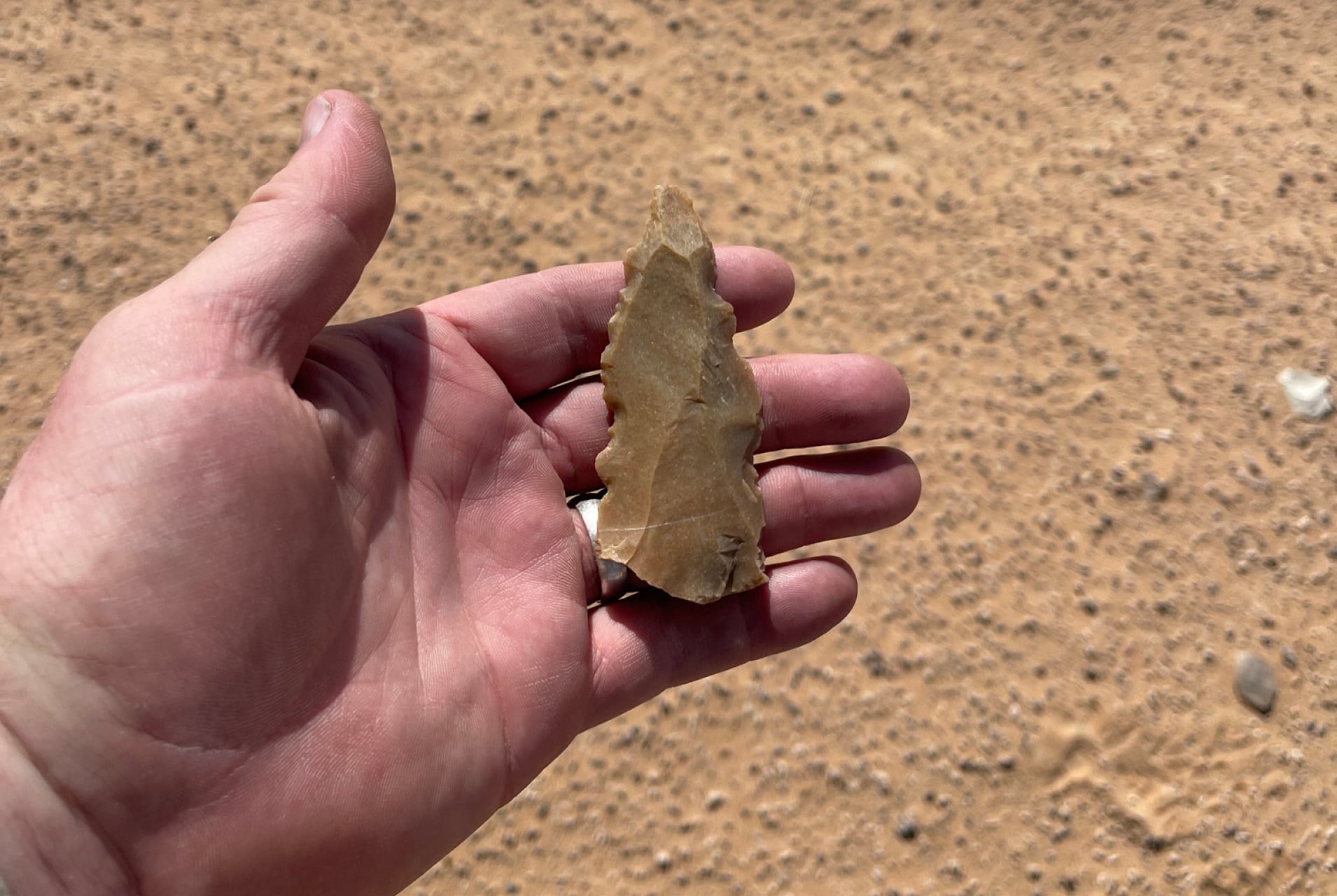
An international team of scientists studied traces of human occupation at Uruq Aljelibah, a Middle Paleolithic site around 125,000 years old. Their findings, published today in Science, describe a remarkably well-preserved record of how prehistoric humans and wildlife coexisted around an ancient freshwater lake, located in what is now Saudi Arabia. The excavations turned up roughly 5,000 stone artifacts and fossil remains. One standout discovery was a carefully shaped stone point with chemical traces from poisonous plants—hinting at the community’s crafting skills. The findings challenge the idea that continued, permanent human occupation was rare in Paleolithic Arabia.
These humans were “using sophisticated stone-tipped weapons, possibly incorporating plant poisons, along with adhesives and plant-fiber technologies,” Chris Clarkson, the study’s first author and an archaeologist at Griffith University in Australia, told Gizmodo. “It gives us an unusually detailed picture of early human life in what is now one of the driest regions on Earth.”
Imagining ‘Green Arabia’
During the Pleistocene, the Arabian Peninsula experienced significant climate and environmental changes, according to the paper. That brought humid phases to the region, turning it into what some experts have dubbed “Green Arabia.” This didn’t go unnoticed by early hominins, who entered and traversed the peninsula to cross over from Africa to the Asian landmass. The new study affirms this idea while adding an important caveat: the peninsula wasn’t just a migration corridor; many humans decided to stay and build a home for themselves.
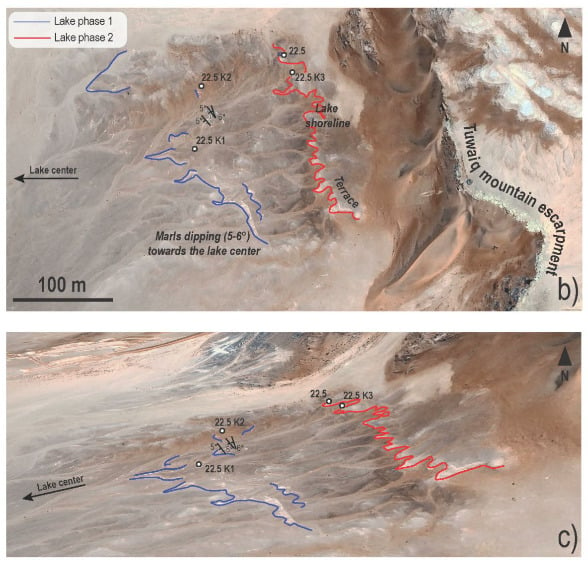
This isn’t the first time that scientists have found traces of Homo sapiens occupation in northern Arabia, Frans van Buchem, the study’s corresponding author, told Gizmodo. Van Buchem, a geoscientist at the King Abdullah University of Science and Technology in Saudi Arabia, explained that previous deposits were dated to between 80,000 and 100,000 years old. The latest findings, on the other hand, are even older and more inland.
Nature’s gift to history
Environmental reconstructions indicated that the lake was roughly 131 square miles (340 square kilometers) with a maximum depth of 95 feet (29 meters). Clarkson added that the organic residue on the tools miraculously survived, allowing the team to study adhesives, fibers, and woods—”a whole world of technology that normally disappears from the archaeological record.”
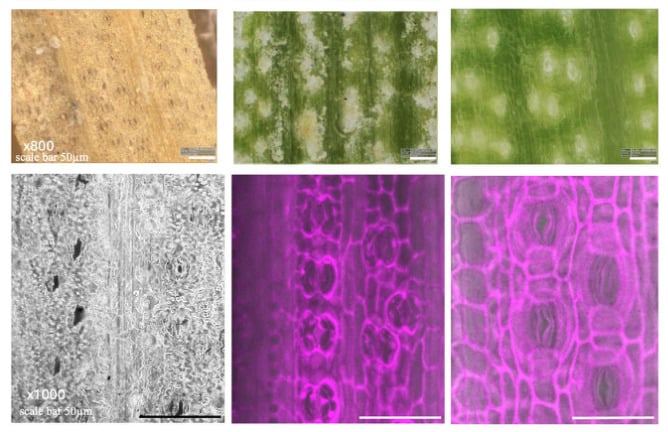
One of these plant residues was tracked back to the arrow poison tree. The weapon appears to have been used as a spear point, van Buchem said. If the poison was deliberately applied, it would enter an animal’s bloodstream and make hunting more effective, Clarkson added. The site also turned up fossil evidence of hippopotamuses, buffalos, camels, gazelles, and oryx. The assemblage of stone tools suggests the area was a hotspot for hunting and processing game.
More stories to be told
The results also contribute to a growing body of evidence that suggests, again, that “Green Arabia” was far more than a land bridge. According to Clarkson, the team will now further investigate the poison residues—it’s not too clear how they were prepared or their effectiveness, he said—and explore other sites near the lake.
“I think the important message is that early humans were far more technologically sophisticated than the surviving archaeological record often suggests,” Clarkson concluded. “We’re only beginning to understand just how complex their lives were.”