How Your Cloth Face Mask Filters Out Bad Things
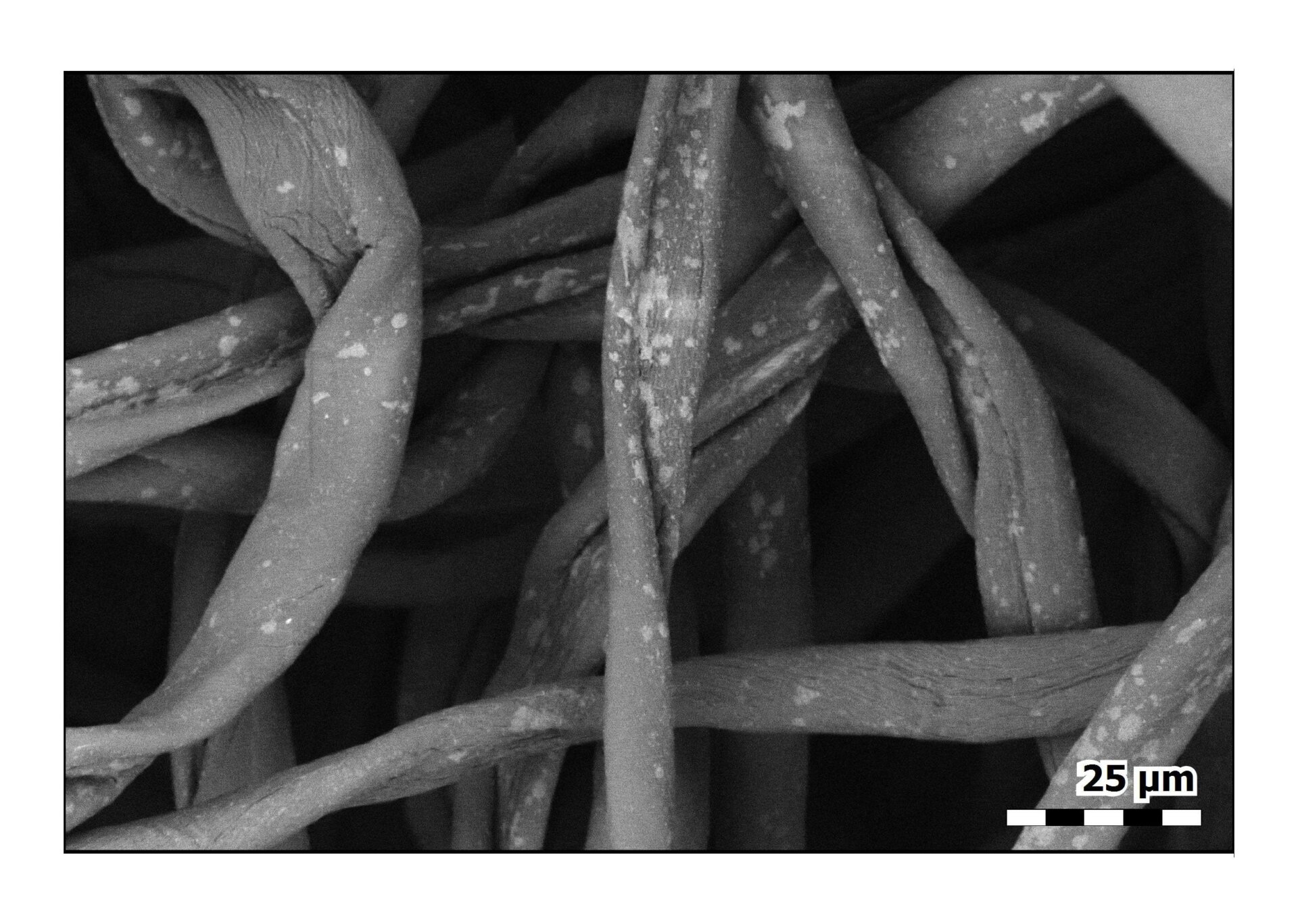
So, what exactly happens when you’re out and about wearing a cloth face mask? For this example, let’s pretend we’re wearing a cotton flannel face mask, which the NIST researchers believe is a particularly good filter. Part of this is due to the chaotic arrangement of the fabric’s fibers.
As explained by NIST, when you breathe through a cotton flannel face mask, shown above at the individual fiber level, the air flows around these fibers and the aerosols “are pulled along for the ride.” Although the aerosols are very small, they do have some mass. Remember the chaotic arrangement I mentioned before? Well, the air you breathe in has to twist and turn around the fibers in the masks. Some aerosols can’t turn fast enough, which means they smash and stick to the fibers. Additionally, since the cotton fibers have kinks and bends, they also have greater surface area, which also helps trap aerosols.