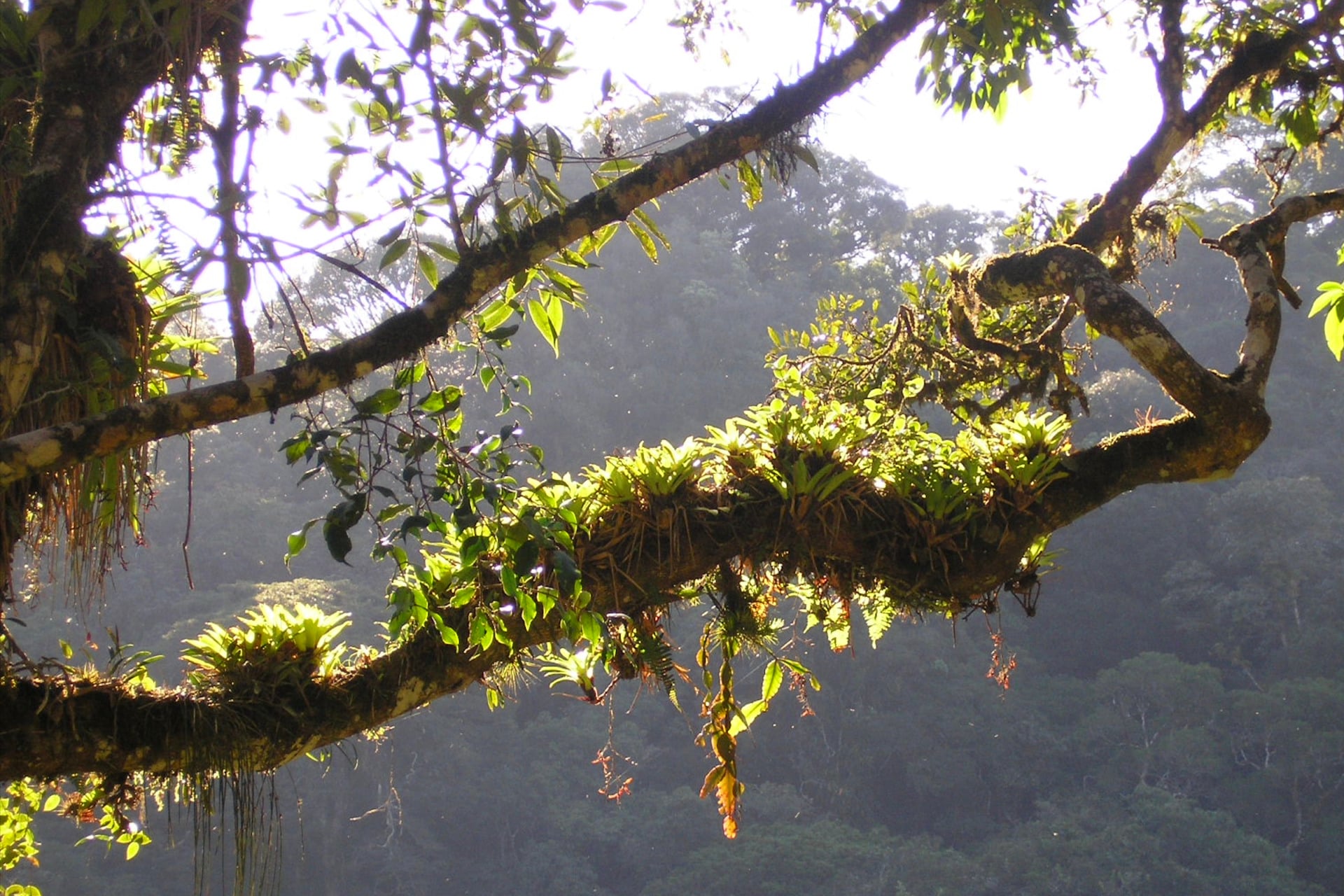
Nearly a quarter of all plant species on Earth—or roughly 55,000 unique flora, by some estimates—currently call Brazil their home. The United Nations, in fact, classifies Brazil as the globe’s leading “mega-biodiverse” nation, “unmatched by any other.” And, while one might attribute this staggering ecological richness solely to Brazil’s 60% chunk of the Amazon, the fact remains that the nation owes much of its mega-diversity to another, lesser-known, rainforest along its eastern coast: Mata Atlantica.
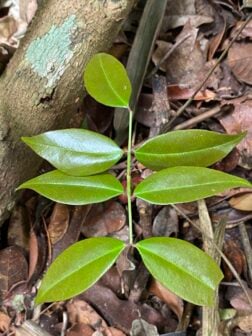
Earlier this year, an international team of biologists, immunologists, and pharmaceutical chemists discovered something interesting about a plant endemic to this region. Leaves of Copaifera lucens Dwyer, a tree primarily found in Mata Atlantica, contain a chemical compound capable of neutralizing covid-19 via a “multitarget mode of action” that disables the deadly virus’s arsenal of spike proteins and enzymes, according to the team’s new study.
“Many current antivirals act on only one viral protein,” according to a statement by pharmacist Jairo Kenupp Bastos, a professor at the Ribeirão Preto School of Pharmaceutical Sciences at the University of São Paulo (FCFRP-USP), who coordinated this project.
“An important aspect revealed by this information is the multi-target mechanism of the compound, which reduces the likelihood of resistance developing,” Bastos said.
In other words, this compound—really a variety of extracts from Copaifera lucens called galloylquinic acids—might be able to beat covid-19 in ways that the virus can’t easily mutate to avoid, slowing the deadly impact of future variants.
No less impressive, the variety of galloylquinic acids found in the plant also appears to inhibit HIV-1, among other antiviral and antifungal properties that inspired the new research.
Exotic tannins
Ultimately, the galloylquinic acids found in Copaifera lucens are a subset of tannins, an astringent class of biochemicals you might be familiar with from tea leaves and red wine.
The researchers found six further subcategories of galloylquinic acid within the plant, identified via ultraviolet spectroscopy methods, after distilling these chemicals from dried, pulverized, and specially treated C. lucens leaf samples.
According to their study, one molecular configuration of the acid, 3,4,5-tri-galloylquinic acid, displayed a “strong binding affinity” with the receptor binding domains of covid-19’s infamous spike protein, the protruding mechanism by which the virus latches onto the surface of human cells.
Further tests with these acids, including plaque reduction neutralization assays, often called the “gold standard” for testing antiviral potential, showed that safe concentrations of galloylquinic acid also latched on and neutralized covid’s papain-like protease enzyme, which helps the virus evade immune system responses, as well as RNA polymerase, an enzyme essential to covid’s viral replication.
“This integrated approach allowed us to understand how the compounds work and how they act at the molecular level,” as study coauthor Mohamed Abdelsalam, an assistant professor with the Delta University of Science and Technology in Egypt, explained in a statement.
Brazil’s ‘zero deforestation’ pledge
Brazil’s current president Luiz Inácio Lula da Silva won his reelection in 2022, in part, on a platform vowing to reach net “zero deforestation” across the nation. It’s a promise Lula has largely made good on: data from the independent satellite research group Global Forest Watch reported that deforestation of the Brazilian Amazon dropped by 36% during his first year back in office.
The gains look especially impressive amid deforestation due to record wildfires, which burned an area of Brazilian rainforest larger than Italy in 2024, to say nothing of civil servant strikes and local black market economies built on legally dubious land grabs, logging, and mining.
The São Paulo Research Foundation, which helped fund the new research, noted that this project underscores the value of Brazil’s biodiversity not only to the nation’s economy but to global public health as well.
“A few more steps remain before the substance can be developed into a drug against covid-19, including in vivo and clinical trials,” the foundation noted. “However, the study … also reinforces the idea that Brazilian flora is a rich and strategic source for discovering new drugs.”