Folding camera systems
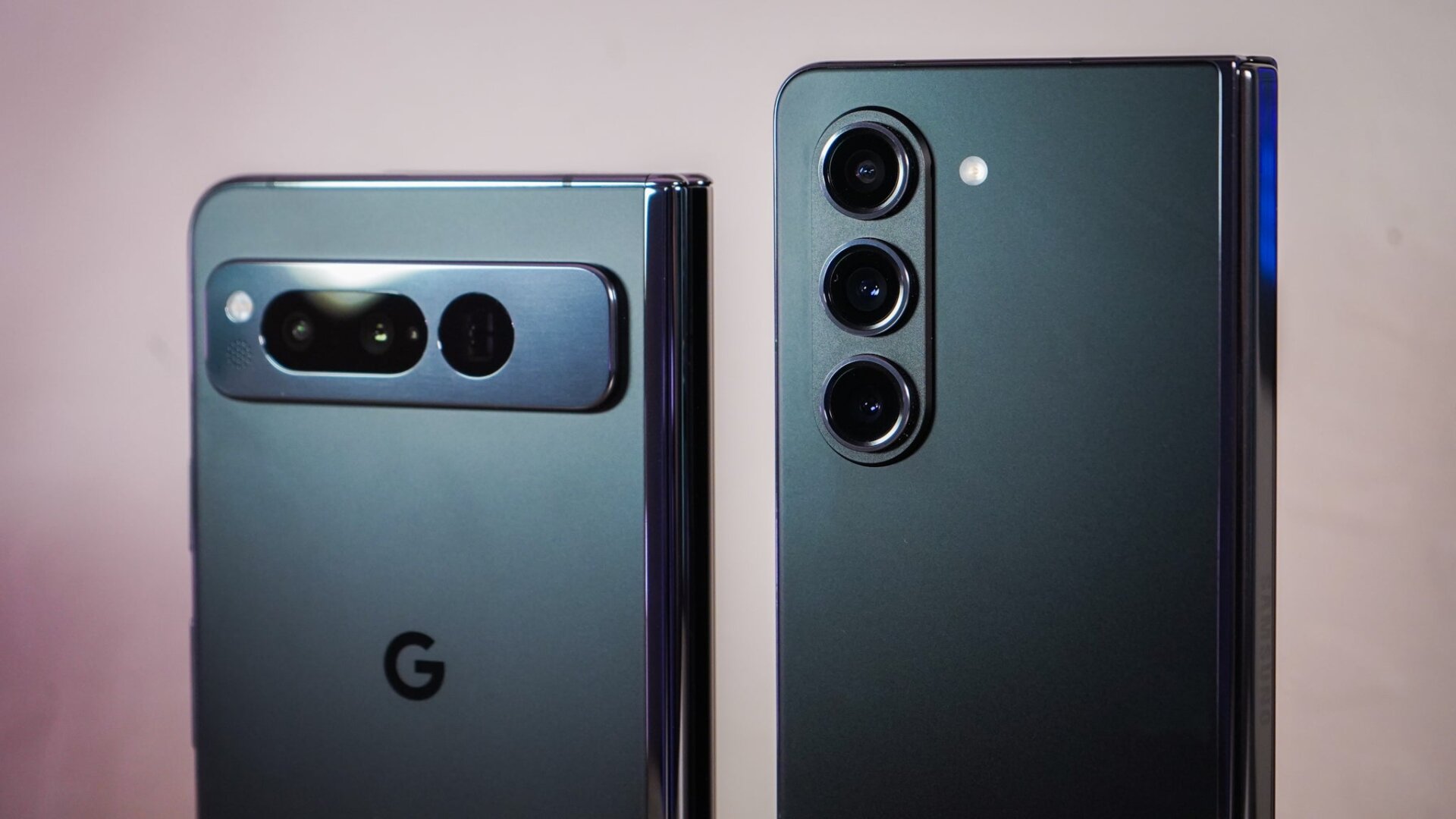
We’ve already run through the camera hardware inside these folding devices. Both the Z Fold 5 and Pixel Fold boast rear-facing three-camera systems. They both offer telephoto lenses, though the Pixel Fold can zoom in further than the Z Fold 5, and a wide-angle camera.
In my initial testing, I noticed that both folding devices carry on the algorithms and performance of the flagship smartphones they’re each modeled after. Samsung’s Z Fold 5’s photos are much more saturated in the result, as Samsung has always been, and they’re just as sharp as the photos produced by the Galaxy S23 Ultra.
Google’s Pixel Fold, on the other hand, is all about that machine learning legacy. Indoor photos shot at night are much brighter than the ones shot with the Z fold 5 because of how Google’s programmed its Night Sight mode. Like the Pixel 7 Pro’s camera, the Pixel Fold will always attempt to “naturalize” the colors on the photos it shoots rather than allowing saturation to take over.
I’ll have more camera samples available in the Z Fold 5 review. But before you click to the next slide, one more thing: don’t expect to take selfie photos or film confessions with the inside camera on each device. Although the Pixel Fold’s 8-MP inside camera is a little clearer than the 4-MP under-display camera on the Z Fold 5, the foldables have those cameras only for the occasional video chat in tablet mode. I always prefer the front-facing camera for selfies, as it’s a better sensor than what’s inside.