Building the test stand
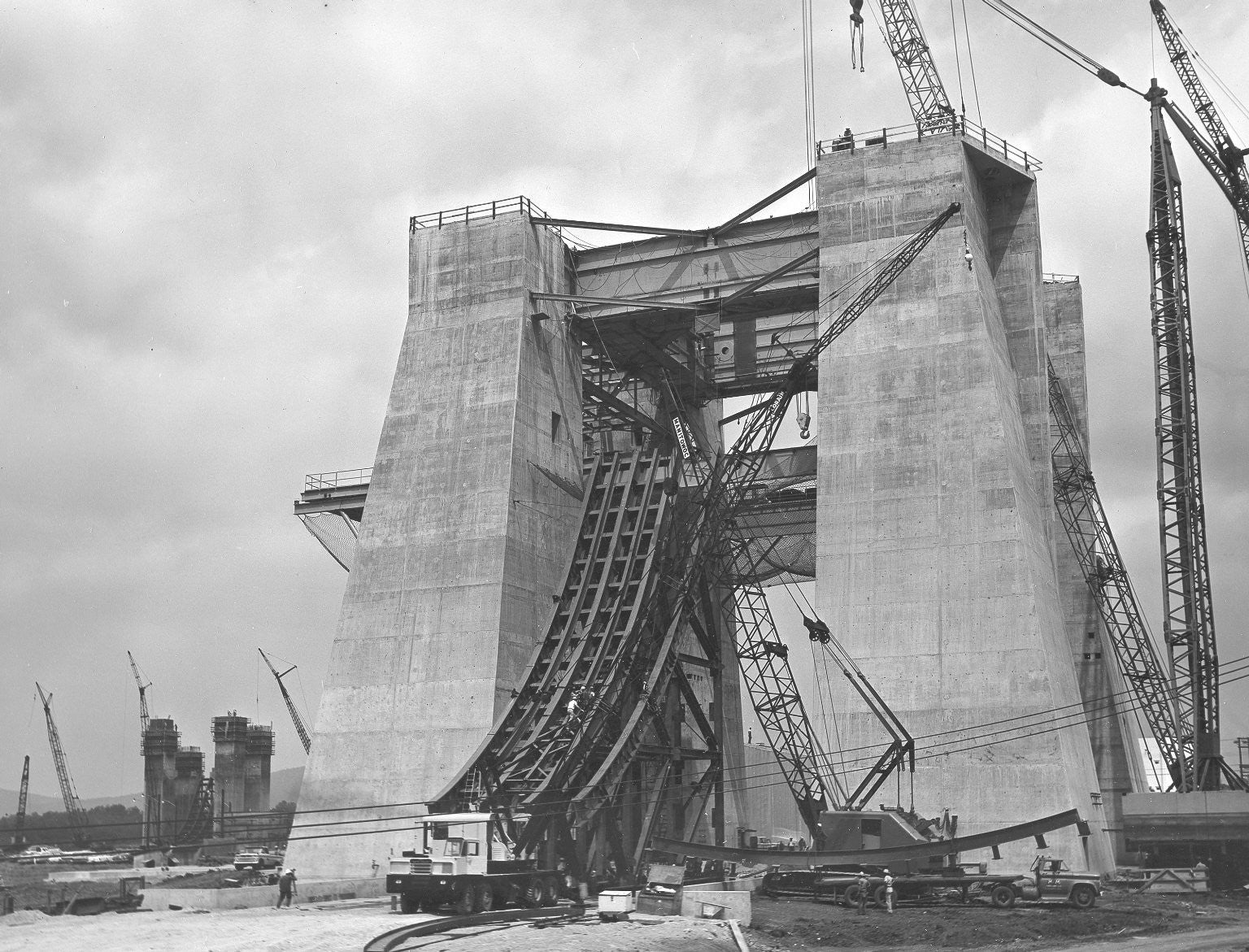
Big rockets need big test stands. Realizing this, NASA began construction of the gigantic S-IC Static Test Stand Complex in 1961 at the agency’s Marshall Space Flight Center in Alabama. The stand was designed to test the 138-foot-long Saturn V S-IC booster stage and hold it hold it firmly in place during static fire tests, during which the booster produced 7.5 million pounds of thrust with its five F-1 engines. Completed in 1964, the stand was built from 12 million pounds of cement and anchored to bedrock at a depth of 40 feet (12 meters) below ground level. The photo above was taken on September 5, 1963.