Artificial Intelligence
In 2002, artificial intelligence was a buzzword mostly related to a Spielberg film that would have probably turned out a lot better with Kubrick in the director’s chair. Most were aware of the term from science fiction, but it was always applied to robots, cyborgs, and killer super computers like 2001’s HAL-9000 who relied on AI to act and behave as realistically human as possible.
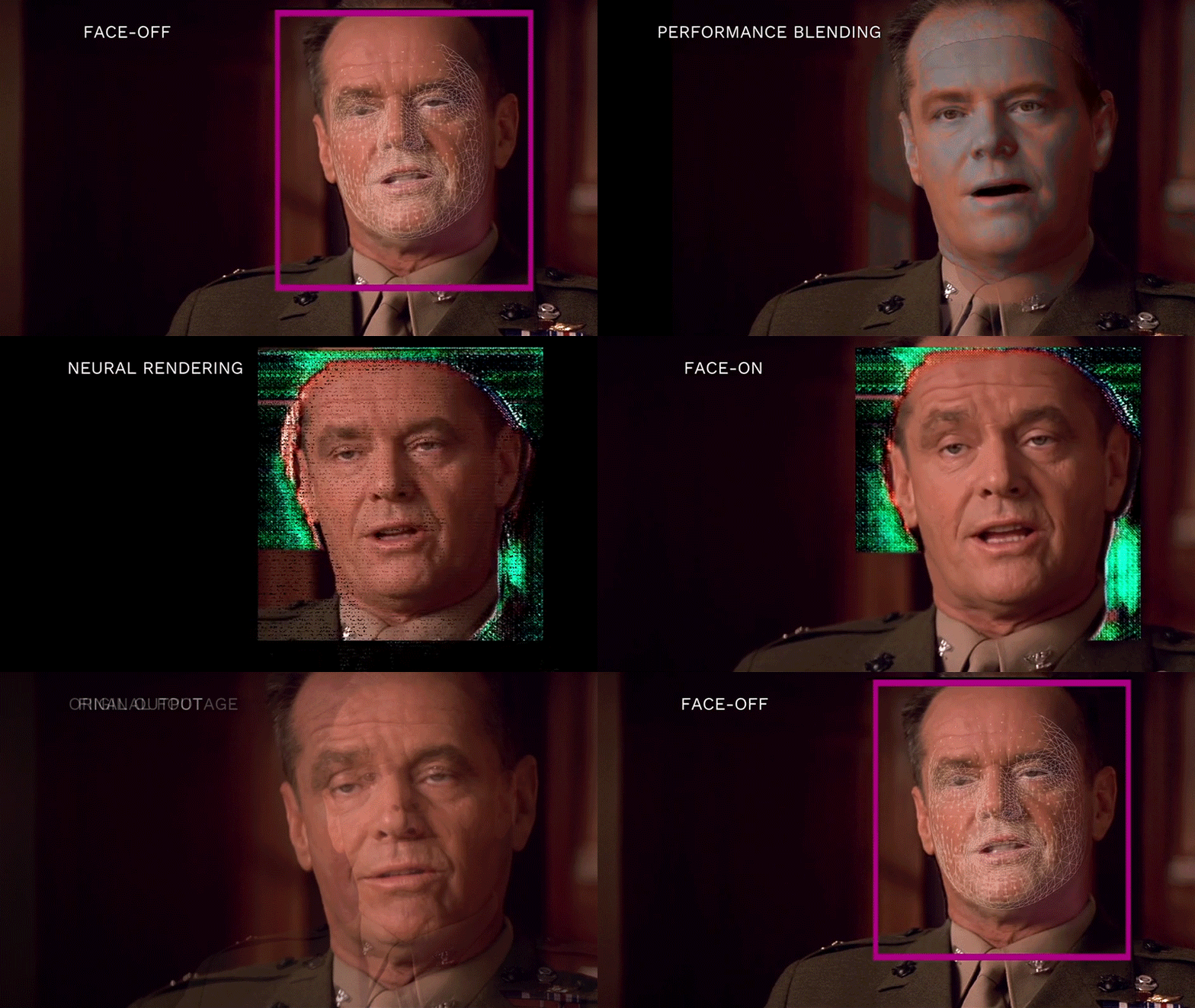
In reality, artificial intelligence was already a hot research topic in computer science labs decades prior as a way to recreate how the human brain thinks and processes data, and was critical to making the earliest voice and image recognition tools function. Today, artificial intelligence has become notorious for the creation of deep-faked videos and images that bring everything seen on the internet into question.
But it’s also a critical part of the voice-activated smart assistants we regularly use, and image editing tools like Photoshop that now make complex tasks that would have taken professional pixel-pushers hours to perform in years past. Every time you snap an image on a modern smartphone it’s probably leveraging some type of artificial intelligence to dramatically improve the results. Many algorithms are born from AI-powered processes, for better or for worse, as you’ve probably discovered questionable recommendations based on what you’ve watched or listened to on streaming services. There’s no denying the tech has a long way to go, but AI already plays a big part in so many of the devices and services we rely on now.