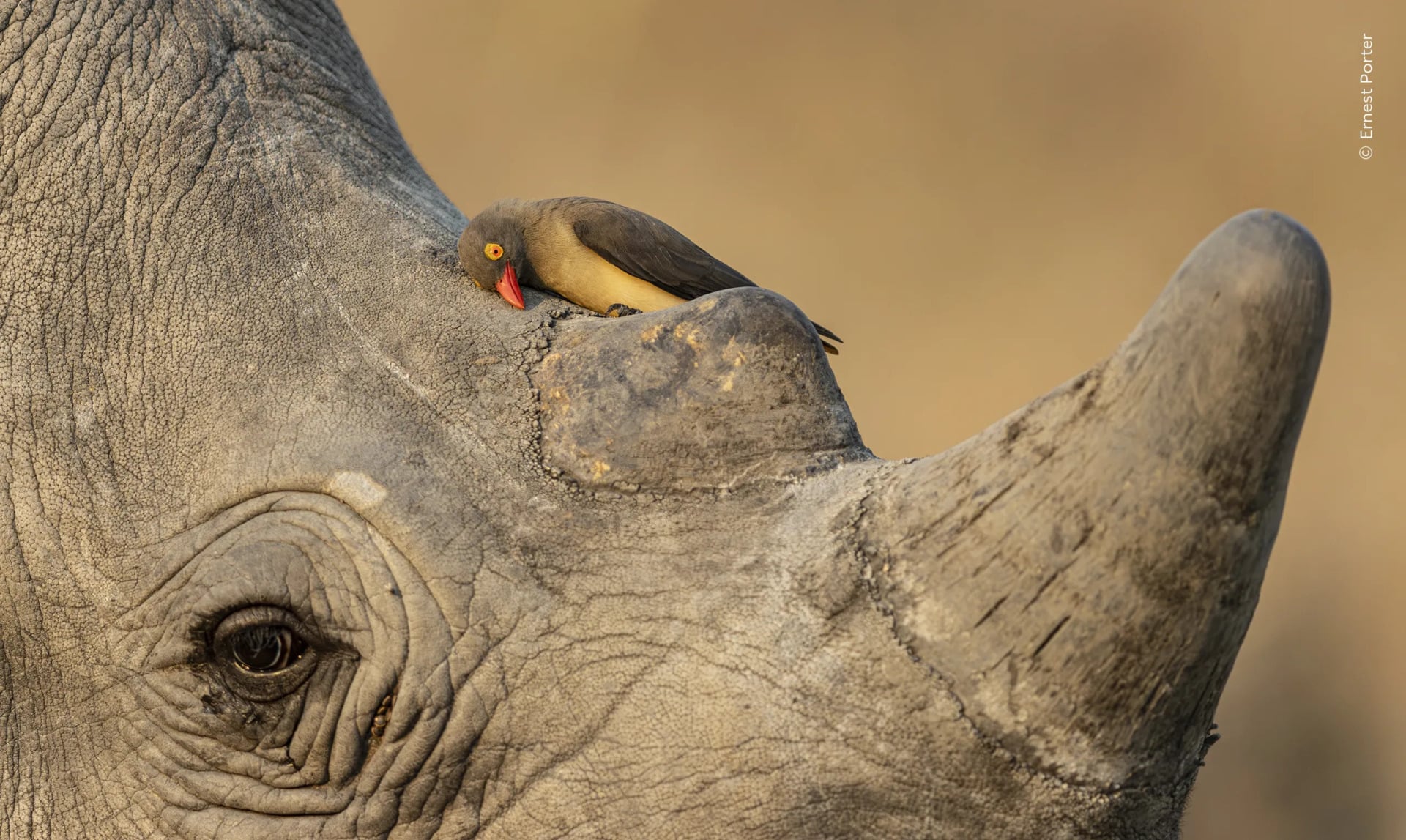
South African photographer Ernest Porter said he was “delighted” to capture this scene of an oxpecker cleaning its bill against a rhino’s skin. The bird feeds on the insects that infest the rhinos’ skin, which is why the red-billed oxpecker’s name in Swahili, askari wa kifaru, means “the rhino’s guard.”
I’ll take Porter’s word for it, but I honestly can’t help but think that the oxpecker looks like it’s just plopped against the rhino, staring blankly into the void—so, basically, me on a Wednesday afternoon.
Jokes aside, Porter’s lovely photograph was designated as “Highly Commended” in the bird category for this year’s Wildlife Photographer of the Year award, hosted by the U.K. Natural History Museum (NHM). On its 62nd year, the competition has attracted a record-breaking 65,403 entries from 121 countries, and a panel of judges selected the winners across 19 categories.
You can see the entire gallery of winners and finalists here. Voting for the People’s Choice Awards is still open, which you can check out here. In the meantime, here are some of our favorite—sometimes relatable—entries from the gallery.
The Aftermath
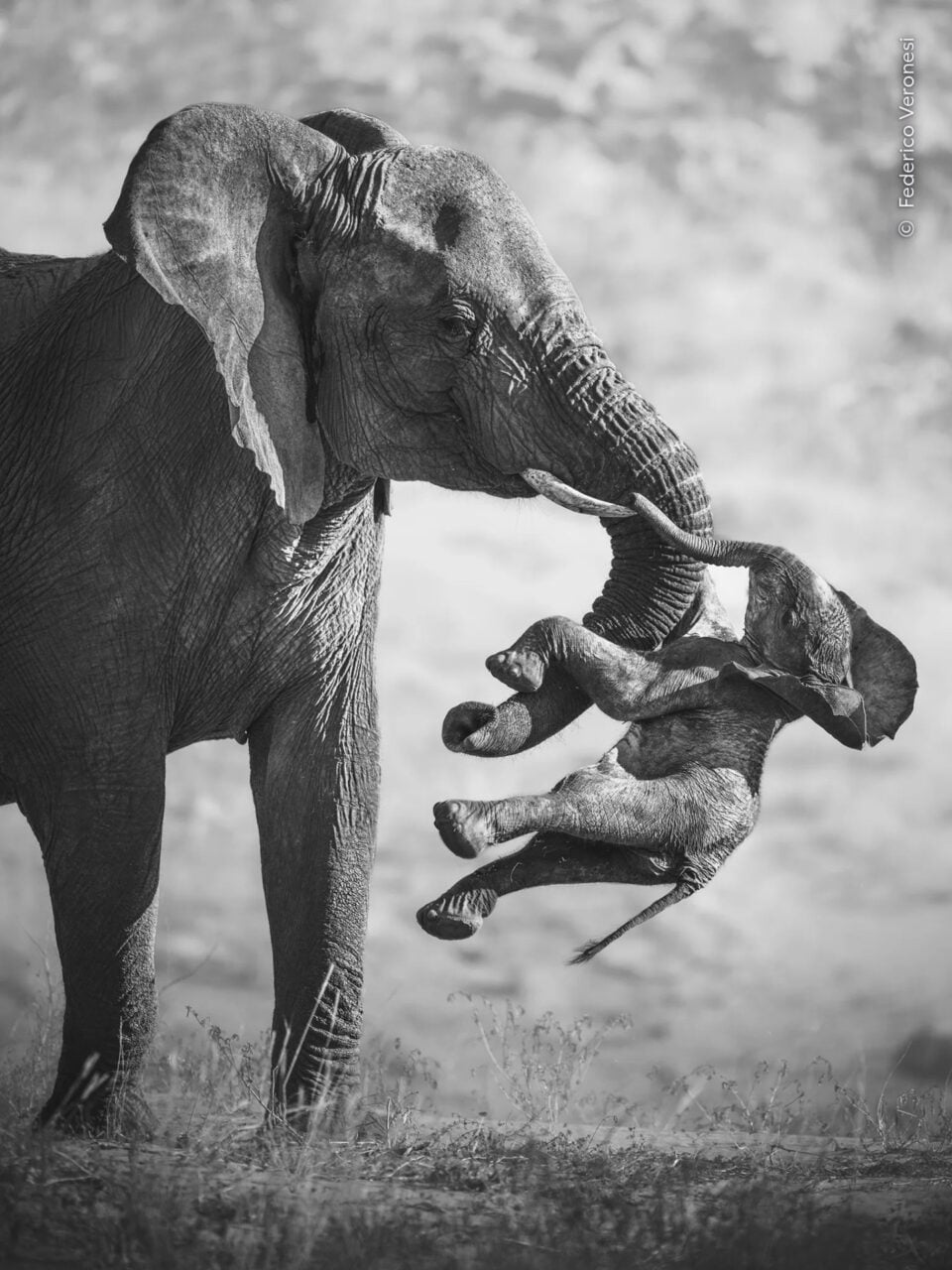
The overall grand title winner went to Italian photographer Federico Vernosei. In this photograph, a female elephant carries the body of a dead calf, leaving behind drag marks in the sand. We humans may never really know what’s really going on, but research has suggested that elephants have their own grieving rituals, according to the NHM. We may be witnessing one here.
“This photograph works on so many levels,” Kathy Moran, who chaired the judging panel, said in a statement. “Emotionally it’s a gut punch, heartbreakingly poignant. Intellectually it’s proof that animals have cognition. This photograph says it all!”
Mob Rule
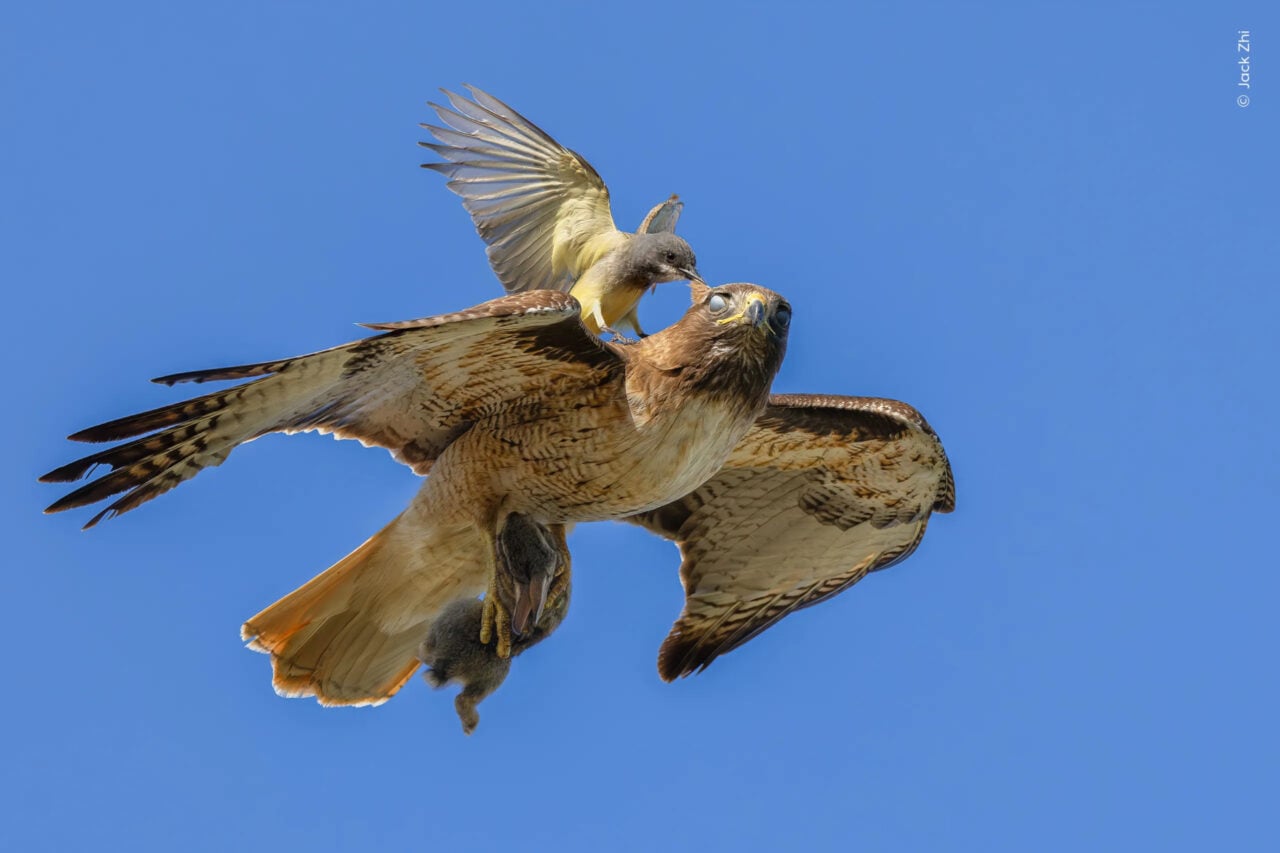
On a (somewhat) happier note, here’s a kingbird mobbing a red-tailed hawk, who is also carrying a brush rabbit—an entire food web in one photograph. This image was highly commended in the birds category and was taken by American photographer Jack Zhi.
According to the image description provided by the NHM, mobbing is a “common and effective” defense for many birds. It’s reportedly better for the bigger bird to move on and not fight back, as it saves energy.
Eye of the Storm
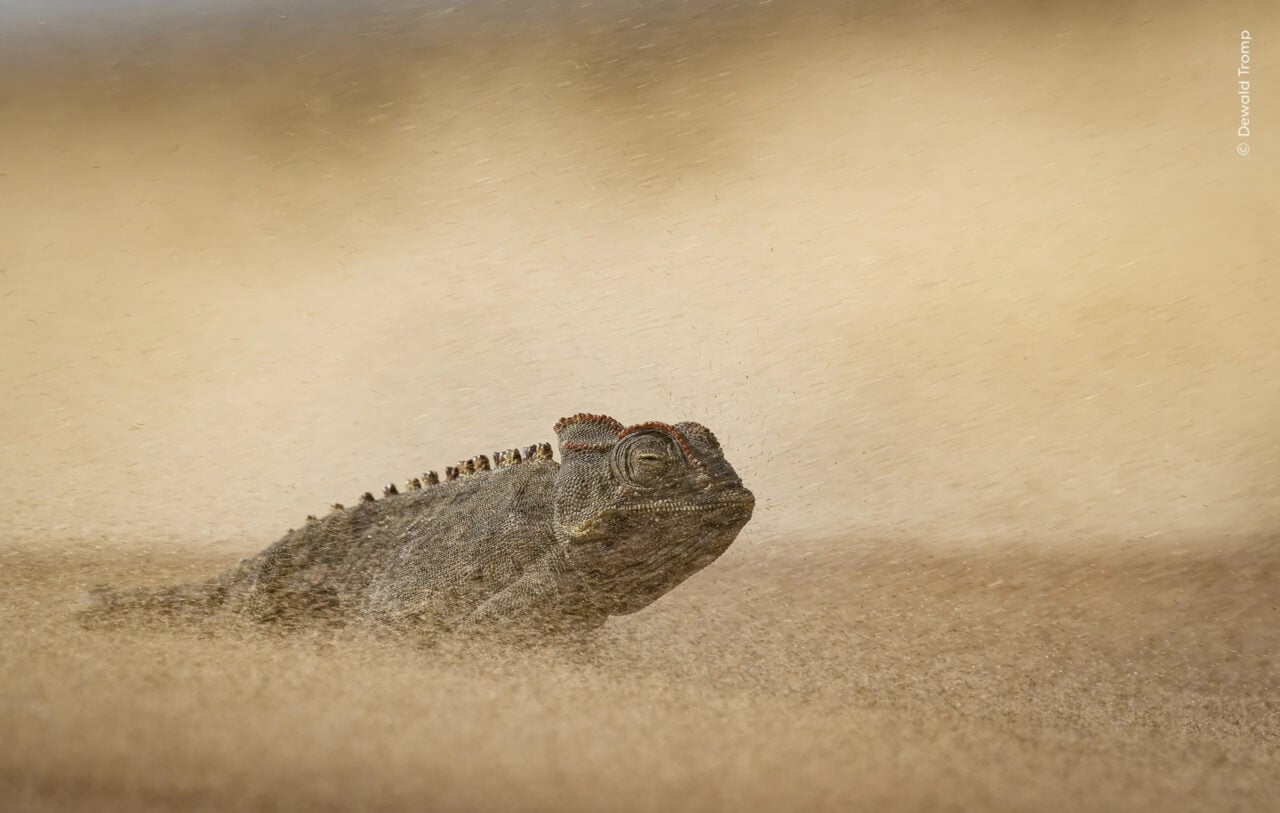
It appears that nature accidentally gave Dewald Tromp some outstanding special effects, as the NHM notes. The South African photographer was studying this Namaqua chameleon in the Namib Desert when the wind picked up, riling up a storm.
As a reward for weathering the sandstorm, Tromp captured this charming (or funny?) image of the chameleon squinting ahead. His work was highly commended in the “Animals in their Environment” category.
Fungi Fireworks
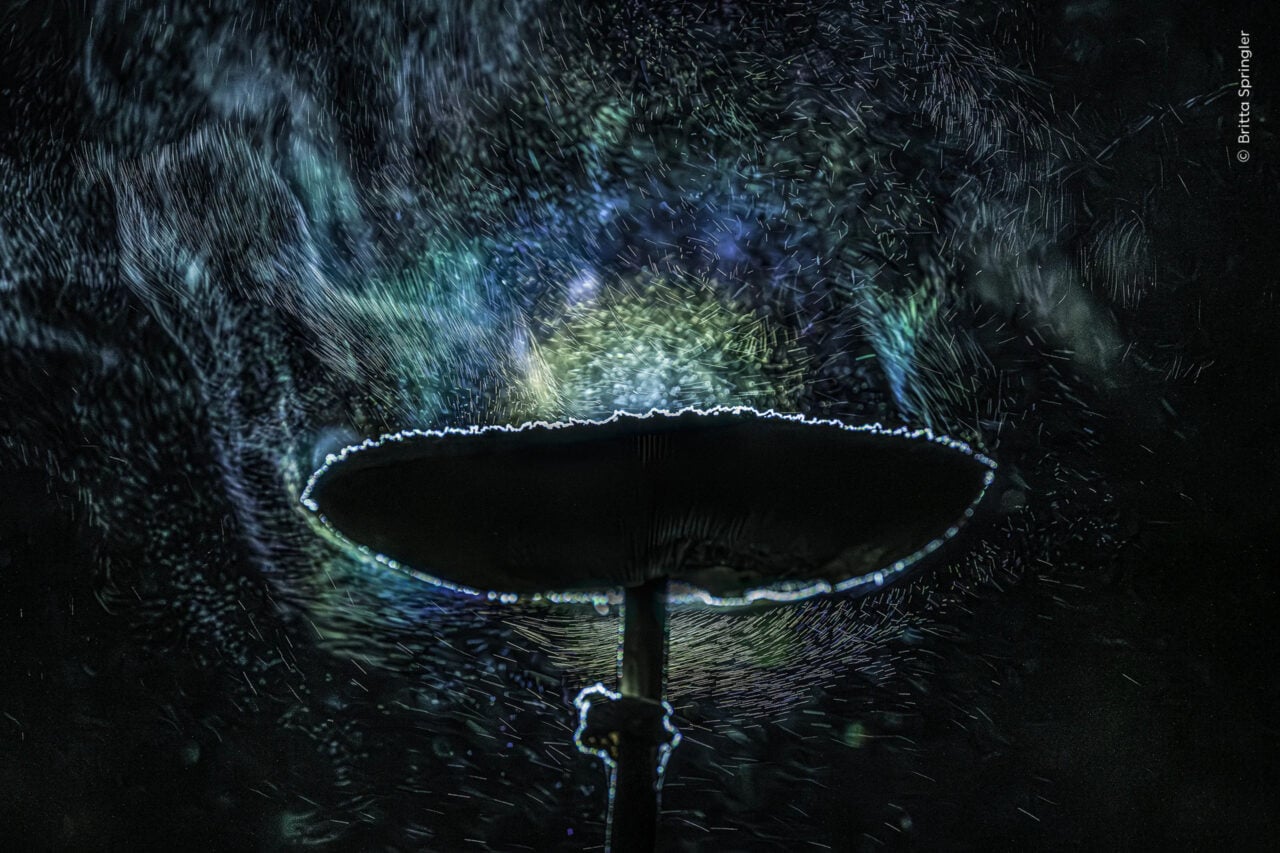
This isn’t a birdseye view of the ocean at night. Nor is it a faraway galaxy. It’s a mushroom! German photographer Britta Springler backlit this mushroom—growing right at her doorstep—and captured the mesmerizing view of the fungus releasing its spores. This photo was highly commended in the category for plants and fungi.
A Race to Mate
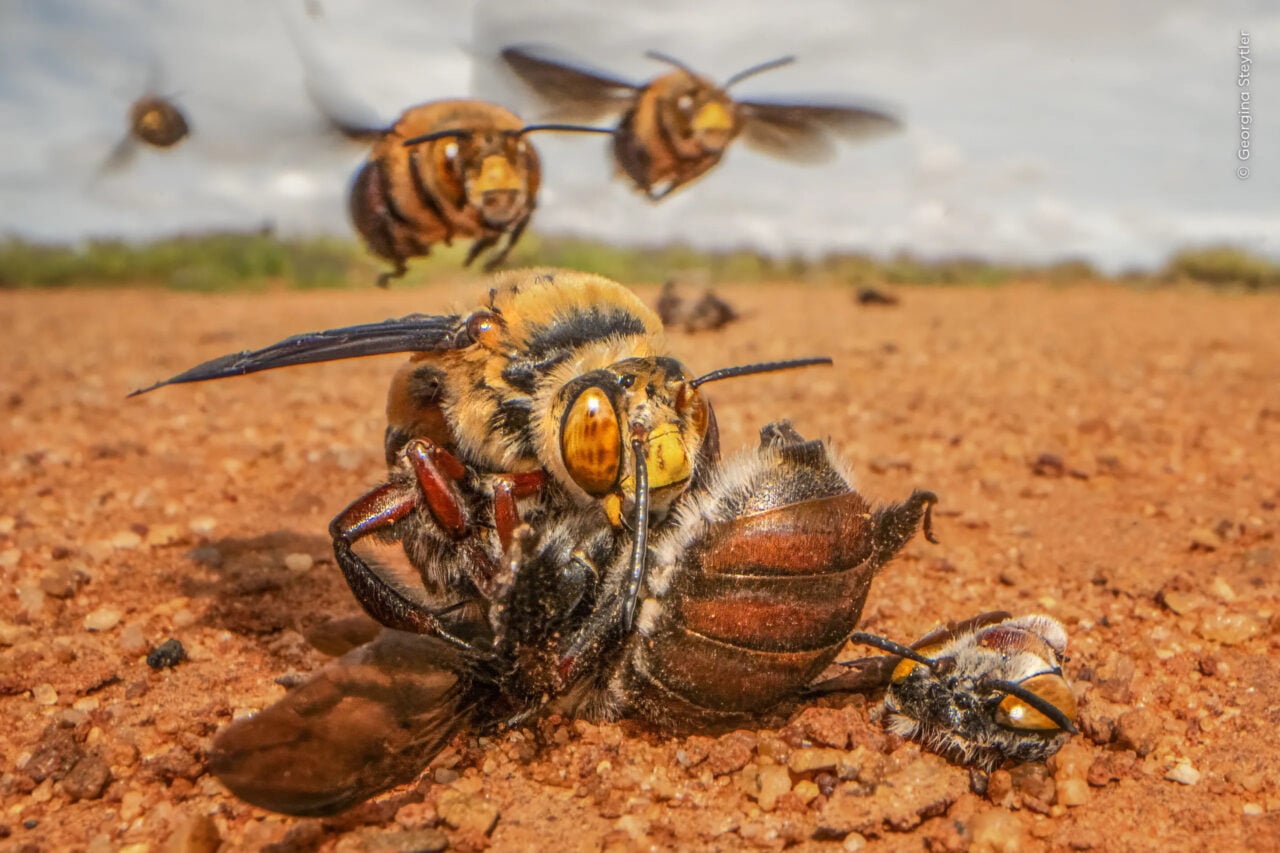
In this striking image, male burrowing bees can be seen accidentally beheading a female while fighting each other to mate with her. Australian photographer Georgina Steytler was highly commended in the invertebrates category for this image.
The NHM’s image description explained that male burrowing bees use their large mandibles to compete to mate. The mating season lasts a few days, and surviving females lay their eggs inside a 12-inch (30 centimeter) burrow in the clay. Human dating struggles don’t stand a chance against this, I’d say.
Frozen in Time
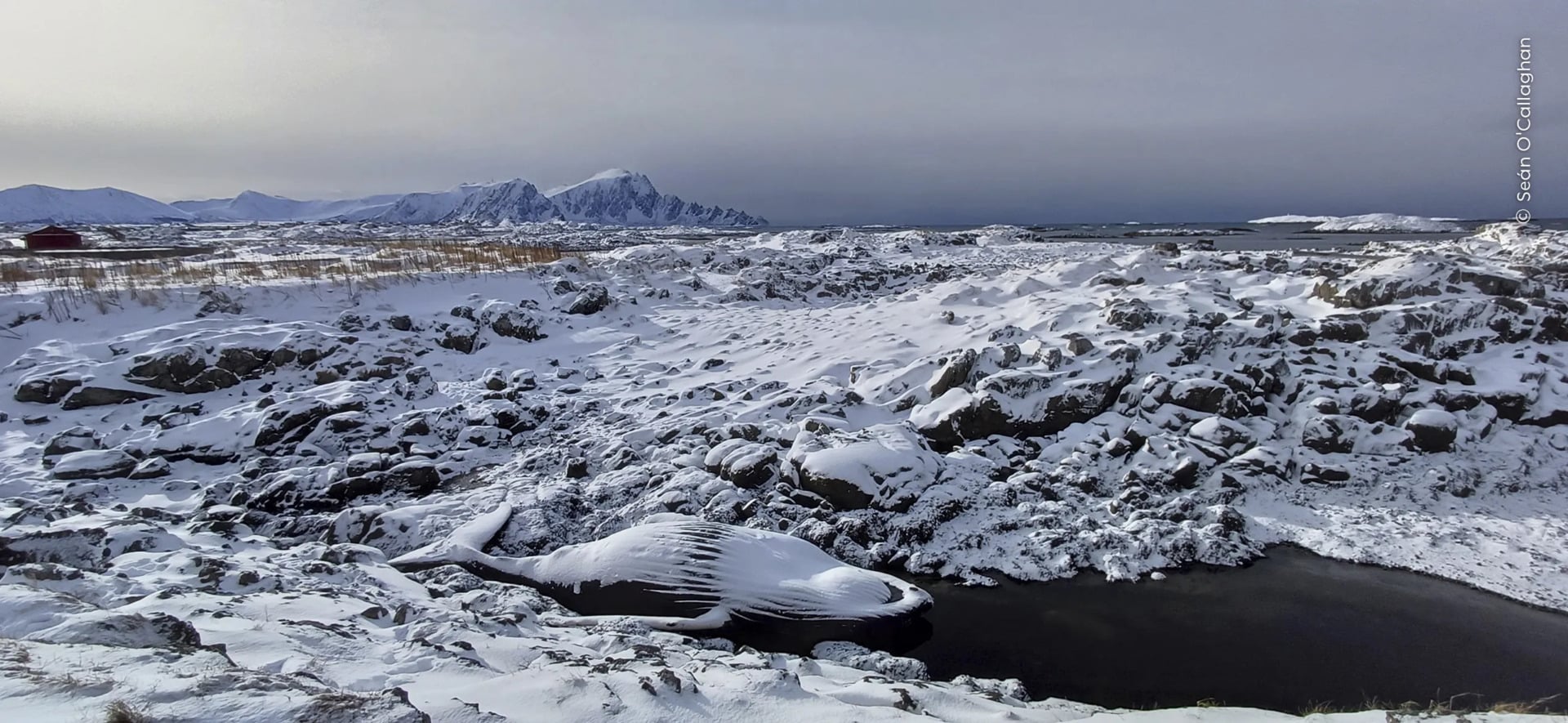
And now, back to some heartbreaking scenes from the wild. This isn’t camouflage; this male humpback whale died and washed up on the coast, where it ended up blending into the snowy rocks. This photograph was highly commended in the “Oceans—The Bigger Picture” category.
Irish photographer Seán O’Callaghan was leading a whale-watching trip when he spotted the dead whale. Closer inspections indicated the whale died after being ensnared in a fishing rope—one major known cause of whale deaths today.
Flight of the Bumblebee
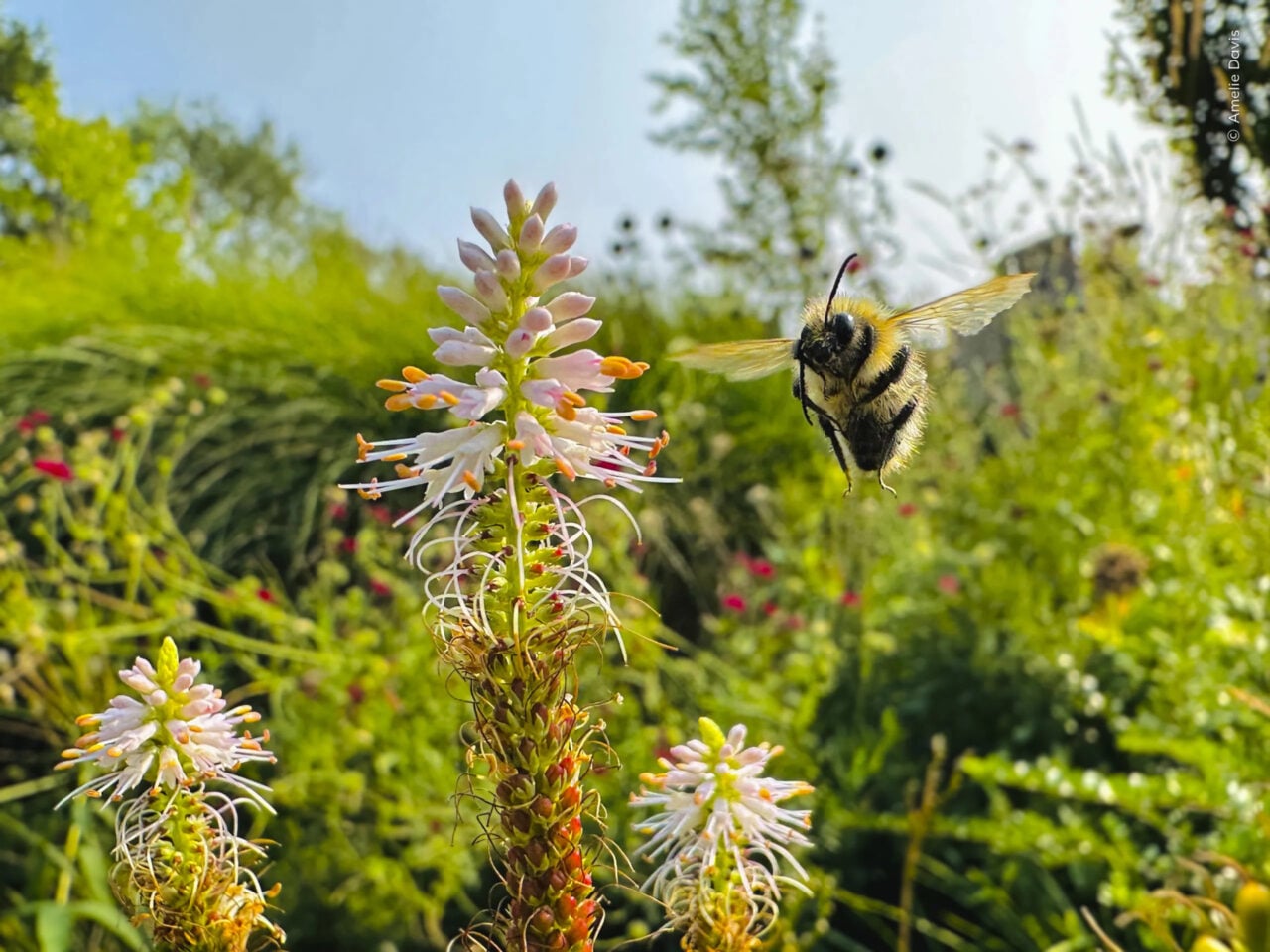
In closing, here’s a lovely photograph from the youngest winner of the competition. Amelie Davis in the U.K. won the category for photographers 10 years and under for her image of the common carder bee in southern England.
According to the image description, Davis had been taking bee photos for a while. This award-winning photograph wasn’t taken with her camera but with her father’s iPhone—a testament, perhaps, to how the best nature photography comes from capturing a sudden, unexpected moment.