Frog (H)army
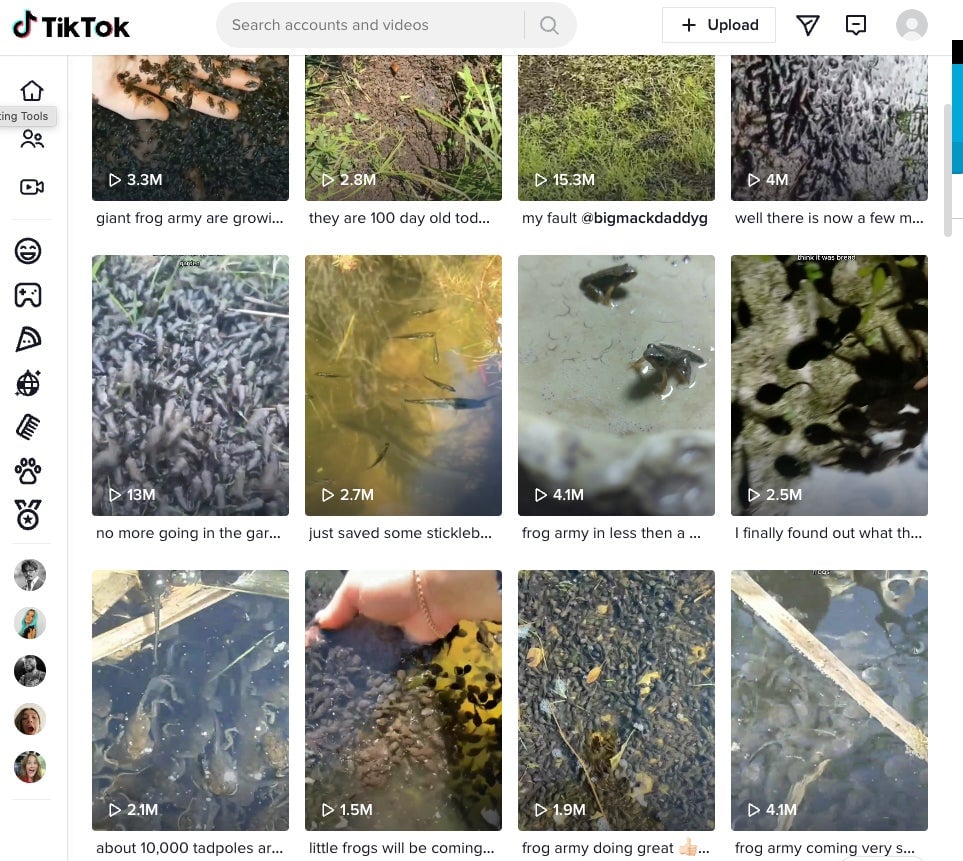
A TikTok account racked up millions likes, followers, and views on so-called “frog army” posts, which alarmed biologists earlier this year. User @thinfrog’s videos appear to catalogue a person collecting amphibian eggs from various water bodies, raising those eggs into a swarm of tiny froglets, and then unleashing them into the wild.
The veracity of the TikTok is unconfirmed, and many commenters have expressed skepticism that the videos are real. Some have gone as far as to identify parts of the footage that seem to be from years-old YouTube videos. But real or hoax, the popularity of the frog army videos concerned experts.
Initially, @thinfrog’s videos seemed to inspire others. Older comments on the posts are chock-full of people asking where they could get their own frog eggs to raise and release. And at least one other TikTok user posted similar content, claiming to have released 100 million ladybugs in New York’s Central Park.
Relocating and releasing animals into the wild without proper approval and permits is a huge environmental risk. Moving frogs, even between ponds in the same zip code, can be extremely detrimental to the local ecosystem and amphibians as a whole. Some species of frog, like American bullfrogs, are considered invasive around the world. They are voracious predators that spread fast and often carry a deadly fungal disease with them. In fact, they’re so bad that bullfrogs are considered one of the 100 worst invasive species worldwide.
And even if the species in the frog army videos isn’t invasive, they could still easily pass along disease to new ponds and streams.
“It makes me cringe,” Tierra Curry, a conservation biologist at the non-profit Center for Biological Diversity told The Guardian. “Instead of helping, [this TikTok user is] actually hurting the animals they’re releasing and all the animals in the environment that they’re releasing them into — it’s creating a vector for disease and invasive species.”