Polar Orbit
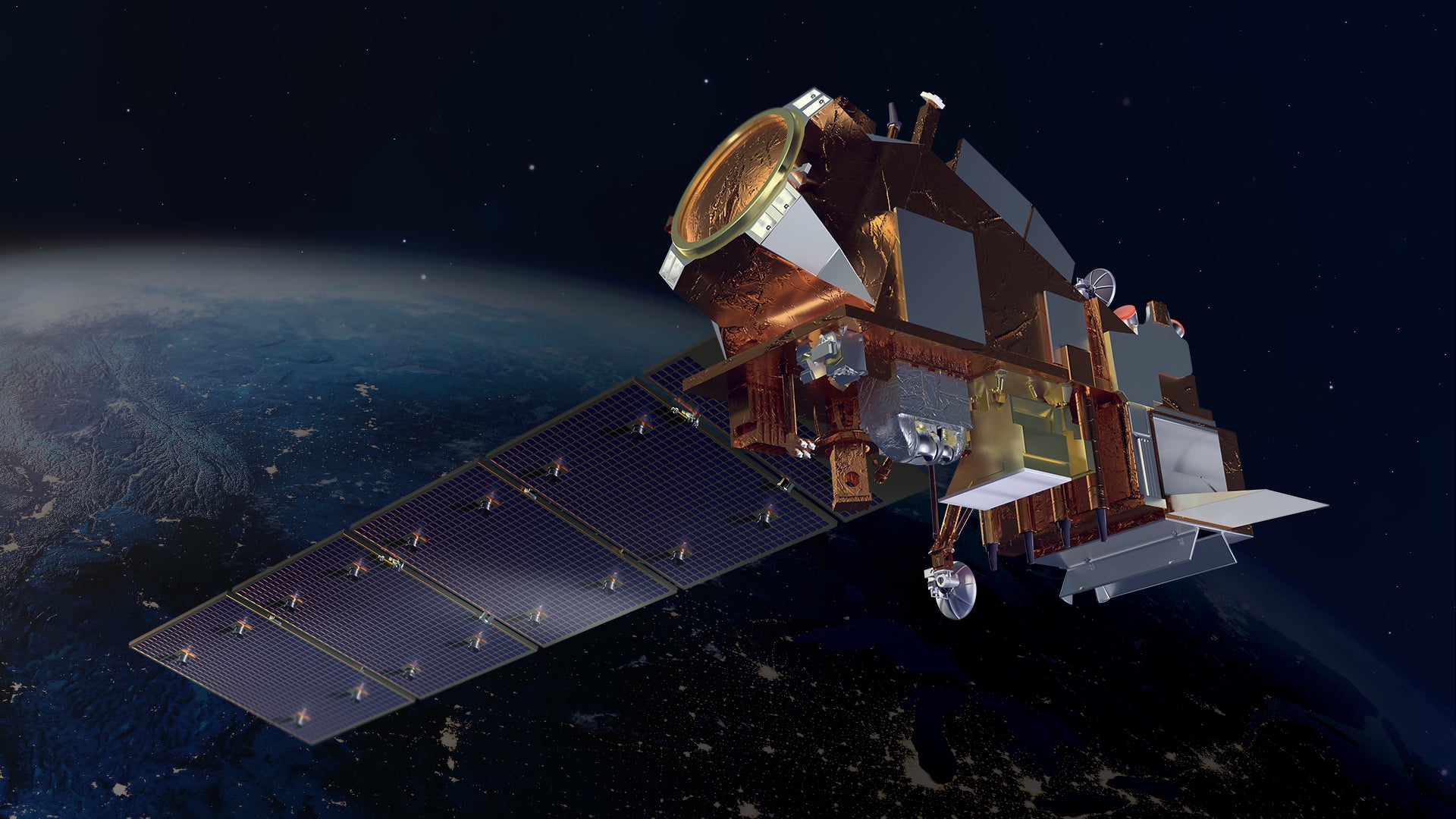
As the name suggests, satellites in polar orbit pass roughly above the poles, moving from north to south rather than west to east. This type of LEO is found at altitudes from 124 to 620 miles (200 to 1,000 km), but it takes more powerful rockets to deposit satellites into polar orbits, as rockets cannot take advantage of Earth’s rotational velocity during launch. Satellites for Earth-mapping, spying, and tracking weather are often sent to polar orbits.
Polar orbits are advantageous because, as our planet turns on its polar axis, satellites can zoom over all parts of Earth every few rotations. Many satellites in NASA’s Earth Observing System operate in a nearly polar orbit, completing one revolution every 99 minutes and spending equal amounts of time in daytime and nighttime. “In a 24-hour period, polar orbiting satellites will view most of the Earth twice: once in daylight and once in darkness,” according to NASA.