A frosty atmosphere

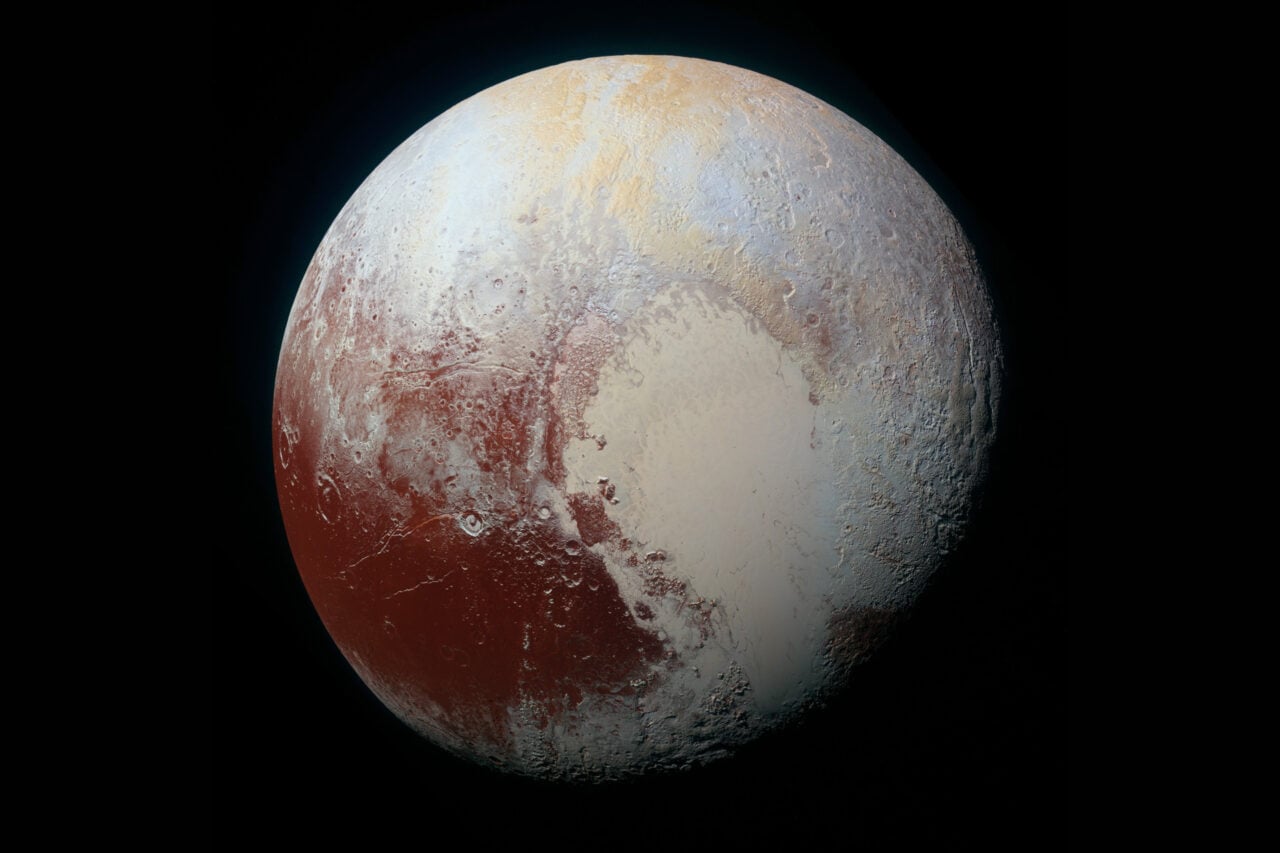
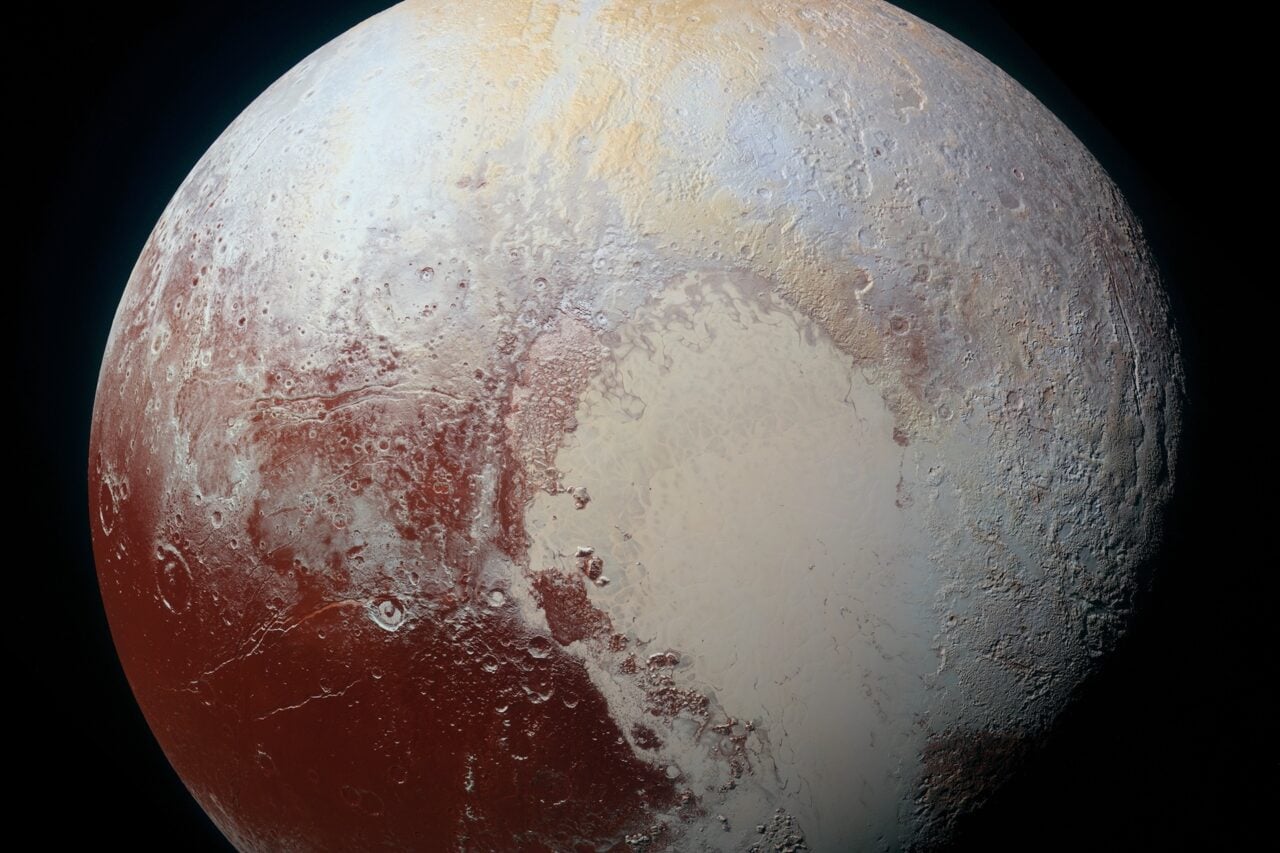
This 2009 illustration imagines the surface of Pluto based on two models astronomers built to understand properties of Pluto’s atmosphere. The atmosphere, discovered in 1998, is very thin but expands when the dwarf planet is closest to the Sun, as frozen gases on its surface sublimate. The pockmarks in this illustration appear to be impact craters, though New Horizons’ visit to Pluto also revealed oblong sunken structures on the surface, which may be rock that collapsed when frozen water beneath the surface melted.
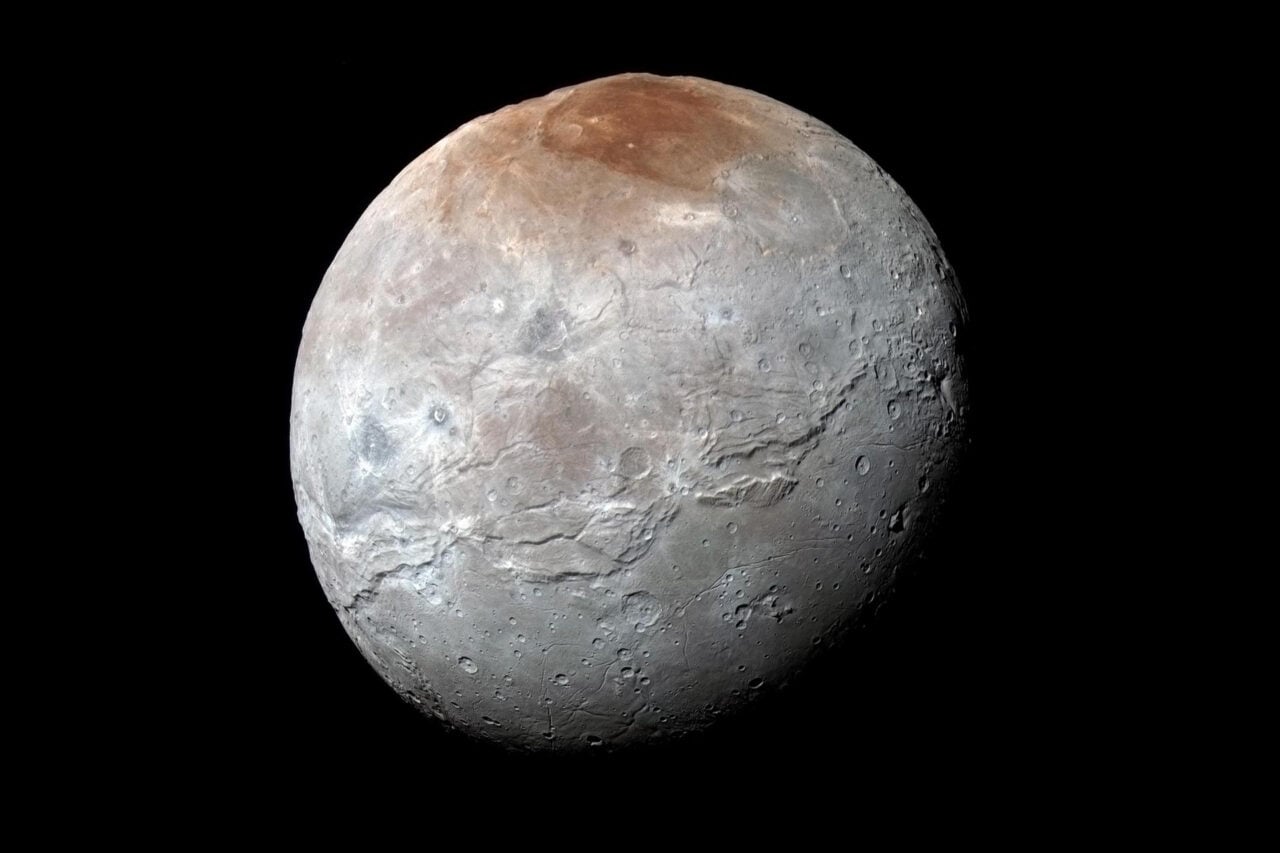
The illustration also shows Charon, one of Pluto’s moons, which orbits at the same rate that Pluto rotates. That means Charon never sets on Pluto and actually sits in the same place in the Plutonian sky at all times. This artist also inserted patches of methane ice on the dwarf Planet’s surface, a discovery that was made in the 1970s.