The Moon is constantly being bombarded by traveling space rocks, its surface recording each collision in the form of craters that never fade in the absence of wind or surface water. Most lunar craters that we know of date back millions, if not billions, of years, making evidence of a recent impact a rare glimpse into a process that is shaping the Moon today.
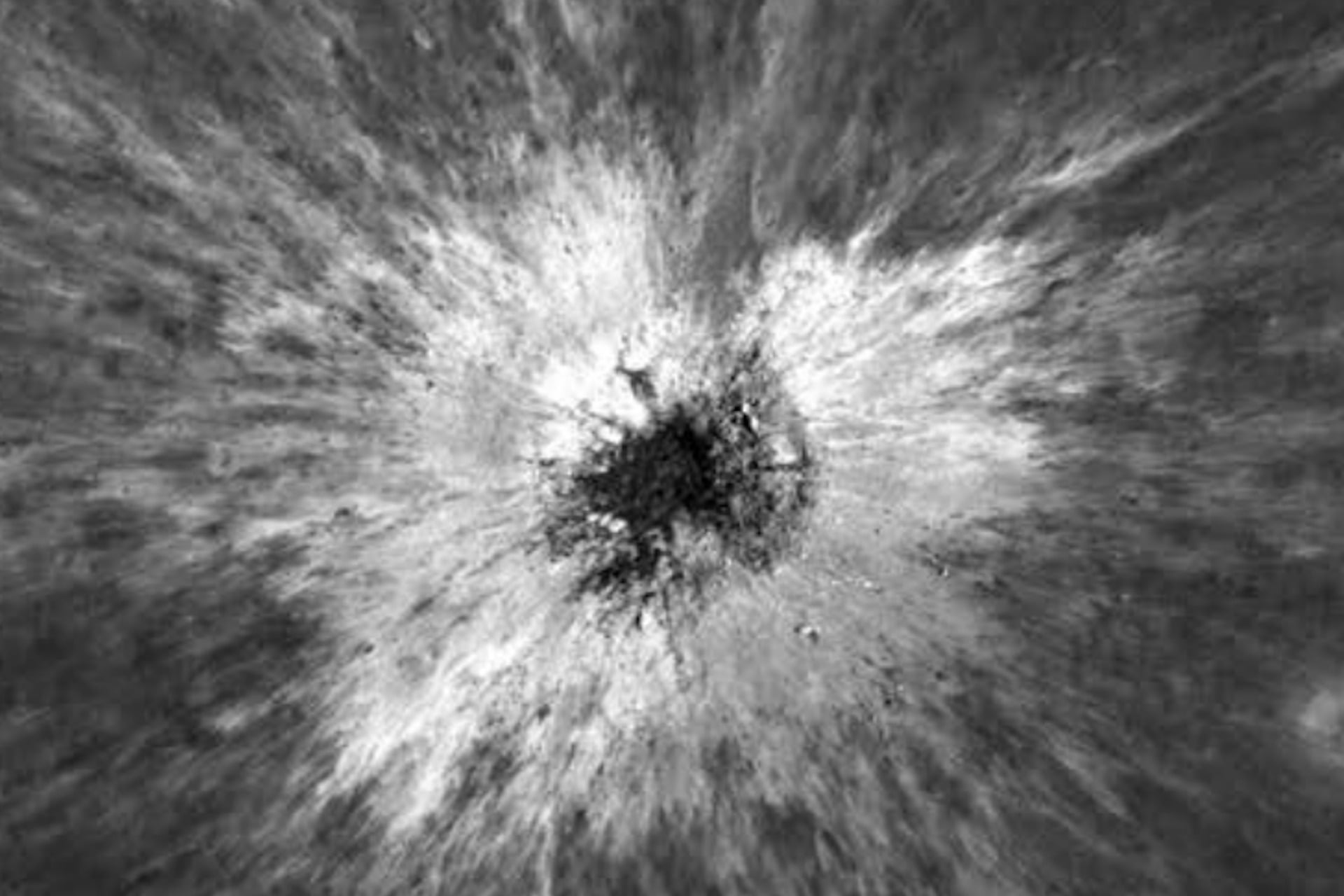
Scientists identified a new crater on the Moon that formed in the late spring of 2024, revealing the violent aftermath of a recent collision on the lunar surface. Using images taken by NASA’s Lunar Reconnoissance Orbiter (LRO), the team behind the discovery analyzed changes before and after the impact to study the rare event.
The findings were presented at the 57th Lunar and Planetary Sciences Meeting in March, and can help scientists better understand how craters form on the Moon and elsewhere in the solar system.
Ready for impact
The newly discovered crater measures around 738 feet (225 meters) across the lunar surface. That makes it the largest impact crater to have formed during NASA’s LRO 17-year-mission. The previous record holder was a 229 feet wide (70 meters) crater, which was discovered in 2013 by comparing before and after images of the same region on the lunar surface.
This fresh scar on the Moon is more than three times as wide. An impact this scale is extremely rare, taking place once every 139 years, according to the researchers behind the discovery. The crater stretches approximately 140 feet deep (43 meters), and is shaped like a funnel with steep walls. Surrounding it are massive blocks of rock that were ejected from the impact, with the largest one measuring at 42 feet (13 meters).
By observing the images captured by LRO, the team was able to observe the direction of the debris and pinpoint where the impact originated from. The space rock may have arrived from the south-southwest direction, traveling fast enough to puncture through the surface and spray a trail of debris northward.
The team also noticed unusually dark material that resembles glass-like rocks inside the crater, which may have been melted by the heat from the impact before instantly solidifying. The melted rocks are an indication of large amounts of energy released upon impact.
Mapping the Moon
NASA’s LRO has been orbiting the Moon for 17 years, mapping the lunar surface in detail to aid future missions. During the duration of its mission, the probe has identified hundreds of newly formed craters on the Moon.
LRO’s extensive dataset revealed that the Moon is being hit twice as often as previously thought. In 2014, the probe itself survived an impact from a tiny meteoroid as it was capturing images of the lunar surface.
Prior to this recent discovery, LRO images identified a 72-foot-wide (22-meter-wide) impact crater in November 2025, which may have formed sometime between December 2009 and December 2012.