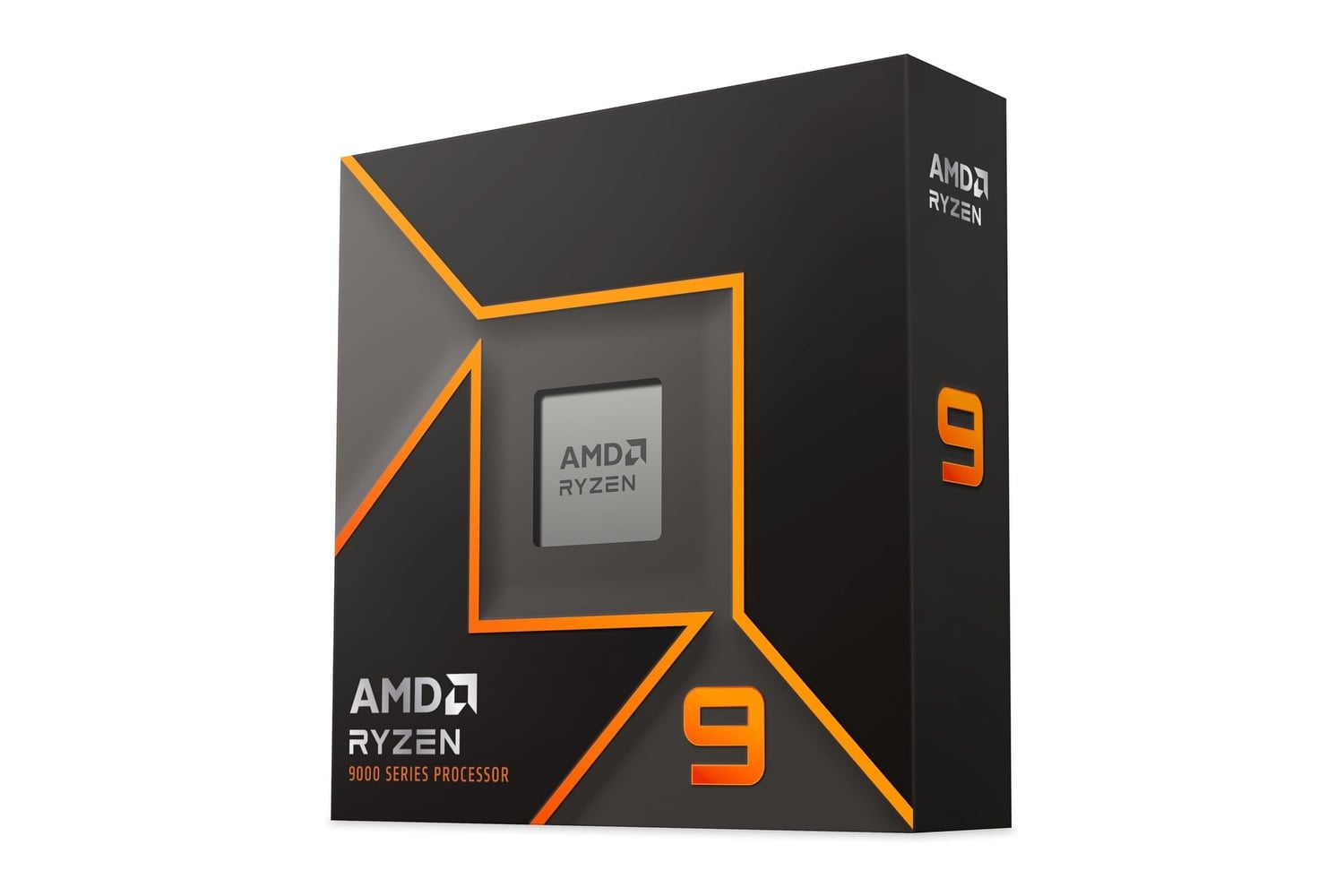
AMD’s Ryzen 9 9950X packs 16 cores and 32 threads into a consumer CPU, making it the high-end desktop model of the Zen 5 series. Boost clocks reach up to 5.7GHz, and it has 80MB of combined cache. This chip uses an AM5 socket, which AMD has said it plans to support until at least 2027. It also has integrated graphics, so the computer will boot even without a discrete GPU.
Head over to Amazon to get the AMD Ryzen 9 9950X for just $500, down from its usual price of $649. That’s a $149 discount and 23% off.
A 16-core desktop processor for heavy multitasking
The 16 cores and 32 threads determine how you’ll use this CPU. Gaming typically uses no more than eight cores, so the extra cores help with video rendering, coding, simulation, or running multiple demanding applications at once. When you’re exporting a video timeline while gaming in the background, it stops being a question of whether you can do one or the other.
Along with offering greater multi-threaded capabilities than the prior generation, Zen 5 increased instructions per clock, letting the chip do more work at the same frequency rather than just running at a higher one. Single-threaded performance increased alongside multi-threaded performance, so games and everyday applications benefit, not just workloads that scale across every core.
The first thing to know about the AM5 socket is that AMD said it will keep supporting AM5 through at least 2027. That can be a great option if you buy a motherboard today and then later purchase another processor. With Intel, changing sockets usually means you get a whole new board and memory too, which can be quite expensive.
The 80MB of combined cache keeps your data close to your processor cores versus in system memory. Your processor cores can access the cache much faster than RAM. Any workload that switches between many large data sets will spend less time waiting on memory, and those workloads will see much faster rendering and compile times. Any game with a very large environment benefits from the same type of performance improvement, because your processor spends less time searching for needed information across the board.
Any display output using integrated RDNA 2 graphics doesn’t require a separate GPU, which makes it useful for testing and troubleshooting or for a computer that doesn’t require a graphics card. Because it draws up to 170W TDP, you will also need a cooling solution. Since AMD didn’t include one, you’ll want to buy a good-quality air cooler or an all-in-one liquid cooler because a 16-core processor under heavy, sustained use produces significantly more heat than most mid-range processors.