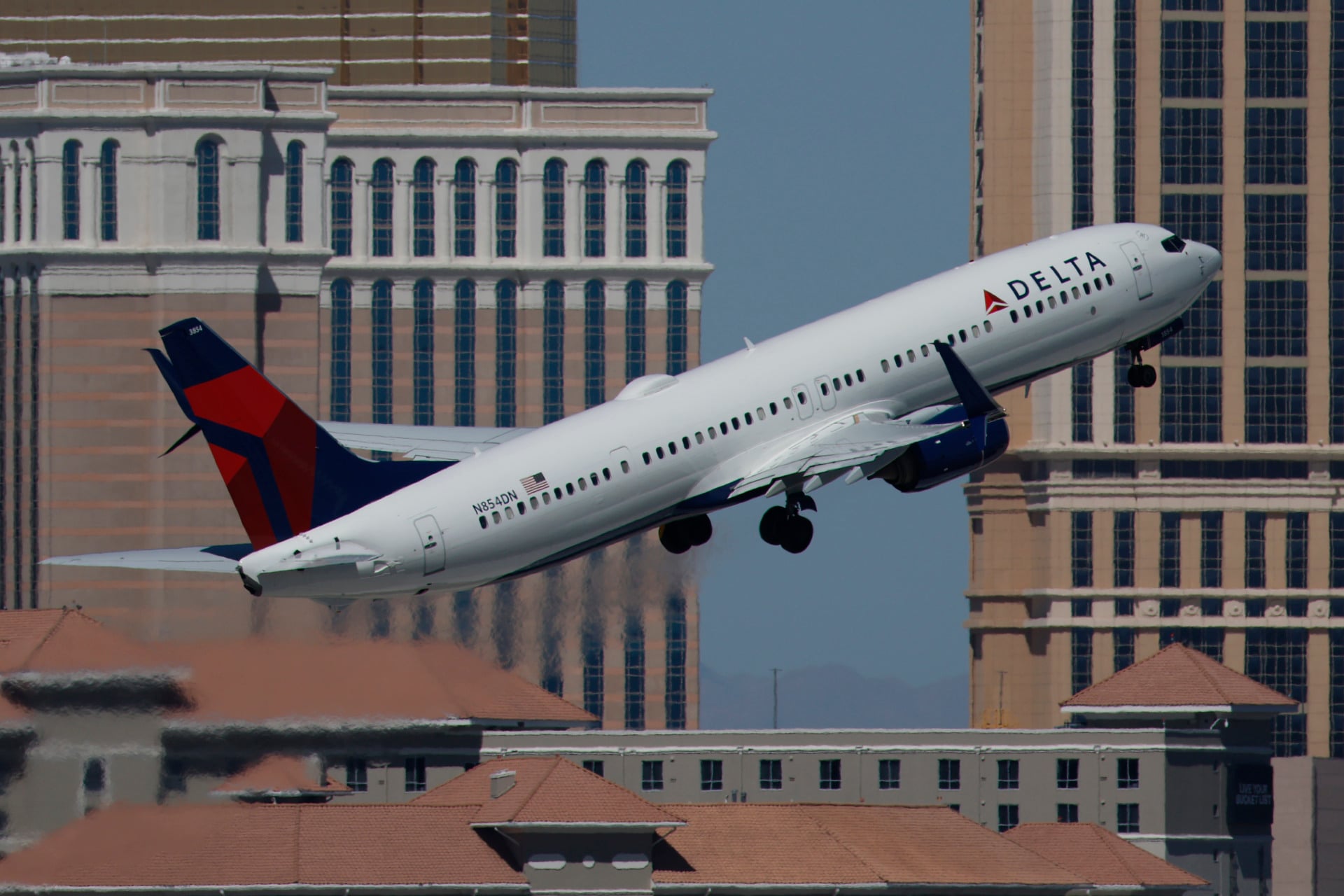
The Federal Aviation Administration (FAA) is expanding use of an $875 million AI tool, SMART, to “assist in managing air traffic across the entire national airspace system,” Ars Technica reported on Thursday—but the agency says that the route-management software will not affect air safety.
The FAA first rolled out the Strategic Management of Airspace Routing Trajectories (SMART) system for Washington, D.C., airspace in September and claims it has already rerouted 180 flights for average savings of 10 minutes and 80 gallons of fuel, Ars wrote (that’s just shy of $345 per flight, at jet fuel rates of $4.31/gallon as of Thursday). The agency wrote on Nov. 10 that after the D.C. test, it will “now use SMART in the airspace of all 22 centers across the country to reduce delays, reduce fuel consumption and improve the travel experience for the flying public.” The tech was already being deployed at some airports.
While FAA fact sheets describe the system as combining “weather patterns, flight paths, traffic flow and controller staffing metrics,” Ars wrote, the FAA also says a D.C.-based team of experts validates findings before they’re ever passed on to air traffic control, and the controllers retain the final decision on whether to accept SMART’s suggestions. Basically, the FAA’s claim is that this system predicts delays and optimizes routes, and that those improved routes are passed on to controllers in pretty much the same process as before.
Sean Duffy, President Donald Trump’s secretary of transportation, has talked up the SMART launch a great deal in recent months, stating it will help with inefficiency. He’s emphasized that there’s “always going to be a human that manages the airspace in America,” according to Politico.
That said, Ars reported that the National Air Traffic Controllers Association (NATCA) told Flying Magazine it was not involved in the “design, testing, or implementation of SMART and therefore cannot speak to its effect on the air traffic control workforce.” Democrats in the House have also expressed concerns about the tool and recently sent a letter to the Government Accountability Office (GAO) asking that it review the FAA’s SMART implementation strategy, performance metrics, and safety risk management, according to Fedscoop.
The concern here appears to be that the Trump administration, which has a slipshod record on air safety and has repeatedly taken heat over delays caused by air traffic control personnel issues, is rushing an insufficiently tested system into widespread use.
“Concerningly, the nation’s frontline aviation safety workforce apparently had little to no input into SMART’s development and have received limited training and information during the current deployment process,” the Democrats wrote. “The use of artificial intelligence within SMART has rightfully raised serious questions about its reliability and safety benefits, particularly on its potential to interfere with decision-making by experienced air traffic controllers or to hallucinate safety-critical information.”
Trump infamously blamed diversity, equity, and inclusion initiatives for the collision of an Army helicopter and passenger jet over the Potomac River in Washington, D.C., that killed 67 people early in his second term—dog-whistling, basically. Trump never walked back the racist remarks, but later blamed outdated air traffic control technology, promising to build computerized systems that would be “brand new—not pieced together, obsolete.”
In mid-September, Politico reported that airlines had “stopped panicking” after Duffy and FAA officials told them the full rollout would only follow a 90-day test period. (It’s not clear why the FAA is outpacing its own professed timetable.) That said, Politico wrote the panic was also driven by a lack of clarity about what the tool actually does, and airline executives were relieved to learn SMART will “simply generate alternative route information that is passed through the FAA’s existing systems and procedures.”
The concerns didn’t appear to center on safety, but on the risk that an abrupt transition could be rocky, especially if SMART doesn’t work as advertised. Politico wrote airline brass had warned the system could overcompensate for predicted delays by canceling or rerouting flights unnecessarily in a sort of self-fulfilling prophecy. One airline industry official told Politico it was “a big relief” that the system didn’t inject itself into day-to-day ATC operations and expressed “some trepidation” over the feasibility of integration if it had.
Ars wrote that the FAA gave The Dallas Morning News an example of one successful reroute of a cargo plane that saved time, although the agency didn’t provide any specifics or information about its use on passenger flights. Ars also noted American Airlines CEO Robert Isom (a known Trump flatterer) has praised the tool.
This isn’t the only tech upgrade the FAA is working on. The agency declared earlier this month that it will finally rid itself of dependency on the 55-year-old floppy disk format by 2028.