Jellyfish

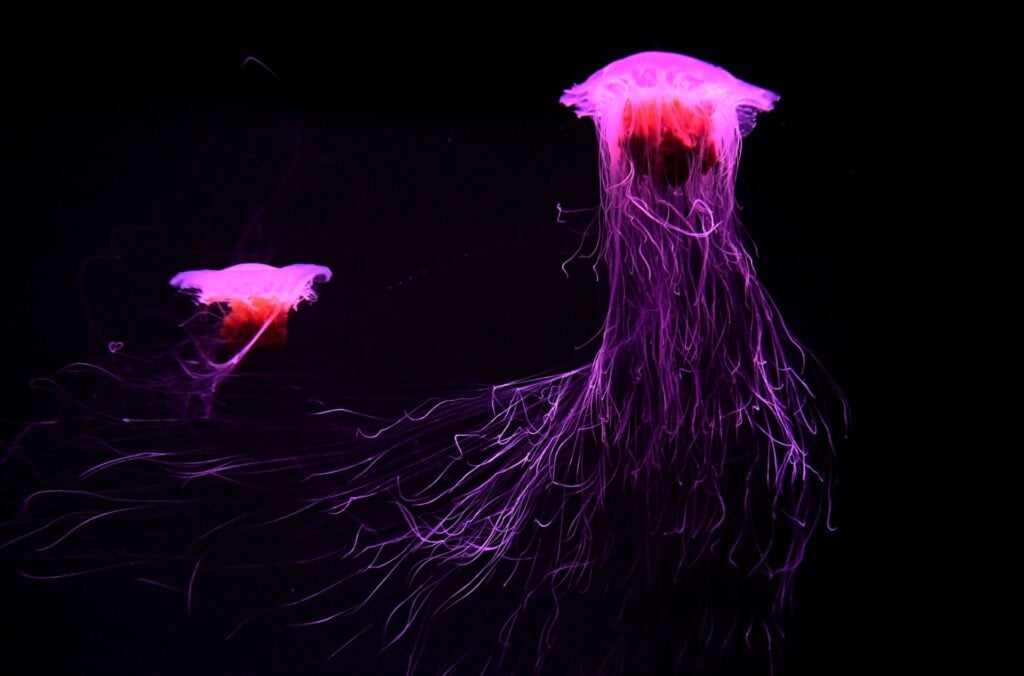
It’s not all bugs (and armadillos): Some species of jellyfish are in bloom, too. Unlike basically all other marine life, certain jellyfish seem to be doing just fine with hotter ocean temperatures and the corresponding lower aquatic oxygen levels. In fact, some research has suggested that ocean warming might help jellies grow and mature faster, making for shorter generation times and increasing populations.
Not all jellyfish are doing equally well, but two of the species that are benefitting most are moon jellies and warty comb jellies, neither of which sting. However, even non-stinging jellyfish can cause issues for people, as in the cases of jellyfish clogging the cooling pipes of nuclear power plants.
A decade ago, 62% of the world’s marine ecosystems were experiencing increasing jellyfish abundance, according to a 2012 study published in the journal Hydrobiologia. Reports of jellyfish swarms have continued to pop up around the world since.
However, jellyfish do proliferate cyclically, and fears of an eventual ocean of “jellyfish soup” are probably overblown. Plus, if jellies are really popping off, climate change is unlikely to be the only human-caused factor in their rise. Pollution can also give jellies a boost by promoting the growth of their algal food.