Opossums
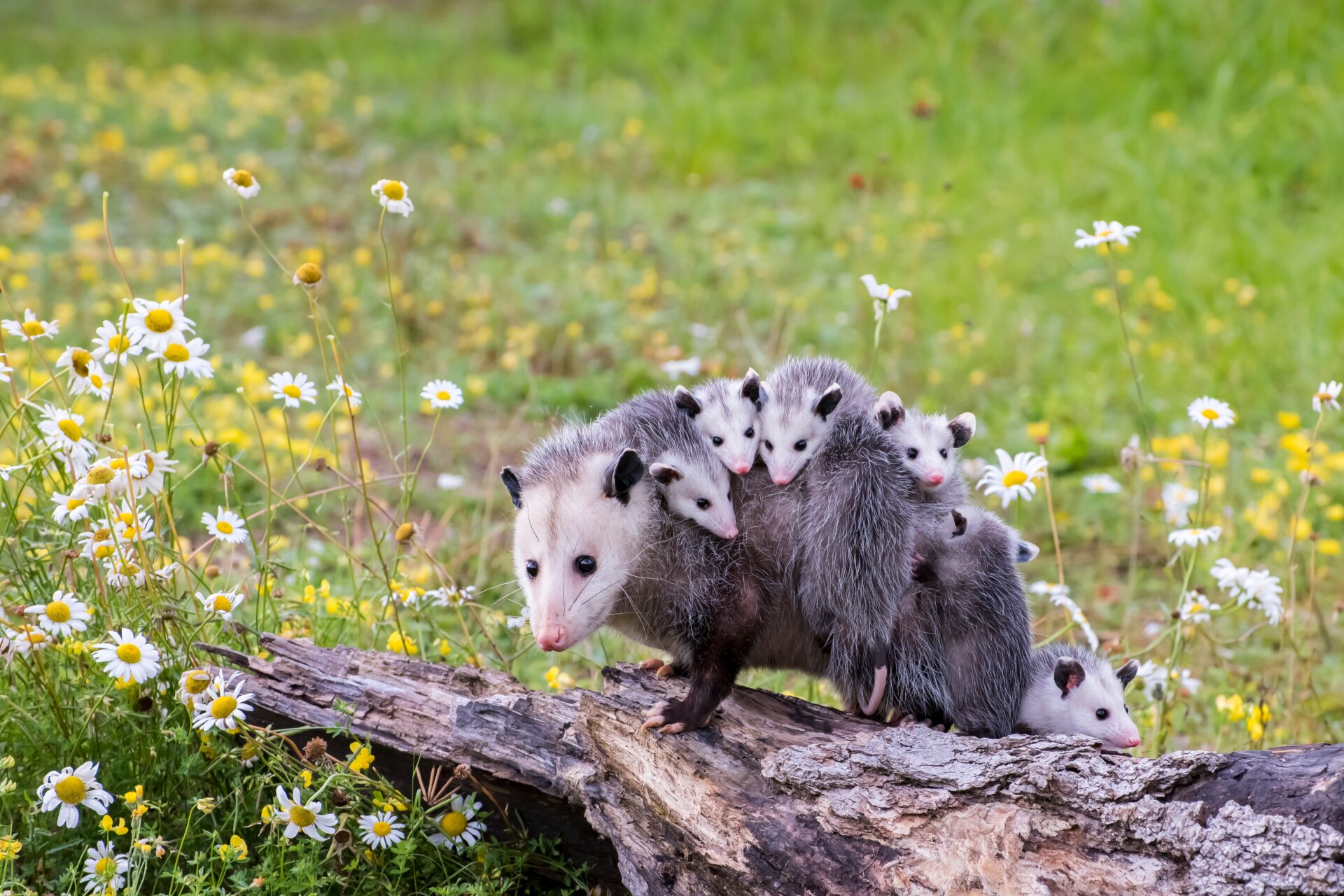
Alright, we started with one cute mammal and we’re ending with another. Think of it as the opossum palette cleanser (pronouncing the “o” is optional). The Virginia opossum is the only marsupial found north of Mexico, and it’s the reigning champ of cute little faces. Like armadillos, opossums have been spreading north (most recently into Michigan’s Upper Peninsula). That opossum proliferation is thought to be facilitated by urbanization and climate change. And of course, that ongoing expansion has its ecological downsides.
In Oregon, where opossums were introduced in the early 1900’s, they’re considered an invasive species. Elsewhere, some wildlife experts are worried that opossums could prey on sensitive species or possibly spread disease. But unlike armadillos, opossums seem to have some clear upsides, too.
Opossums very rarely carry rabies, compared to other wild mammals like raccoons. Plus, they are effective scavengers, cleaning up carrion and keeping the levels of dead stuff in check in the environment (which can help to stop the spread of some diseases). Even in Oregon, where they’re invaders, opossums are appreciated for preying on venomous rattlesnakes. But contrary to popular belief and memes, they may not be the tick vacuums they’ve been made out to be. Ah, well.