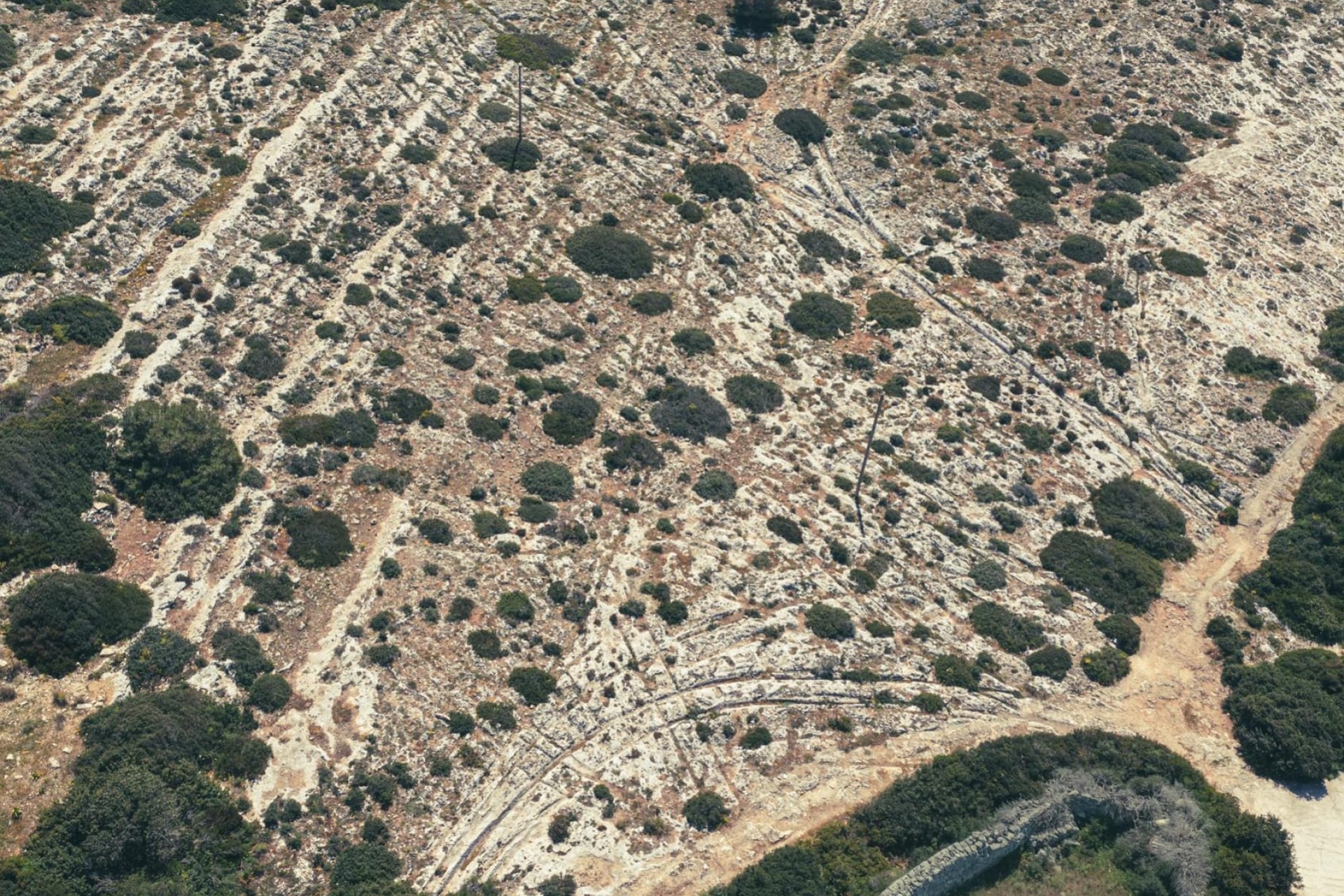
The Maltese archipelago has its own version of the Nazca lines: cart ruts. For centuries, archaeologists have puzzled over thousands of deep grooves etched onto the bedrock, forming an odd network of lines resembling a railway. The mystery grew as some suggested these “railways” were from prehistoric times—but a new study challenges this long-held hypothesis.
Joel Grima, a PhD student at the University of Malta, has made the Maltese cart ruts the central focus of his doctoral research. Accordingly, Grima has been deep in the trenches of the cart rut lore, and to Gizmodo, he explained that at first, he also favored a late prehistoric—specifically the Bronze Age—origin for the tracks. But as he dug further into evidence, he was “completely swayed by the sheer volume of evidence” supporting a later Classical date for the cart ruts. Grima recently published his findings in the Journal of Archaeological Science: Reports.
The paper “highlights how much of the supposed evidence for a prehistoric age is in fact comparatively indirect and circumstantial,” Grima told Gizmodo. “In light of this, it is very likely that a significant proportion (and possibly all) of Maltese cart ruts date to post-prehistoric periods.”
The Maltese cart ruts
According to the paper, cart ruts like those found at Malta are a “firmly global phenomenon,” as similar tracks exist in Europe, Asia, and North America. However, these instances tend to be found within urban archaeological sites, making it easier for researchers to date and contextualize them.
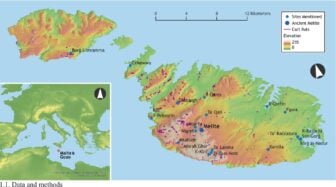
What makes the Maltese ruts unique is their sheer density—which, considering the relatively small size of the islands, is “rivaled by few others,” Grima explained. To put this in perspective, the latest study addresses 2,628 distinct tracks based on over 200 different sites across the Maltese archipelago, which overall adds up to roughly 31 miles (50 kilometers).
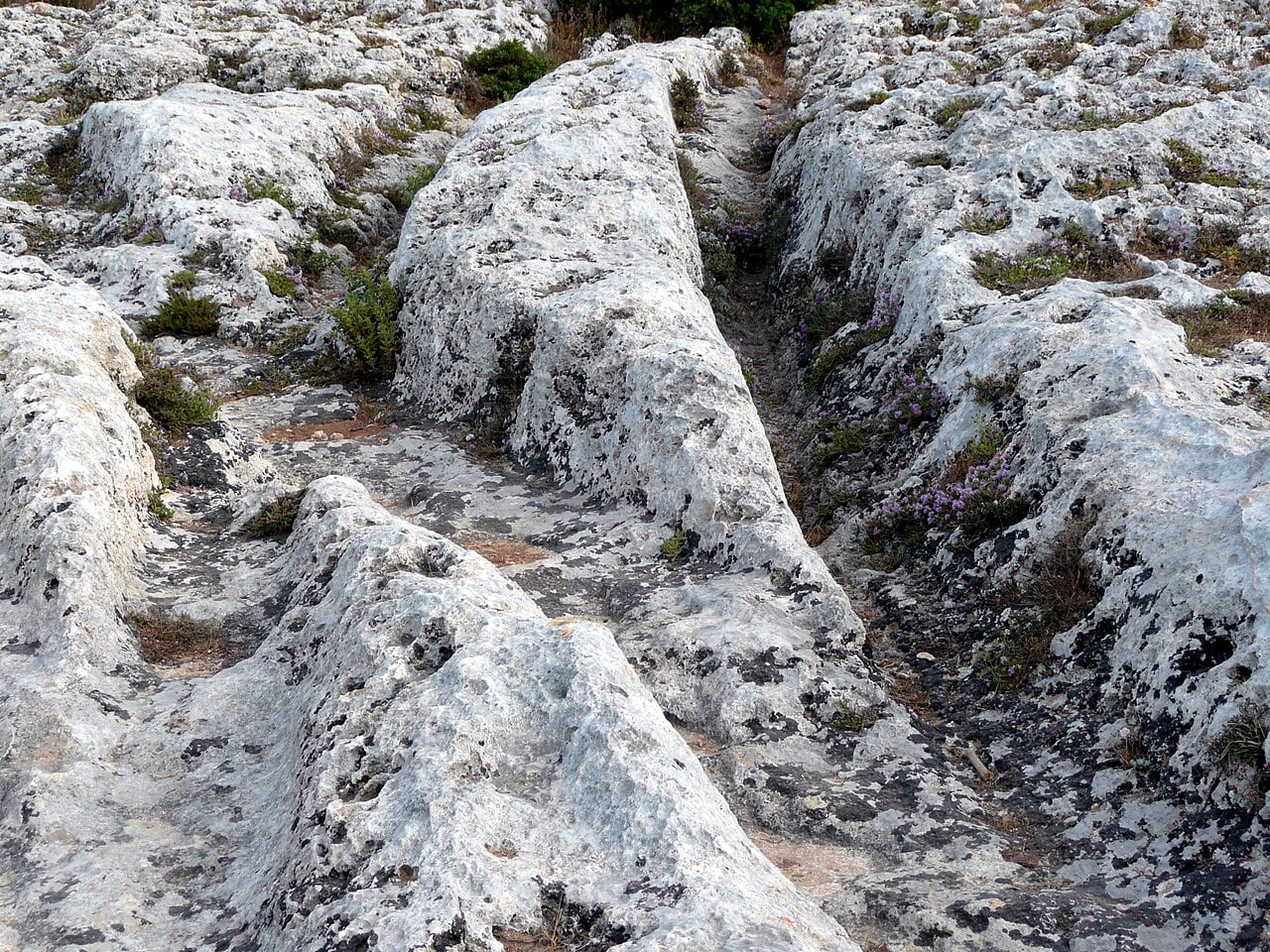
Most of these tracks are in clusters, with the largest containing over 250 pairs that add up to 3.7 miles (6 kilometers) laid end-to-end, he added. Each groove can be as deep as 23.6 inches (60 centimeters), and the distance between each pair ranges between 43 and 59 inches (110 and 150 centimeters). Some of them do appear connected like a railway network, whereas others randomly trail off into the sea.
Naturally, historians and archaeologists have been greatly fascinated by the cart ruts. But for a long time, the popular consensus was that the ruts were formed during Malta’s prehistory (between 5200 and 750 BCE), partly due to the past work of influential figures in Maltese archaeology, as Anthony Bonanno, also an archaeologist at the University of Malta, wrote in a commentary in 2020. However, Bonanno added, statistical evidence strongly suggests that the ruts are associated with ancient quarries from between 750 BCE and 500 CE.
Old, but not that old
Grima’s analysis also supports a later date for the cart ruts. For the study, Grima conducted an extensive review of stratigraphic and contextual evidence on the cart ruts. He also visited the sites not only to personally study the tracks but also to create digitized models he could use later to compare the structures with other relevant formations. Grima’s review dated a sizeable portion of the tracks “securely to the classical period,” which the paper defines as spanning the Phoenician colonization of Malta (700 BCE) to the end of the Byzantine period (870 CE)—a stretch of time that includes, but extends well beyond, Roman rule.
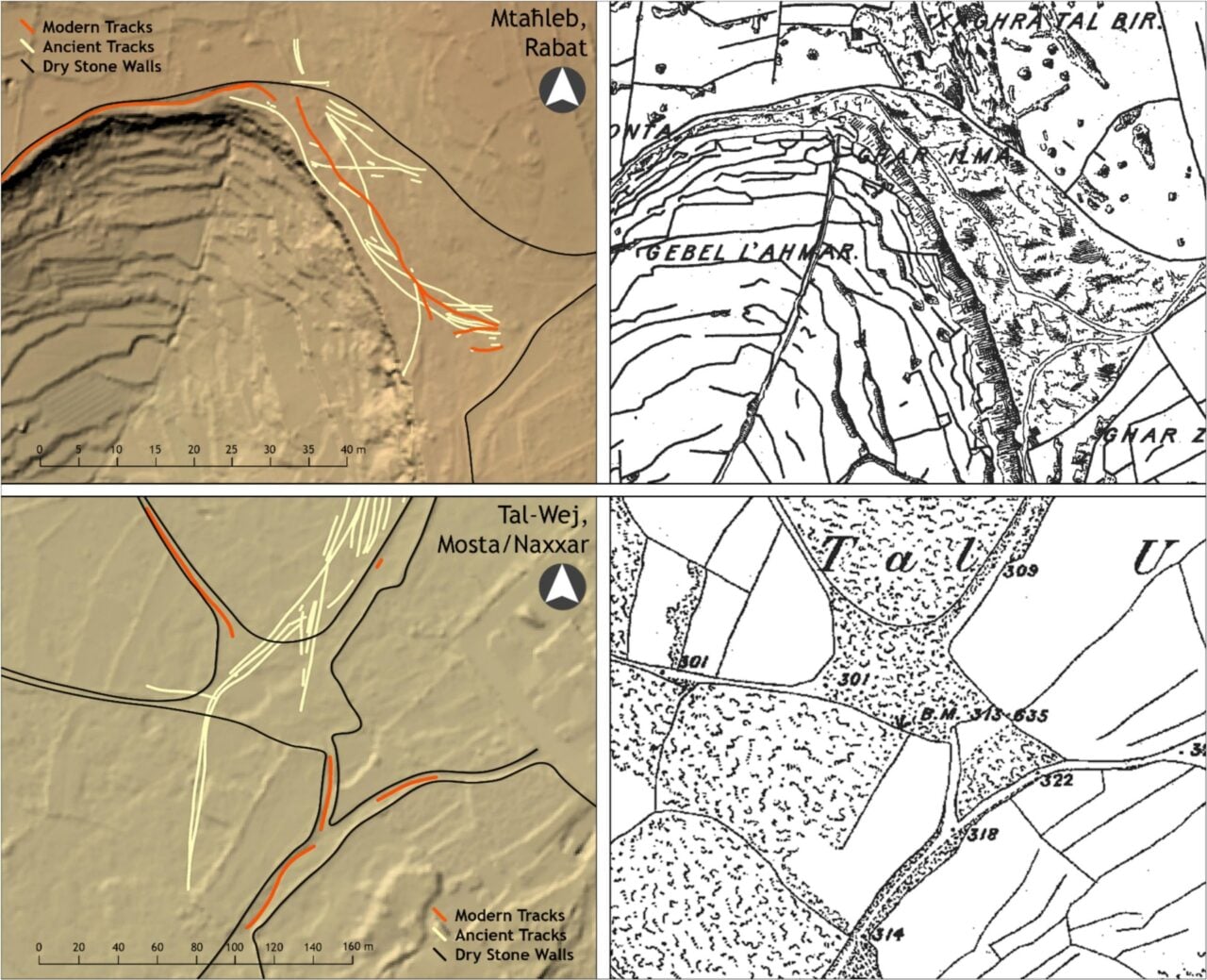
On the other hand, researchers do generally agree that the Maltese cart ruts are from antiquity. Also, it’s very likely that their formation “spanned several cultural phases and many centuries, if not millennia,” according to the study. But insofar as we’re only considering reliable, direct dating evidence, a “considerable proportion” of the numerous cart ruts “lies firmly within the Classical period,” Grima wrote in the paper.
Rocky lines
That said, the age of these cart ruts is only one of many unanswered questions out there, Grima told Gizmodo. For instance, the community still disagrees on whether ancient humans intentionally cut into the bedrock or if the grooves naturally emerged from years of wheels traveling over them. The type of vehicle—wheeled carts or slide cars—and the distribution of the trade network are also points of contention, he added.
On that note, the latest paper shows how far experts have come in understanding these mysterious tracks—even if they still don’t agree on many things. But progress has been real. The cart ruts are an example of how “even questions that long seemed unanswerable can in fact be elucidated through critical analysis of available evidence and the implementation of ever-evolving scientific techniques,” he concluded.