This week, LG invited me to stare at its most recent Canvas TV, mini-LED screens with matte displays that debuted back at CES 2026. It turned out LG was trying to promote its partnership with the Metropolitan Museum of Art in New York City, where—if you pay for an LG Gallery+ subscription—you get access to slideshows of select paintings shown in the renowned museum. The Met has similar, ongoing deals with Samsung for the Samsung Art Store usable on its competing The Frame series.

There’s nothing wrong with LG’s first Gallery TV. Facing head-on, the matte filter on the screen may honestly trick a passerby into thinking it’s legitimate oil on canvas. Closer inspection reveals there’s no actual texture that makes seeing these paintings in real life such a transformative experience. It may not also have the best viewing angles or brightness, based on my limited time with it. Samsung’s The Frame Pro is still one of the few of its kind that could potentially replace your actual TV.
But that’s not why you’re buying one of these. You want a screen that can show art on a wall with a degree of verisimilitude. LG’s 55-inch Gallery TV currently goes for $800 at Best Buy. A Hisense Hi-QLED S7 CanvasTV, the company’s smallest own art TV line, sells for a similar amount on sale. They’re obviously trying to compete with the price of Amazon’s most recent Ember Artline screens. In reality, there is little to distinguish between any of these specialized 4K QLEDs. They all come with replaceable frames and screens that aren’t much good for watching any content save for static images.
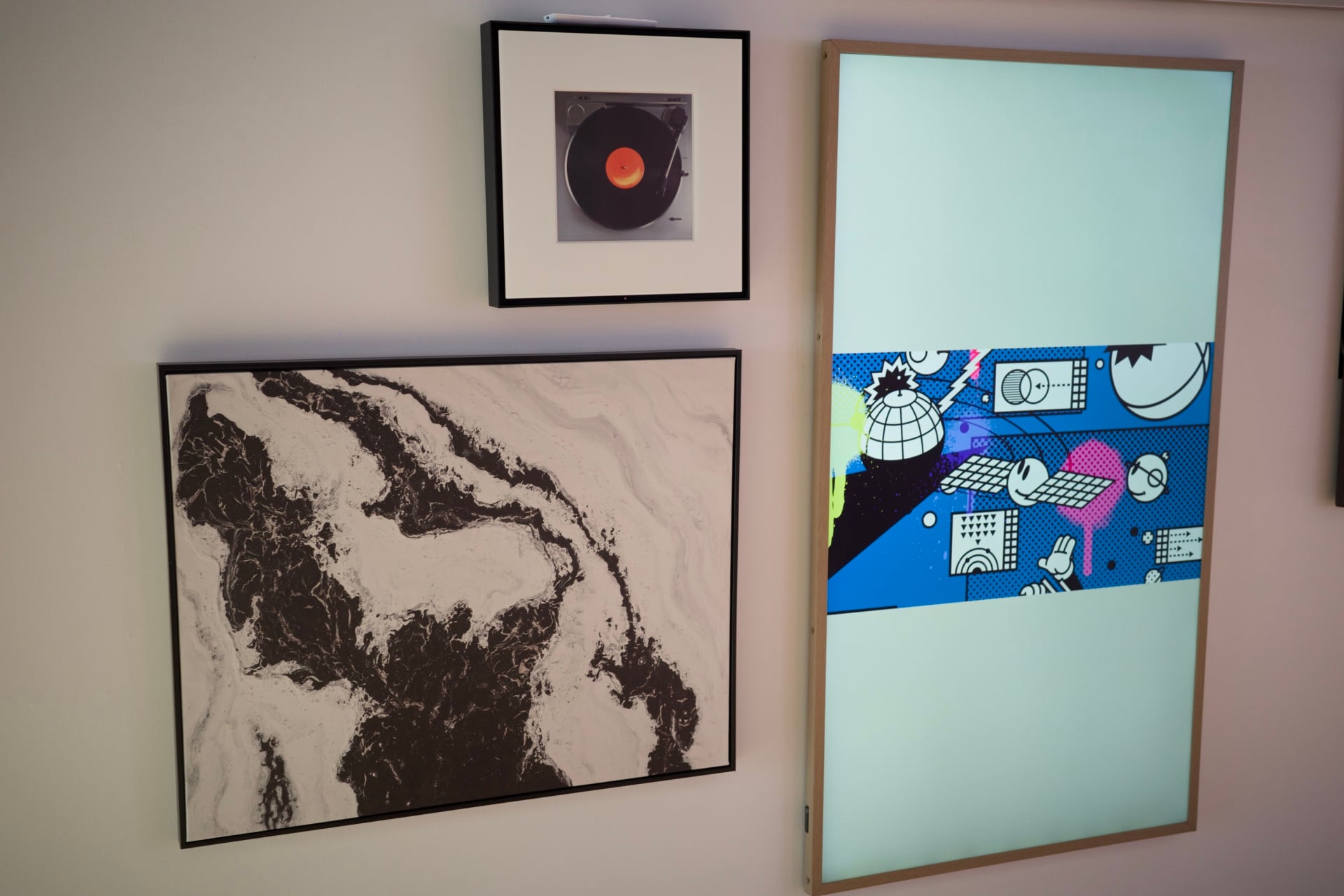
With so many The Frame knockoffs kicking about, I’m stuck wondering: Where’s the screen for me? I live in a small Brooklyn apartment, and my walls are already covered in prints from deserving artists. But wouldn’t I, too, want to hang my favorite Courbets or Manets from my wall? I cannot possibly fit a 55- or 65-inch screen up in my apartment. Even if I could, I’d be dealing with the renter’s dilemma of whether or not to bang holes into my wall and possibly suffer the wrath of the landlord. One of my work colleagues told me they had bought a used Frame TV and had left it in its box for an entire year, concerned about where and how to hang it in his Brooklyn abode.
Why aren’t companies thinking of screens that the rest of us can actually consider using, something that’s not $800 or more? Back at IFA 2026, I finally got to spend a few precious minutes in front of Hisense’s S5 DécoTV, a 1080p 32-inch small-form-factor screen that, unfortunately, cannot hang up on a wall. It’s also not compatible with Hisense’s own Art Mode for showing curated artworks. Samsung currently sells a 43-inch The Frame TV measuring 38 x 22 inches. That’s more doable in my small space, but I need something that’s even more compact or, better yet, purpose-built for most canvas sizes.

Edge-lit art TVs aren’t even the best format for displaying these works. LG showcased Edgar Degas’ The Dance Class on its 65-inch TV (49 inches wide and around 30 inches high). The actual painting is only around 32 x 30 inches unframed. Let’s not forget that most classic art canvases exist in a more square 4:3 aspect ratio, wholly different from most landscape TVs at their 16:9 aspect ratio.
What we actually need is a low-power screen that’s built specifically for this kind of artwork, something that doesn’t take up loads of space or power and can better fit the true scale of artwork. The first screenmaker to actually invent a lifestyle display built for folks with less space will find their screens adorning my walls.