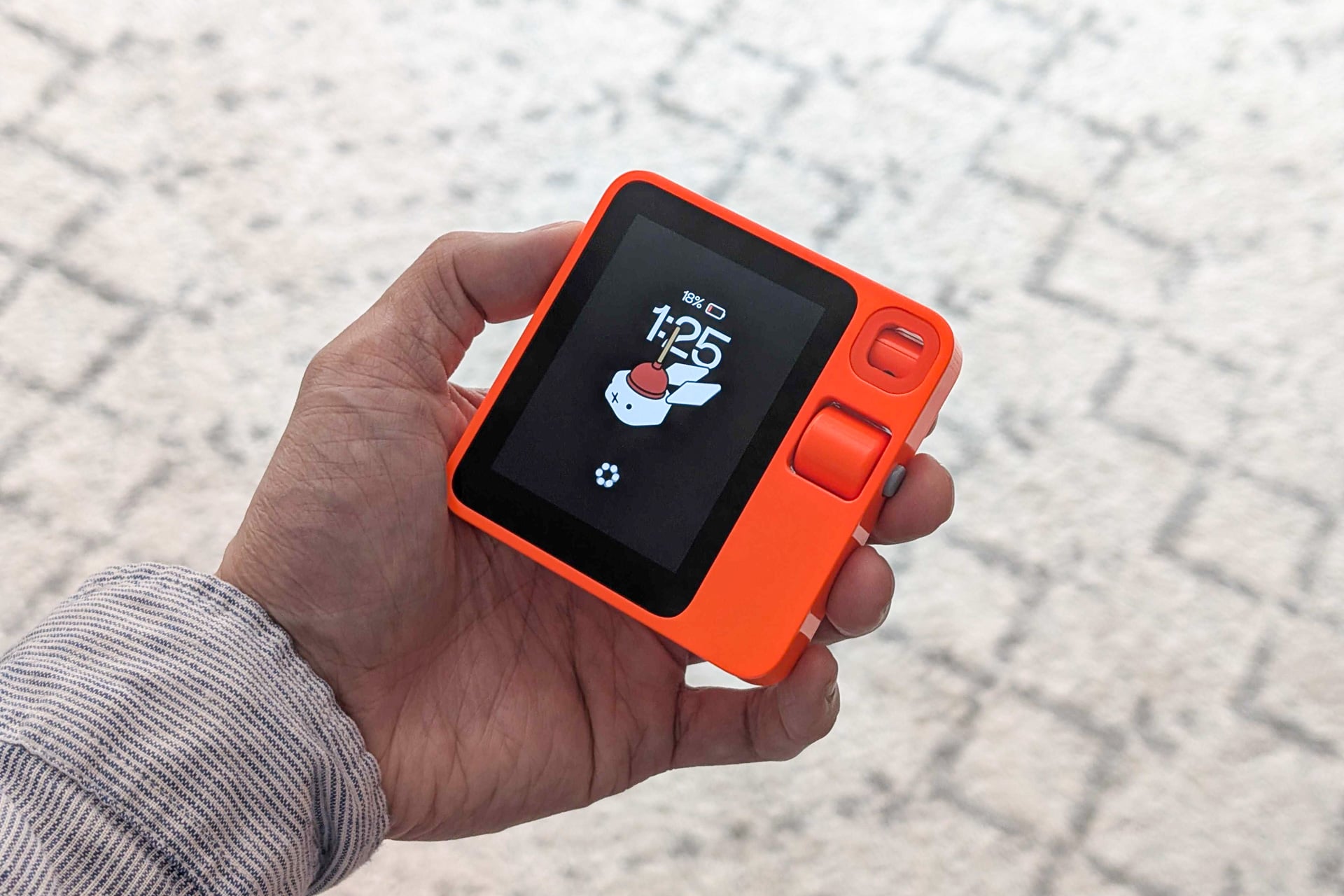
There have been quite a few AI gadgets released into the world at this point, and lots of them are fairly similar. You’ve got AI pins like the kind popularized and eventually made notorious by Humane; you’ve got pendants that hang around your neck like the kind made equally infamous by companies like Friend; you’ve got whatever the Rabbit R1 is.
This week, at Microsoft’s annual Build developer conference, we got something new, something groundbreaking, something… badge-y. In fact, what we got is an AI gadget that’s also a badge. I’ll wait for your vision to come back into focus—it’s a lot to take in.
If you sense a bit of sarcasm, it’s because AI gadgets have given me plenty of reason to approach new ideas with eyes firmly rolled, and Microsoft’s offering (concept or not) feels like more fuel for that skeptical fire.
First, let’s recap: Microsoft’s badge concept is exactly what it sounds like. A badge-like piece of hardware you wear around your neck. It’s not just any badge, though; it’s got tech crammed in it. It’s got a touchscreen, fingerprint reader, Wi-Fi and 5G connectivity, a microphone for voice commands, and my personal favorite, a side-facing camera. To demonstrate this last bit, Microsoft technical fellow Steven Bathiche pointed the badge at the Build crowd and said, “Copilot, find some good shots from this, clean them up, and then send them to me for me and my team to review.” Cool? He didn’t show the Build audience what the result looked like, which is telling. How well did Copilot clean up the images?
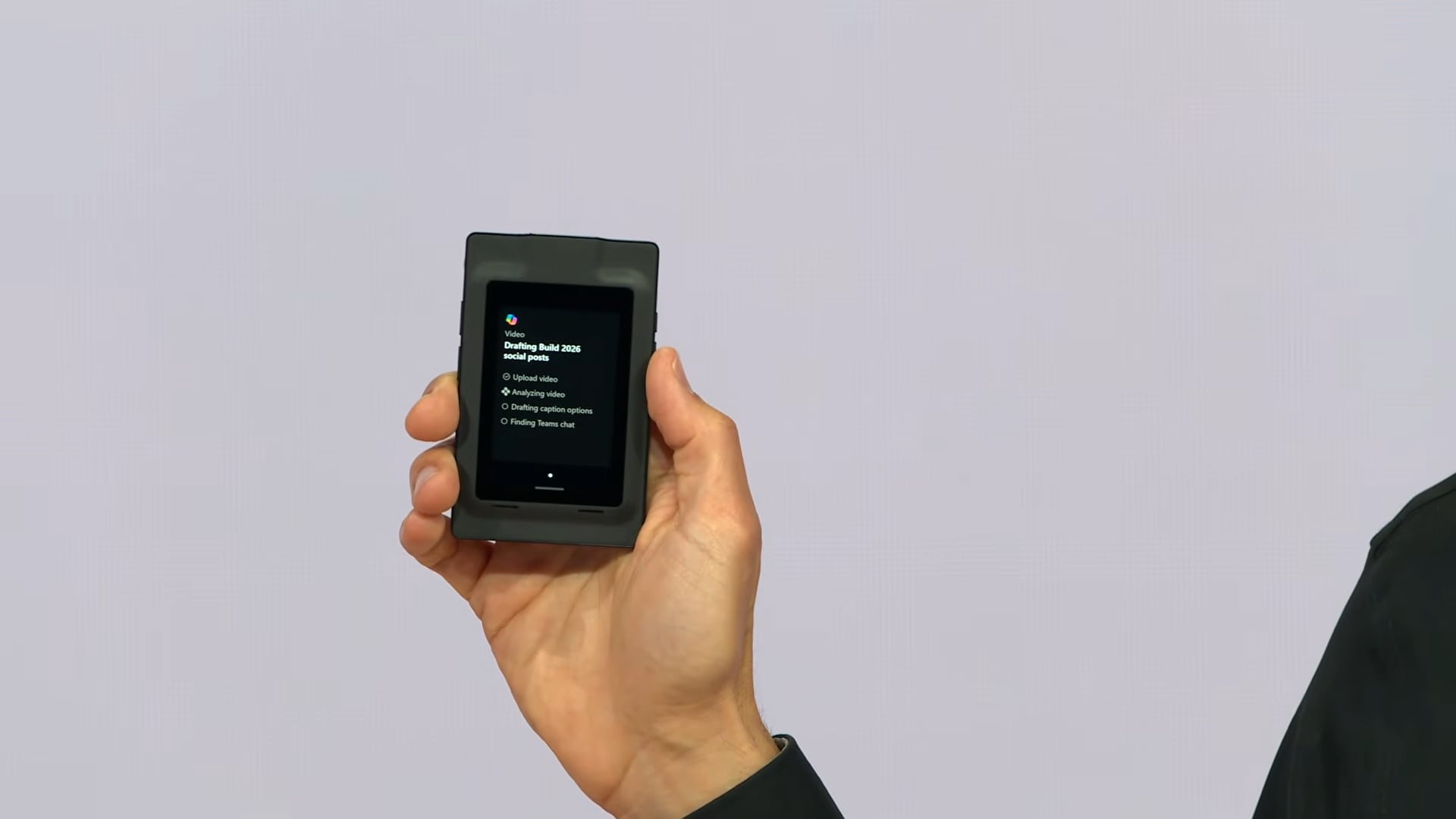
All of this hardware is designed to funnel the wearer back to something Microsoft is calling Project Solara, which is the company’s OS for agentic AI, aka AI that can actually do actionable stuff for you. Microsoft envisions its badge as an enterprise product, designed to be draped around the necks of nurses, people in retail, and other hard-working, salt-of-the-earth folks like us.
With an AI gadget (badget?), workers can do things like record conversations and use the camera to “better understand the world around them.” To be honest, I’m not super clear on what people are supposed to be doing with an AI badge, and I’m not certain that Microsoft knows either.
In the company’s explanation of its badge, as well as another desktop concept that looks like a smart home hub, Microsoft gives some indication of how the hardware can be used, but not much outside of what I just told you. It’s intentionally vague, but I’m also not sure that Microsoft has any choice but to be vague in this case. There’s so much to figure out about AI hardware, and Microsoft isn’t the only one struggling to crack the code.
OpenAI, for example, also has big plans for the next generation of AI hardware, though its efforts in actually getting those plans on a consumer-facing runway don’t seem to be going smoothly, even with the help of Apple design legend Jony Ive. The company’s first crop of AI-focused hardware, according to a report from the Financial Times, has hit snags, and some of those potholes seem like they’re of the serious variety—struggles in mustering the necessary compute power to make the devices work, for example. Other issues have centered around UX, like getting its voice-first AI gadget to understand when to shut up and when to listen.
OpenAI hasn’t revealed much in an official capacity about its hardware, but it’s clearly still interested in the space. This week, Wired reported that, with OpenAI funding, Opal, a company that formerly focused on bespoke webcams, started a pivot towards AI gadgets. Those efforts will begin with an “AI-powered audio product,” apparently. What’s even more interesting is that Wired states that OpenAI CEO Sam Altman is currently testing the mysterious AI audio product, as well as other executives at the company. It’s worth mentioning here also that one of OpenAI’s first AI gadgets is rumored to be a smart speaker of some kind. Hmm.
Look, I can’t claim to know beyond a shadow of a doubt how things are going behind the scenes at OpenAI and its AI gadget development, but if I had to guess, this little dance with Opal underlies some struggles to figure out hardware on its own. If you’re struggling to get the train moving, why not throw money at someone else who’s already done some of the grunt work to get things off the ground? I guess we won’t know until the first OpenAI gadget arrives in (maybe) 2027.
If there’s one thing that seems to be certain in the current crop of AI gadgets, it’s that nothing is certain, though that hasn’t killed the drive towards a nebulous next generation. Even Apple is reportedly kicking the tires, though who knows if those efforts will ever result in real hardware you can buy.
In the meantime, we’ll have to watch companies throw touchscreens and microphones at the wall and see what sticks, and if Microsoft’s badge is any indication, we’ve still got a ways to go before you’re walking around with an agentic piece of jewelry.