Turning Meat on a Spit Under Dog Power
Back in the late 18th and early 19th century, cooking meat often happened by turning a spit over a fire. But constantly cranking the spit obviously could get tiring. That’s where dogs came in.
The 1853 book The Illustrated Natural History (Mammalia) by John George Wood explained how the dog-powered turnspit worked:
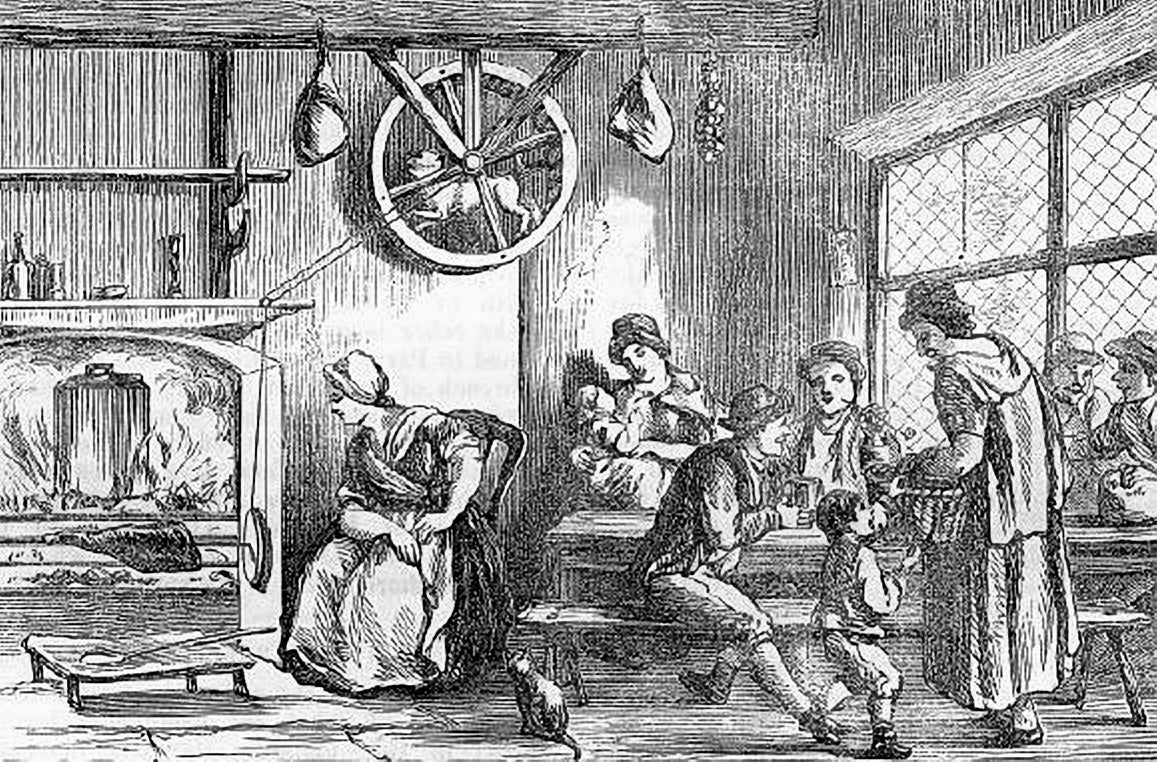
At one extremity of the spit was fastened a large circular box, or hollow wheel, something like the wire wheels which are so often appended to squirrel-cages: and in this wheel the Dog was accustomed to perform its daily task, by continually working. As the labour would be too great for a single Dog, it was usual to keep at least two animals for the purpose, and to make them relieve each other at regular intervals. The Dogs were quite able to appreciate the lapse of time, and, if not relieved from their toils at the proper hour, would leap out of the wheel without orders, and force their companions to take their place, and complete their portion of the daily toil.
The illustration above, which appeared in the 1799 book titled Remarks on a Tour to North and South Wales: in the year 1797 by Henry Wigstead, featured an illustration of the dog-powered spit. And it’s clear the illustrator wanted to communicate how this labor-saving invention was making things easier for humans.