The Aral Sea
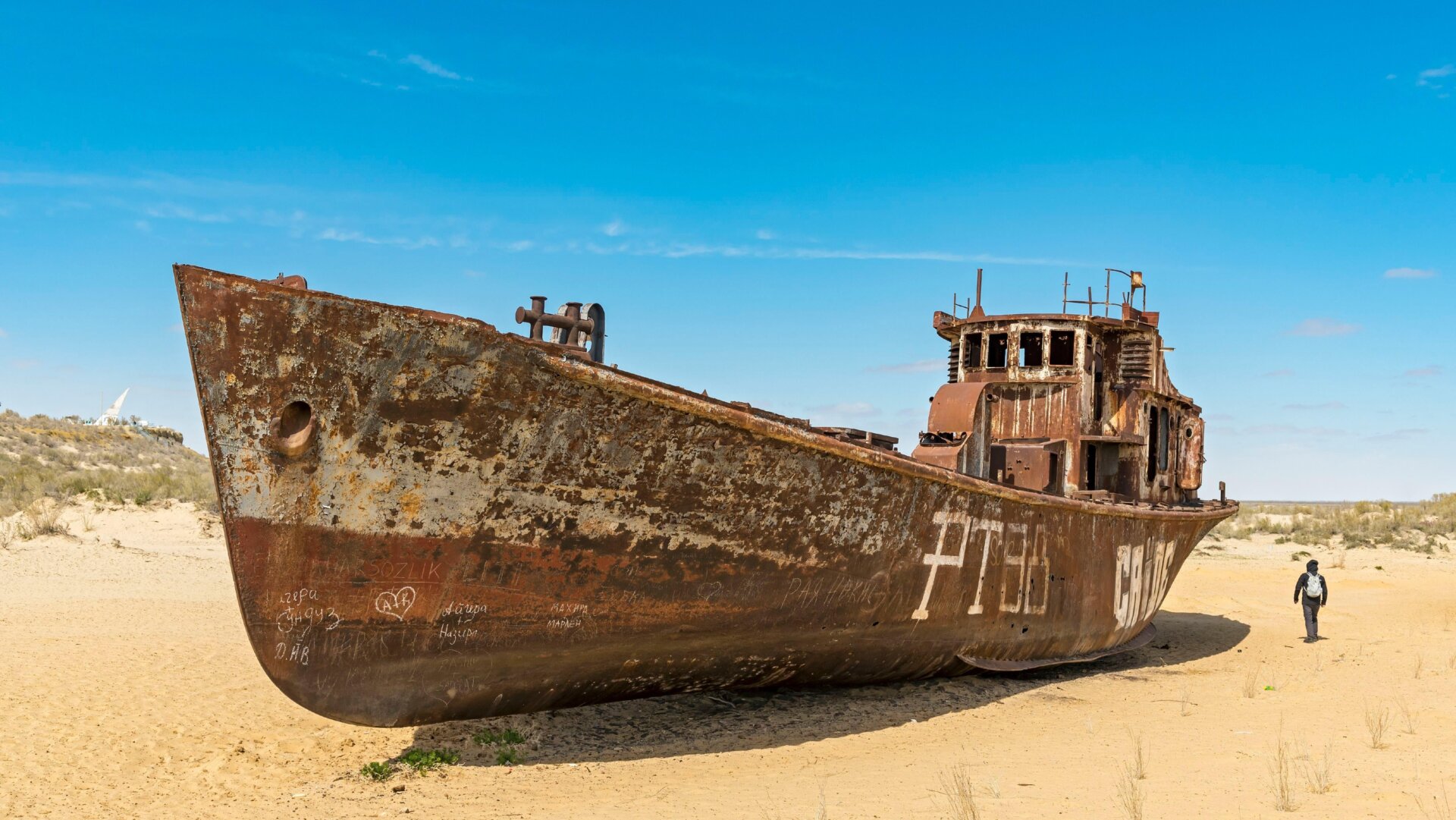
Roughly 1,400 miles (2,240 kilometers) or so from Chernobyl sits a calamity in another part of the former Soviet Union. The Aral Sea was once the fourth-largest lake in the world. But an irrigation project started in the 1960s to turn arid parts of Kazakhstan, Uzbekistan, and Turkmenistan into a breadbasket diverted the river that fed the lake. By 2014, the once-mighty lake was reduced to a mere sliver of water. Climate change-fueled drought has furthered the Aral Sea’s transition into a shallow salt pan. (The far northern part of the lake basin is in comparatively decent shape following a dam project.) Yet the remains of the lake’s legacy can be found all around it, including a ship graveyard in Turkmenistan that now sits more than 90 miles (150 kilometers) from the lake’s current shoreline.