The most expensive nuclear disaster in human history turned 40 on Sunday, but the consequences have been almost perversely benign for some of the region’s wildlife.
The full core meltdown at the Chernobyl Nuclear Power Plant in 1986—which led Soviet officials to wrap the failing nuclear reactor in a colossal sarcophagus of concrete and metal—took the lives of roughly 30 people in its immediate aftermath. Scientists now estimate the death toll between a conservative 4,000 and a stomach-churning 16,000 additional radiation-related deaths. To mitigate this bloodletting, roughly 1,081 square miles (2,800 square kilometers) of what is now Ukraine and another 838 square miles (2,170 sq km) of nearby Belarus were cordoned off into an impromptu radioecological preserve, which, despite the setting, continues to thrive.
Environmental scientist Jim Smith at the University of Portsmouth, who has studied this “Chernobyl exclusion zone” (CEZ) for over 30 years, told The Guardian last week that wildlife in this would-be radioactive wasteland has improved even as it’s become surrounded by war.
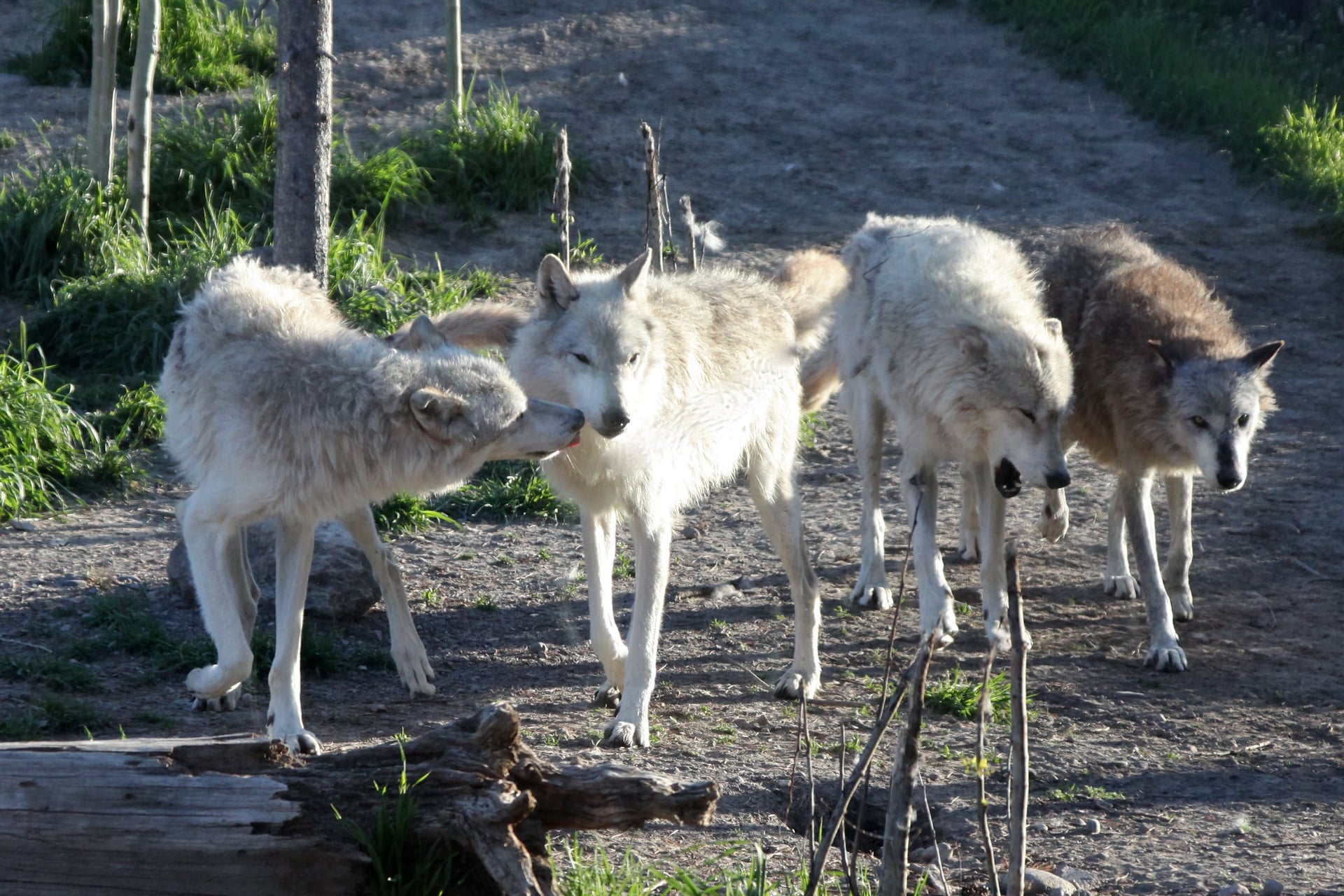
“Wolf populations are seven times higher than they were before the accident because there is less human pressure,” according to Smith, who noted that populations of elk, roe, deer, and rabbit have also flourished in the zone.
“The ecosystem in the exclusion zone is much better than it was before the accident,” Smith opined. “It’s been a very powerful demonstration of the relative impact of the world’s worst nuclear accident, which is not so big, and the impact of human habitation, which is devastating.”
Chernobyl’s new breed of wolves
Evolutionary biologists at Princeton discovered something unique about this gray wolf population, which likely helped these predators carve out their new niche in the exclusion zone: mutations that appear to make Chernobyl’s wolves more resistant to cancer.
The researchers catalogued genetic divergences between Chernobyl’s gray wolves and their peers, derived via RNA in blood samples taken from the wolves and related populations in Belarus and Yellowstone National Park.
The team, led by evolutionary biologist Shane Campbell-Staton, further tested the CEZ wolves’ outlier genes against human cancer data from The Cancer Genome Atlas, with a focus on ten types of tumors documented in both canines and humans. Their analysis, presented at the 2024 meeting of the American Association for Cancer Research, found 23 genes that were unusually prominent in Chernobyl’s wolves aligned with two or more of these tumor types. They also found evidence of neutrophil and macrophage immune cell activity, a known adaptive response to cancer.
“A wolf within the Chernobyl Exclusion Zone,” as Campbell-Staton told NPR at the time, “it may have to deal with pressures from cancer, but it doesn’t have to deal with pressures from, say, hunting.”
“And it may be that the release from that hunting pressure—that separation from humans—turns out to be a much better thing than having to deal with cancer, which is kind of messed up.”
Conflict zone
Beyond the zone’s painful new role as a theater of war, with Russian drones damaging the nuclear plant’s new sarcophagus just last year, the CEZ has also become a site of conflict between ecological researchers as well.
Not all species in the zone have fared well across these past four decades. Research out of Turkey last year found that small birds, including barn swallows and great tits, have struggled to reproduce there due to “sperm abnormalities, oxidative stress and reduced antioxidant levels.” Chernobyl’s rodents, like the bank vole, have also shown evidence of radiation damage—even as larger, more charismatic megafauna have prospered.
Smith at Portsmouth argues that some long-abandoned land near the exclusion zone in Ukraine might, in fact, actually be ready for human agriculture with the right guardrails, including external gamma dose rate surveys and extensive mapping.
But, as he noted in the Journal of Environmental Radioactivity last September, changes like this would require “respect for the dignity and integrity of affected stakeholders, and a fair distribution of benefits,” tall orders potentially during an armed invasion.