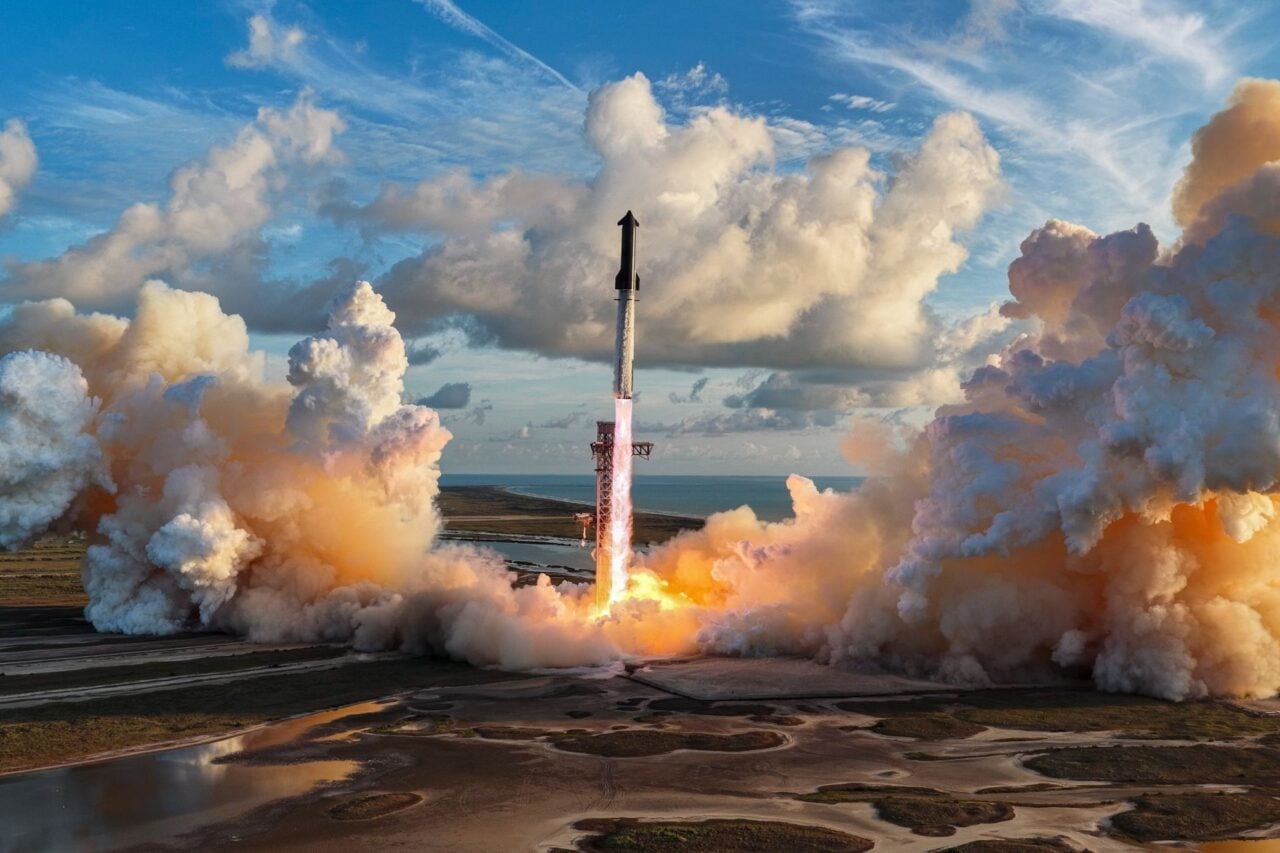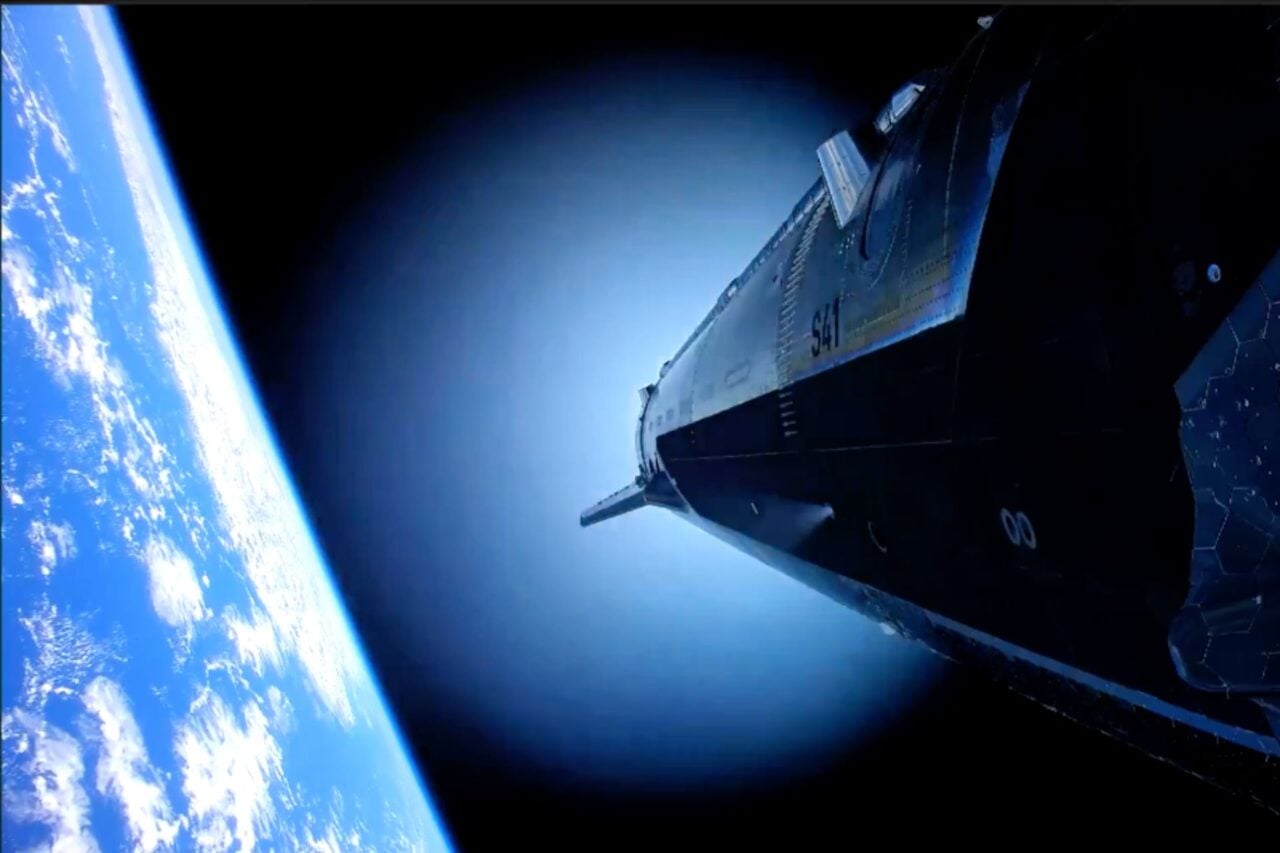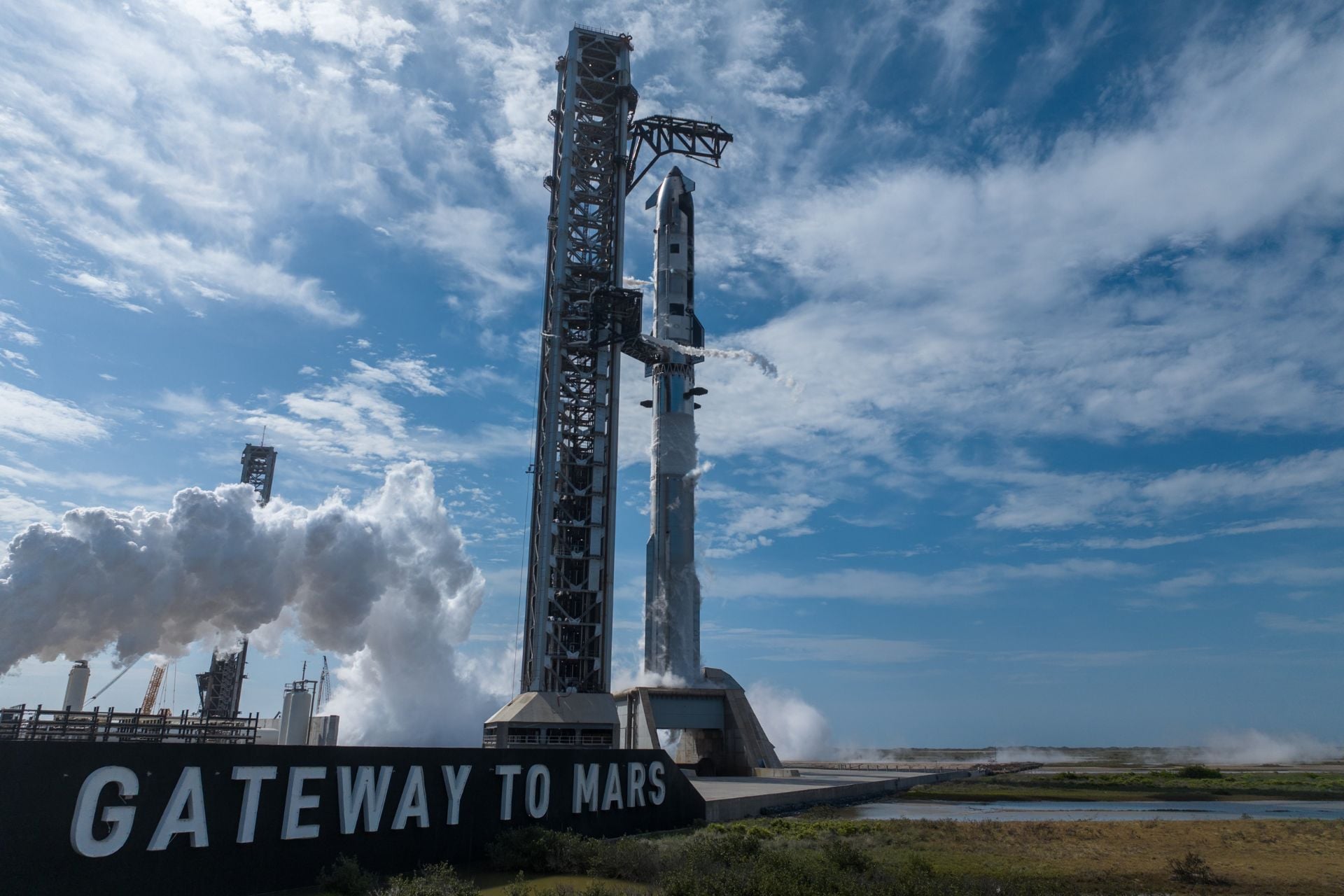
SpaceX is getting ready to launch the latest and greatest iteration of its super heavy-lift rocket. Starship V3 is the biggest, most powerful launch vehicle ever built, and its debut will have a transformative impact on the commercial spaceflight industry—if it doesn’t blow up.
Admittedly, the rocket’s journey to the launch pad has been a little rough. The booster exploded during pre-launch testing back in November, and in April, its Raptor 3 engines did too. Considering the huge technical leap between Starship V2 and V3, it’s understandable that SpaceX ran into some issues. Now, the company is confident that it has worked out the kinks. It aims to launch Starship V3 for the first time during a launch window that opens at 6:30 p.m. ET on May 19.
Ahead of the launch, SpaceX shared new details about the upgrades that put this rocket in a league of its own. Here are 3 reasons why Starship V3 will be a spaceflight game changer.
1. Significantly increased payload capacity
The rocket’s Super Heavy booster is equipped with 33 Raptor 3 engines, which together are expected to produce about 18 million pounds of thrust at liftoff, according to SpaceX. That’s nearly 10% more powerful than the previous generation of Super Heavy boosters. V3’s upper stage is equipped with six of these engines that together produce more than 3.3 million pounds of thrust.
Full duration and full thrust 33-engine static fire with Super Heavy V3 pic.twitter.com/vUJTqoHEZy
— SpaceX (@SpaceX) May 7, 2026
This means Starship V3 has significantly greater payload capacity. The rocket is designed to carry 100 tons of payload to low-Earth orbit, a far cry from Starship V2’s 35 tons. This increase could dramatically reduce the number of launches required for major missions, allowing SpaceX and its partners to deliver larger satellites, space station modules, lunar landers, and other heavy cargo to orbit. Over time, the ability to carry more mass per flight could lower launch costs, potentially opening the door to missions that are currently too expensive.
SpaceX made several booster upgrades to support its increased thrust and overall performance. Super Heavy V3 has a redesigned fuel transfer tube that will enable faster simultaneous engine ignition for launch and landing burns. The company also modified the aft end of the rocket (where the engines are mounted) for better heat protection and tighter integration of its fuel transfer, power, and computer systems.
2. Optimized for rapid reusability
Eventually, SpaceX hopes to launch thousands of Starships per year, and several aspects of V3’s design are aimed at that goal. The combination of rapid reusability and significantly increased payload capacity has the potential to drastically decrease launch costs per pound of cargo.
The first grid fin for the next generation Super Heavy booster. The redesigned grid fins are 50% larger and higher strength, moving from four fins to three for vehicle control while enabling the booster to descend at higher angles of attack. pic.twitter.com/Nc6bavBHD8
— SpaceX (@SpaceX) August 13, 2025
Super Heavy V3 has an integrated hot-staging system that replaces the previous single-use protective interstage. Starship uses a hot-staging maneuver for its stage separation—when the upper-stage engines ignite before the booster engines are completely cut off. Instead of relying on a disposable structure to shield the booster from the upper-stage engine blast, the system is now built into the booster itself, reducing the amount of parts lost after each mission and the need for post-flight repair.
SpaceX also modified the V3 booster’s grid fins to optimize its reusability. The first stage will have three fins as opposed to four, and each fin is now 50% larger and “significantly stronger,” according to SpaceX. These lattice-like structures help steer Super Heavy back to Earth with precision, enabling the “chopstick” catch that allows SpaceX to use the same booster multiple times.
As for the upper stage, SpaceX has made several design changes that support rapid reuse by simplifying systems, reducing exposed components, and streamlining how the vehicle handles fuel, heat, and control in flight. These upgrades should reduce the risk of damage and shorten turnaround time between missions.
Both the upper stage and Super Heavy will also have “advanced avionics capabilities designed for high flight-rate, full reusability, and enhanced reliability,” according to SpaceX. About 60 custom avionics units are at the core of these two vehicles, integrating batteries, inverters, and high-voltage electrical distributions into single packages. Together, they deliver 9 megawatts of peak power across the rocket.
3. Enabled orbital refueling
Starship V3 is the rocket SpaceX will eventually use to experiment with orbital refueling, which will be critical for missions to the Moon and beyond. No spaceflight company or agency has attempted this before. SpaceX needs to demonstrate orbital refueling with Starship V3 relatively soon, as NASA plans to use a modified version of the rocket’s upper stage as a crew lander for the Artemis program.
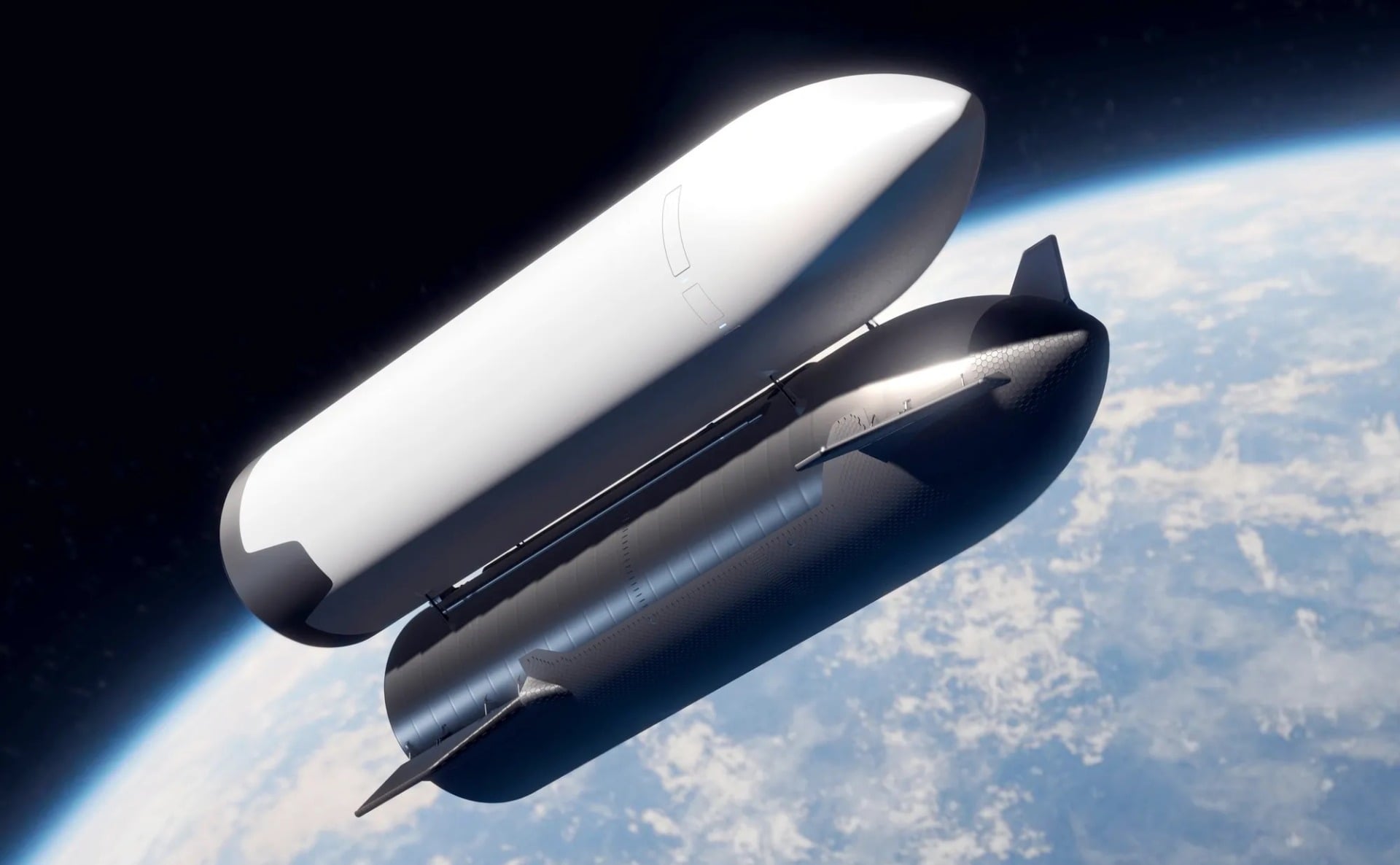
Starship V3 is equipped with a set of systems designed to let two Starships dock, transfer fuel, and manage that fuel safely in space. Engineers added four docking drogues to the leeward side of the upper stage, as well as propellant feed connections for ship-to-ship propellant transfer.
To keep cryogenic propellants stable during transfer, the rocket has a dedicated system for managing fuel interactions with the engines during extended coasts in space. New precision radio frequency sensors will also provide accurate measurements of propellant levels in microgravity to support orbital refueling.
Achieving this capability would not only enable deep-space exploration but also further reduce launch costs and extend mission lifespans. SpaceX is currently the best-positioned company to demonstrate orbital refueling within the next few years, but first it will have to validate Starship V3’s design and ramp up its launch cadence.
That could take time. As we saw with Starship V2, launching a rocket of unprecedented size and power often comes with setbacks. But if Starship V3’s launch manifest proceeds smoothly, SpaceX could soon unlock a new era of spaceflight.