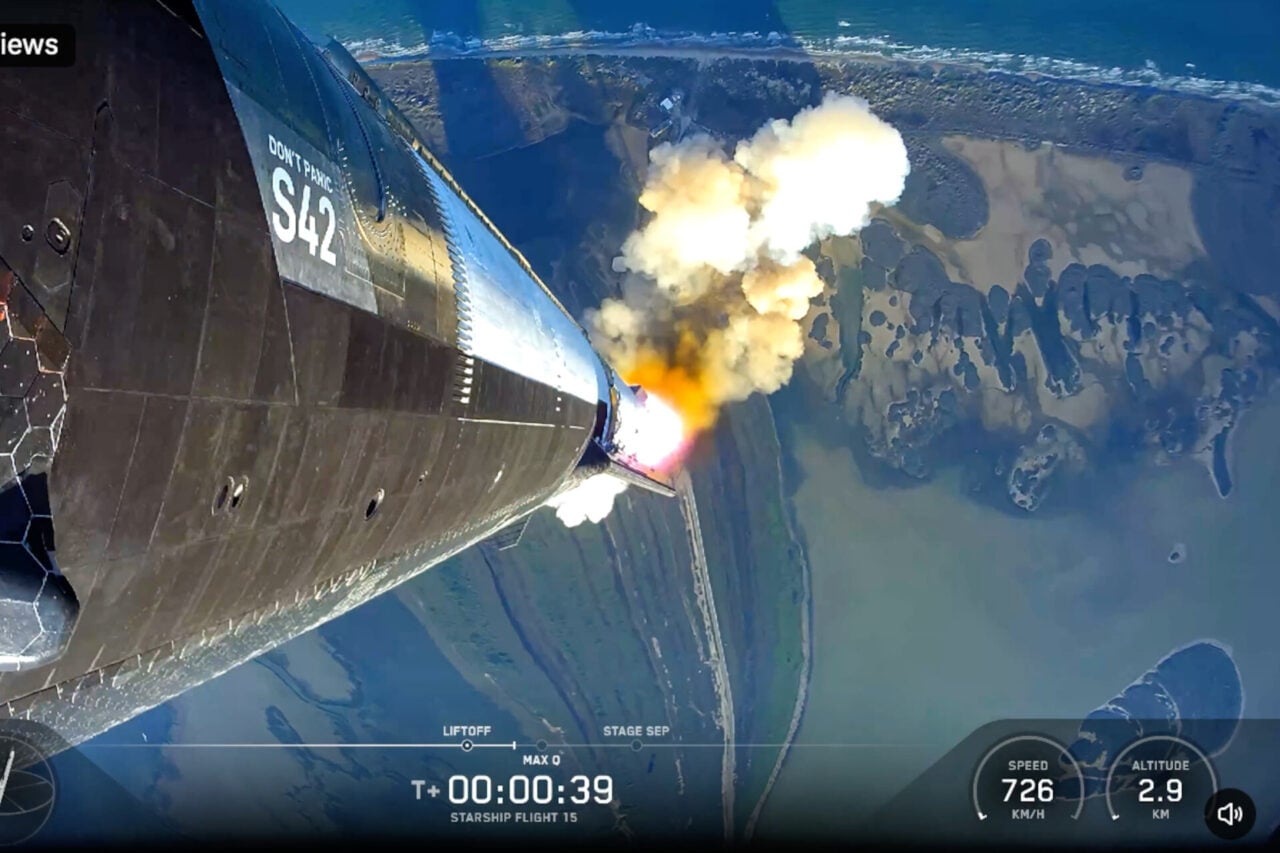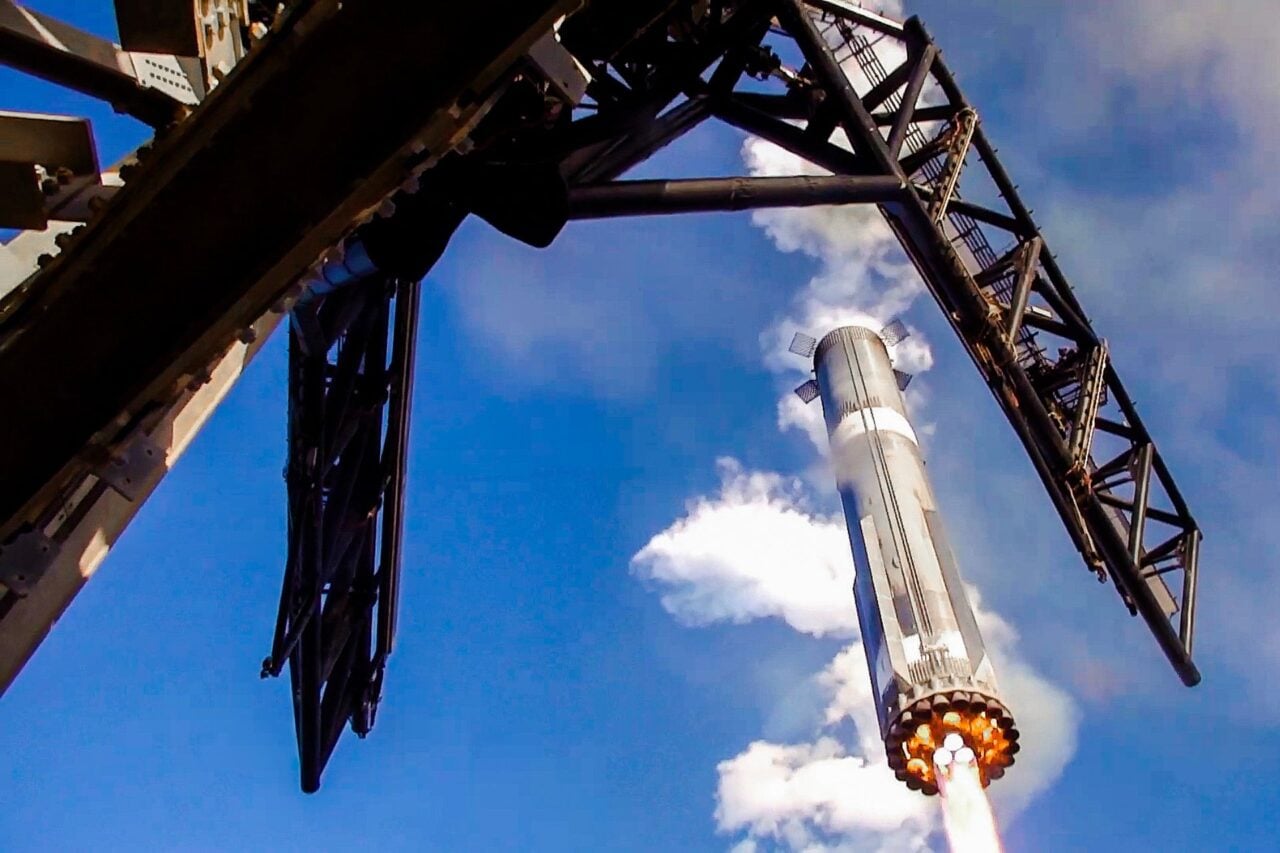
We’re all waiting to see if SpaceX can salvage at least part of a test that was meant to be the “Holy Grail of rocketry”: the elusive double catch. Fully employing the long-in-the-works “Mechazilla” launch structure, SpaceX was aiming to:
- launch one of its Starship space vehicles, a two-stage system with a Super Heavy booster, and an upper phase with a payload of 26 Starlink satellites
- catch the Super Heavy booster
- release the payload
- orbit Earth for a while
- finally, catch the Starship upper stage
Before Friday, no one had ever recovered a full orbital launch system—which would mean both stages can be reused. And unfortunately that still hasn’t happened because the test has not been a total success so far.
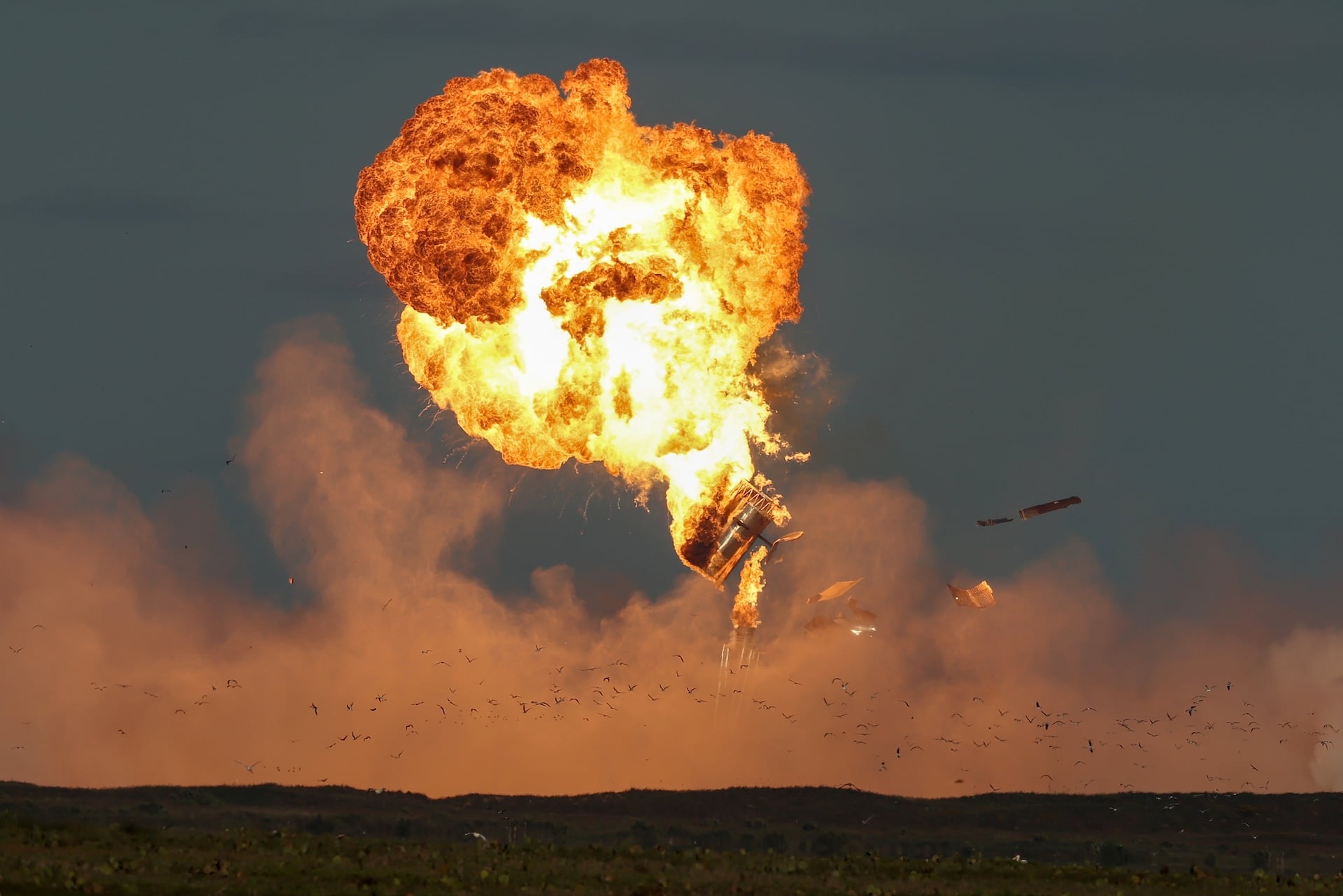
The booster catch was at one point on track, SpaceX spokesperson Dan Huot said according to Space.com, but “in the later stages of the coast, the booster aborted itself for a GNC issue that it detected, and that put it into its contingency landing offshore.”
That’s a nice way of saying the Guidance Navigation Control system had some kind of issue and the booster initiated its apparent plan B, which is to stay well clear of the precious Mechazilla tower, and instead to intentionally blow itself up just above the Gulf of Mexico. The spectacular explosion was captured by onlookers and posted on social media:
بوستر فوق سنگین استارشیپ spacex امروز موقع فرود منفجر شد. قرار بود این اولین ازمایشی باشه که هم بوستر هم خود استارشیپو روی برج پرتاب فرود میارن. pic.twitter.com/CaCwpI58gq
— ℳℯ𝒹𝒾𝒸𝒾 (@mehrqd) November 14, 2026
But while SpaceX was dealing with that somewhat unpleasant situation down at the surface of the Earth, things were going a bit better in space. The Starlink satellites were successfully deployed as the upper stage proceeded with the most placid part of its mission: 14 orbits around the Earth—the second successful orbit for Starship.
A catch of the upper stage is by no means certain, but early signs are positive. “Our heat shield team reviewed all the data we got from our ground tracking cameras, and from those satellite cameras and confirmed the heat shield is in a good posture for a reentry and return to the launch site,” Huot said, according to Space.com.
If reentry goes according to plan, the expected time for the upper stage to return to the Mechazilla tower in Starbase, Texas and be caught is 22 hours, 32 minutes and 34 seconds into the mission, or about 4:20 p.m. EST.
There will still be two more layers of contingency before the catch is attempted. The first orbital Starship test in September ended with an early splashdown just off the coast of Hawaii, and that could happen again if the catch is called off. But the spacecraft may then proceed toward Texas, and if the catch is aborted at the last minute it could also proceed to a watery grave like its booster did.
If the final catch is even attempted, it will be a first. If it’s successful, it will be a much more satisfying first.
There are YouTube livestreams scheduled to broadcast what they hope will be the final Starship catch on Saturday afternoon. Here’s one from Space.com’s channel called VideoFromSpace: