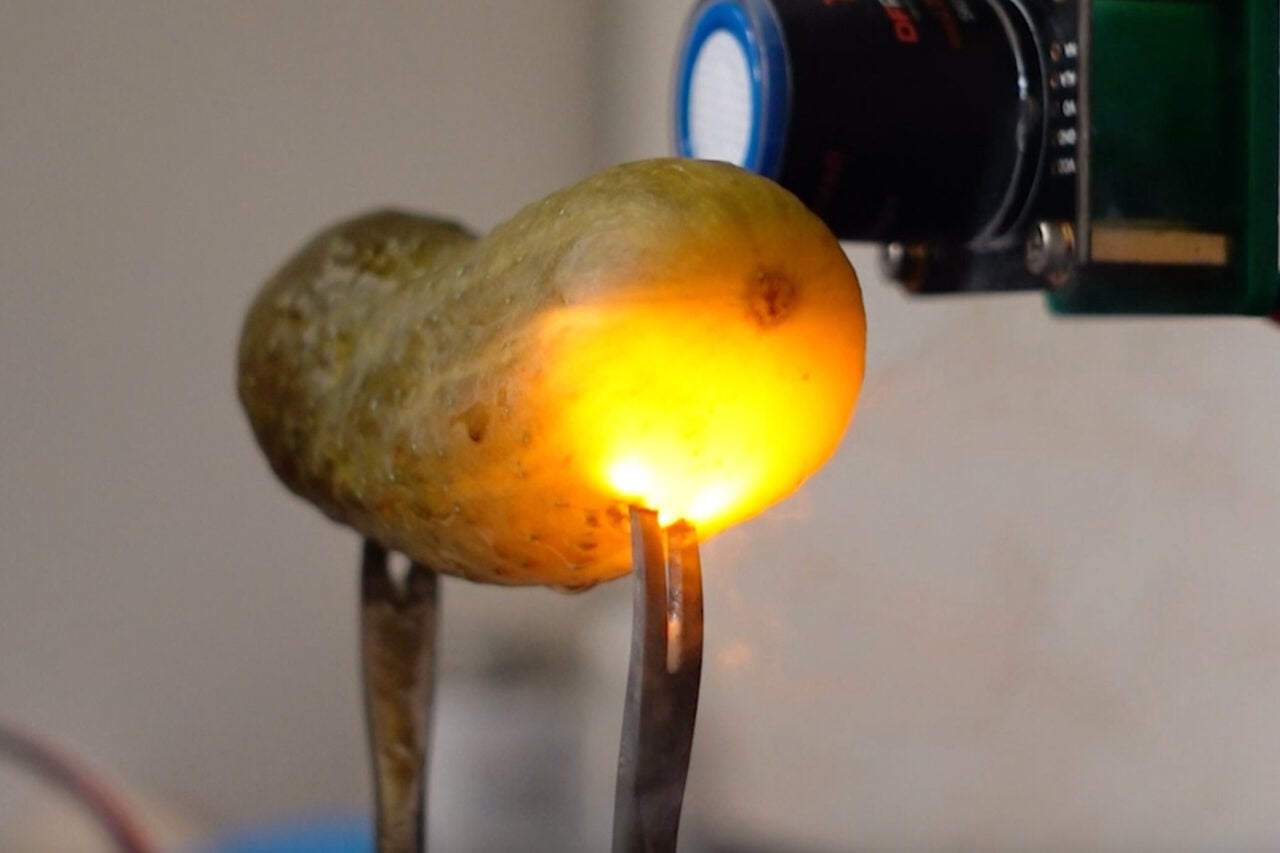
Lithium batteries are compact, efficient, and store a lot of energy. They also, occasionally, catch on fire. Here’s how that happens.
The great thing about lithium batteries is they keep store a huge amount of energy in a small, light package. This makes them perfect for use in planes, cars and laptops. The bad thing about lithium batteries is they have a huge amount of energy on tap, and it can be released in a very small space. This makes them terrible for use in planes, cars, and laptops.
Engineers overcome the bad side of lithium batteries through careful design, and manufacturers overcome it through quality control. That doesn’t mean things can’t occasionally go wrong. Essentially, when you charge a lithium battery, you cram electrons into a carbon storage unit. You tap that energy by letting the electrons flow through an electrolyte full of lithium salts. Usually the flow of electrons is regulated. An article in The Economist explains what happens when things go bad.
The trouble comes about if there is a small fault or damage is caused to the extremely thin separators that keep the elements of the battery apart. This can lead to an internal short-circuit and a subsequent build-up of heat. This can trigger what is known as a “thermal runaway” in which the battery overheats and can burst into flame. That can cause adjacent battery cells to overheat, which is why groups of cells in some battery packs (such as those used in Tesla cars) are kept in separate protective compartments.
These things rarely happen, and when they do, for the most part they result in little damage. So far, though, there’s no way to get around the trade off. A lot of energy on tap means a little more risk that it can get out of hand.
[Source: Why Lithium Batteries Keep Catching Fire]
Image: Ansgar Hellwig