
An identity theft protection service will not stop anyone from stealing your identity, and the honest ones say so on their own websites. That tends to surprise people, because the ads sell something closer to a shield, and it is the first thing to get straight before deciding whether one is worth paying for. What these services really do is watch for signs that your details are being misused, tell you quickly when they are, and pay for and organize the cleanup if the theft goes through.
Whether one is worth it depends on what you already do yourself, so it helps to start with the part that costs nothing.
What You Can Do for Free
The most effective protection against identity theft is a credit freeze with Equifax, Experian and TransUnion. It is free by law, it does not touch your credit score, and it stops anyone from opening a new credit card or loan in your name until you lift it, which blocks the most common and most expensive form of fraud. You can also download your credit reports from all three bureaus every week, turn on transaction alerts in your banking apps, and report a theft at IdentityTheft.gov, which builds a recovery plan for you.
Someone who does all of that, and actually reads their reports every few months, already has most of the protection a paid service sells. Few people actually do, and even they only see part of the picture.
What You Cannot Watch Yourself
A freeze and a credit report cover new credit. A good part of identity fraud never reaches a credit bureau, though: a payday loan taken out in your name, a checking account opened at a bank you have never set foot in, your Social Security number offered for sale on a forum, or a stranger giving your name to the police after an arrest.
This is where a paid service starts to make sense, and it is easier to see with a real one. Coveron, the identity protection service sold by Nord Security, the company behind NordVPN, watches exactly those blind spots. Its middle and top plans monitor short-term loan applications and new financial accounts in your name, and check booking records from more than 2,800 US jails. Every plan scans the dark web for the email addresses, phone numbers, Social Security number and card numbers you give it, and the alerts name the source and the type of data found, which tells you whether you need to change one password or call your bank.
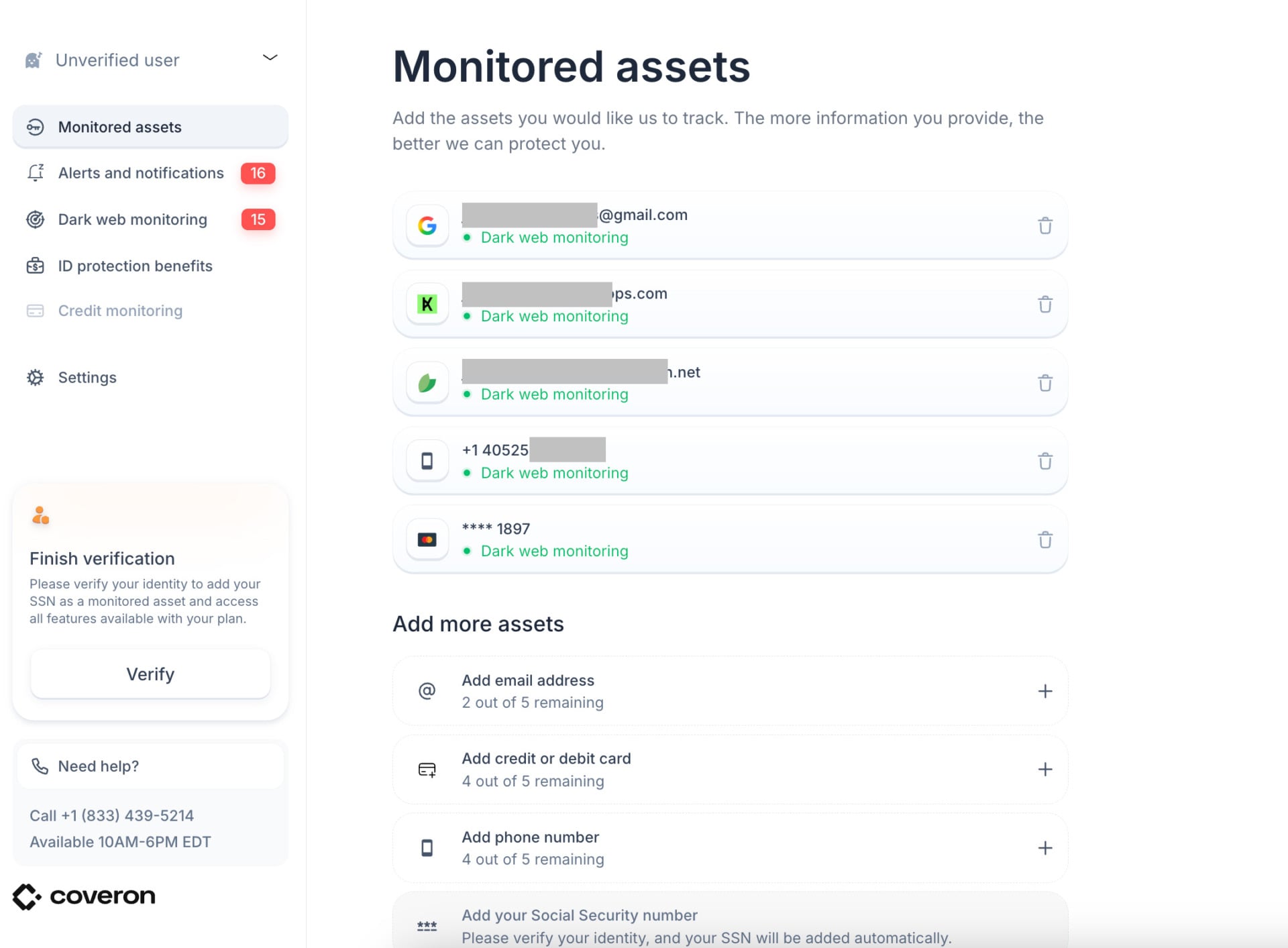
What you are paying for here is time, because the gap between the leak and the moment you find out usually runs into months, and someone can open a lot in your name in that time.
The Part People Underestimate
The second thing these services sell is help once the damage is done, and it is the part most people only appreciate afterwards. Undoing identity theft means weeks of calls to lenders, disputes with the bureaus, police reports and replacement documents. The stolen money is often the smaller problem next to the time it takes to prove it was not you.
With Coveron, that work goes through a case manager, after a claim with HSB Specialty Insurance, the US insurer that underwrites its policy. The cover reaches up to $2 million for recovery costs such as legal fees and lost wages, though each category has its own cap, and lost wages, for instance, stop at $5,000. It also pays out for online scams and for someone fraudulently transferring the deed to your house. Our Coveron review goes through the plans and their limits, including the US-only availability and the fact that New York residents cannot claim the insurance, and our Coveron coupon code page lists the current discount.
So Is It Worth It?
For some people, clearly yes. If a breach has already exposed your Social Security number, if you own a home, or if you know you will never get around to checking your reports, the recovery help and the insurance alone justify the subscription. Parents are in the same position: nobody checks the credit file of a ten-year-old, so a stolen number can sit unused for years, which is why Coveron’s household plans watch for children’s Social Security numbers on the dark web. When we compared five of these services in our guide to the best identity theft protection services, that mix of monitoring and insurance is what put Coveron ahead.
If you have frozen your credit, read your statements every month and would be comfortable handling a fraud case on your own, a paid service adds less, and the money may do more elsewhere. Either way, the freeze comes first. A protection service is what you add on top of it to see what the freeze cannot, and reducing how much of your information circulates in the first place is a separate job, the one a data removal service like Incogni does. Both sit in the same group, since Nord Security merged with Surfshark, the company that created Incogni.