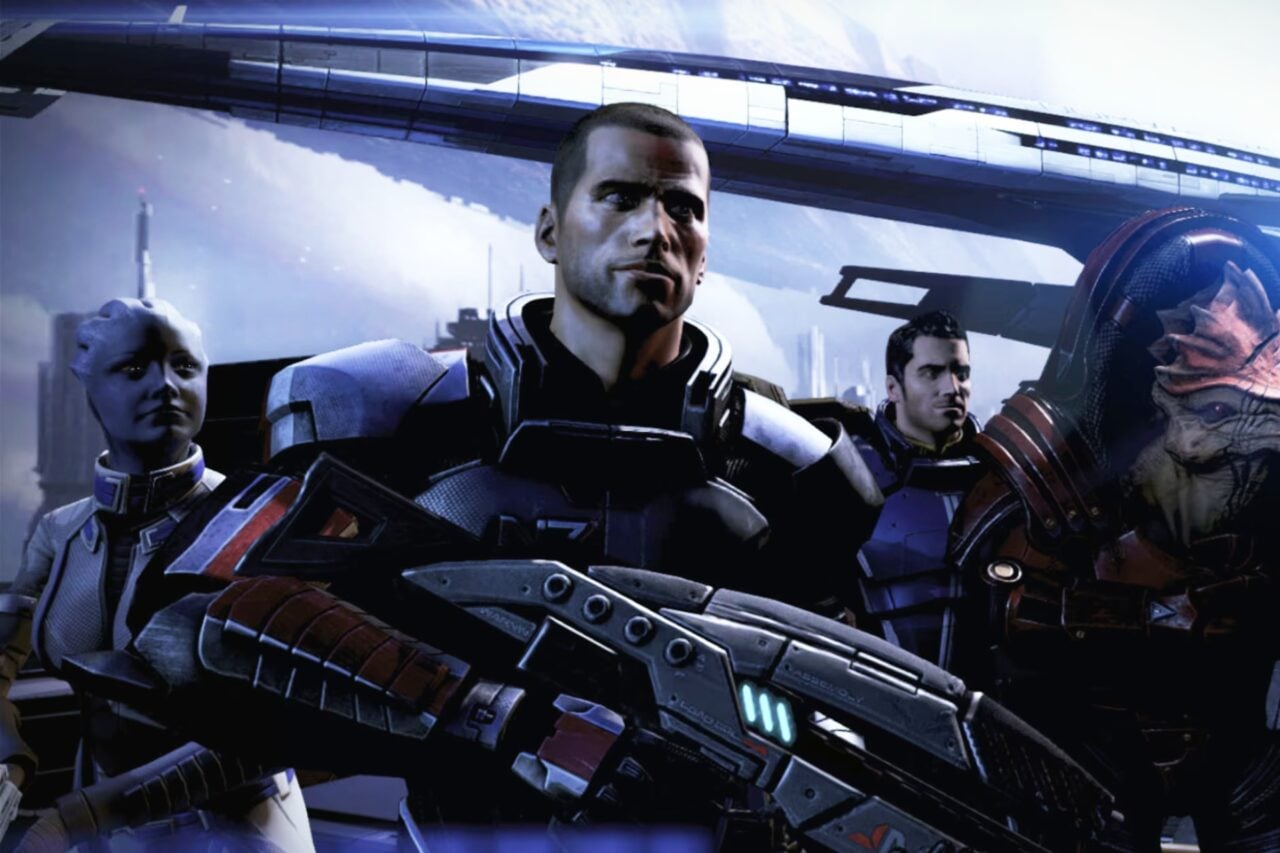
It’s not hyperbolic to call BioWare’s closure a sucker punch. Last month’s news sent waves throughout the gaming world as players and those in the industry have spent weeks mourning the studio, talking about its highs, compromised lows, and everything in between.
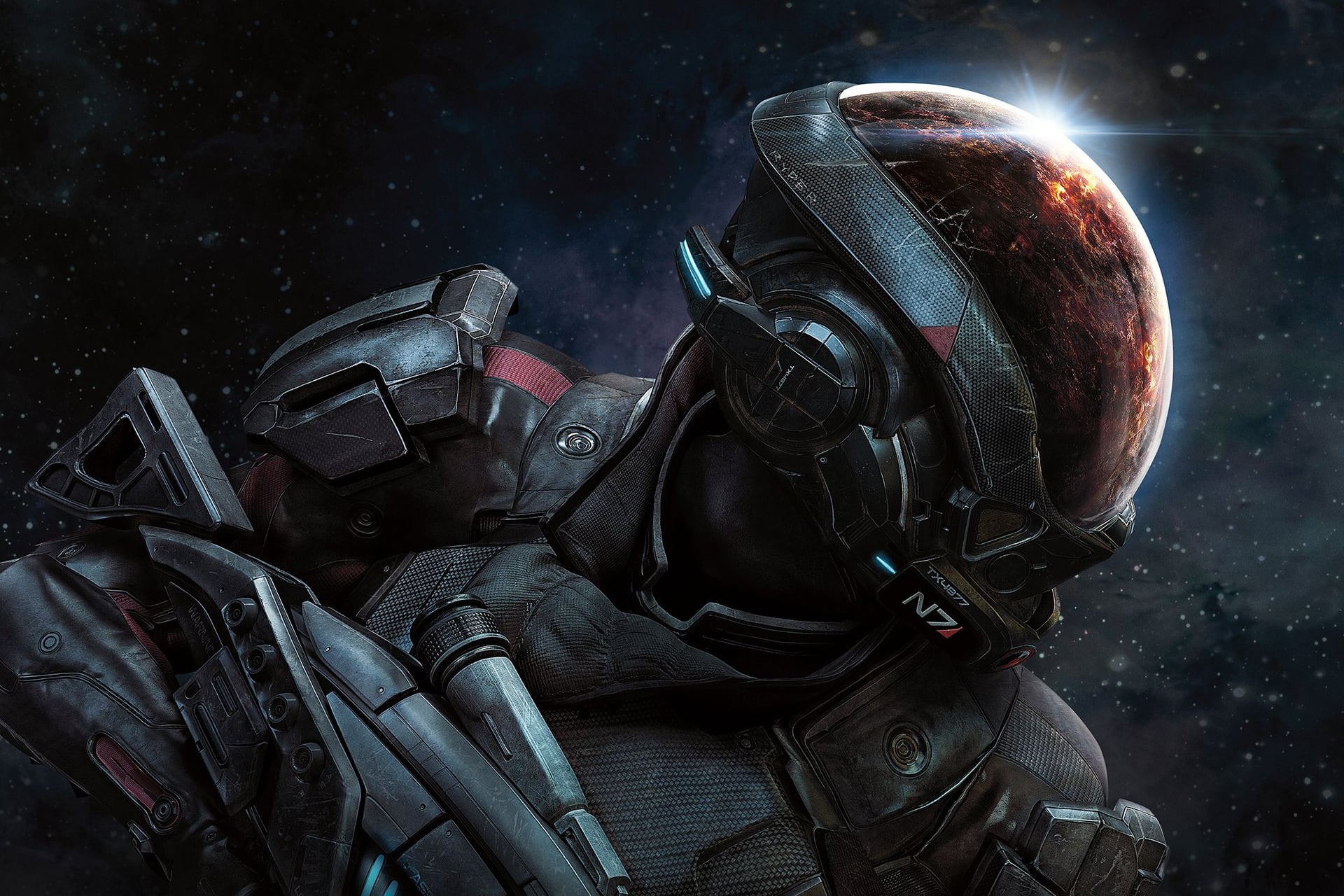
Falling… somewhere on that spectrum, take your pick, is Mass Effect: Andromeda, the series’ last mainline entry. Originally released March 21, 2017, for PC, PlayStation 4, and Xbox One, the game served as a soft reboot that could continue the series after Mass Effect 3 wrapped Shepard’s tale. Unfortunately, it had a famously troubled development, and other afflicted games, you can see the cracks where, if the creative vision stayed fully consistent and resources were there, an arguably stronger game would be. However long it took to make Andromeda’s final version, it definitely shows that it came in hot compared to its predecessors or other titles in its lane.
As the first game after Mass Effect 3’s divisive ending, any successor was fated to catch a certain amount of flak. But its bigger kiss of death came from its fellow action-RPGs, Legend of Zelda: Breath of the Wild and Horizon Zero Dawn. All three released weeks apart from each other, and players and critics found the blending of open world and action-RPG systems in Zelda and Horizon more agreeable and fleshed out. (And, most importantly, both held up considerably better on a technical level.) Sometimes, a flawed game survives despite its issues; other times, it glaringly stands out next to its contemporaries. Shit happens.
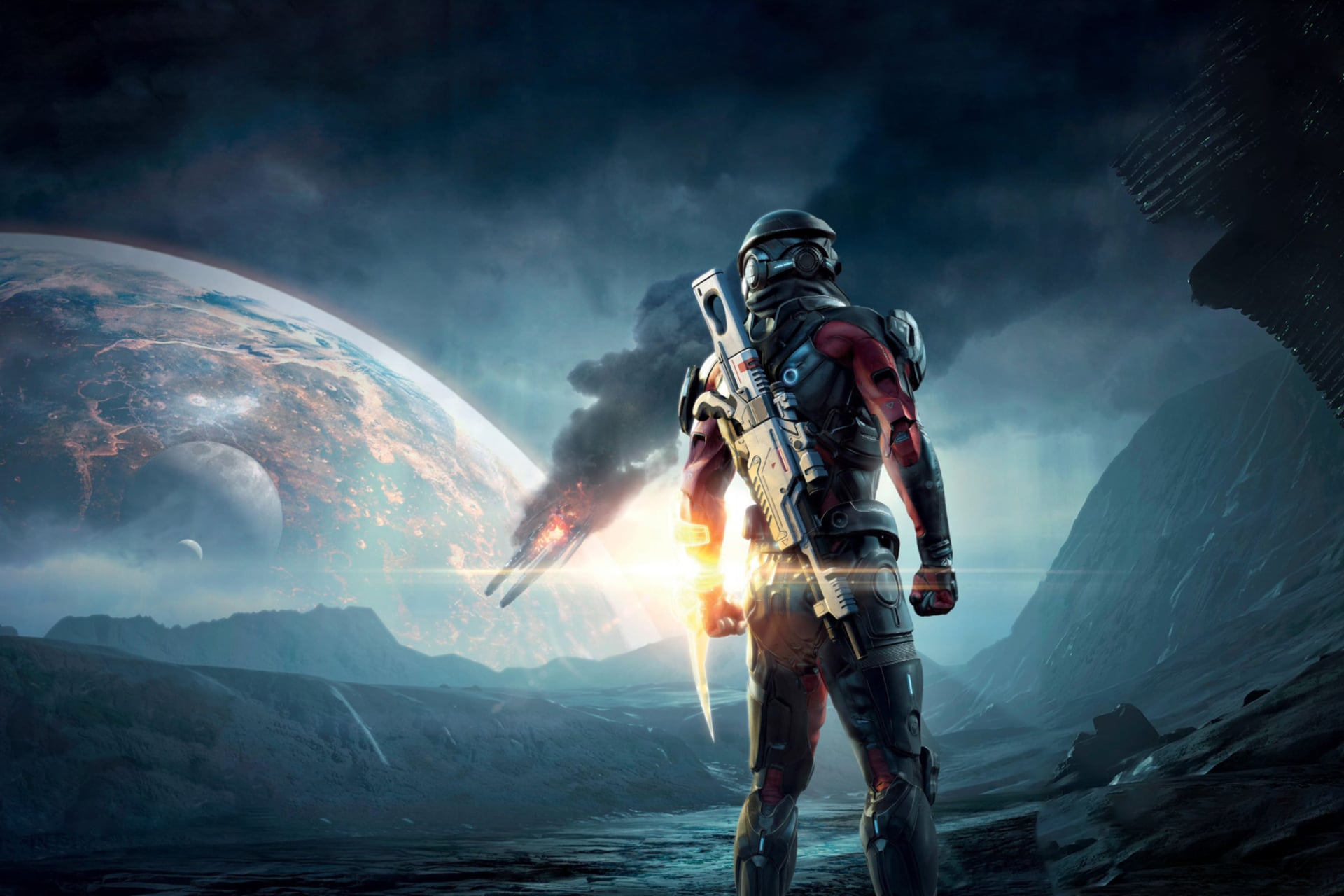
So it’s no wonder Mass Effect: Andromeda had such a mixed launch reception. Longtime BioWare fans went through this already with Dragon Age II, yet there was still a few hits to take, particularly after reports of the game’s difficult production. With the benefit of time and patches, things eventually worked out in Andromeda’s favor, and once players understood what it was trying to do, albeit clumsily, they got on its wavelength more easily. This turnaround wasn’t so strong that a hidden gem was found, but it’s put some extra shine on a game whose faults might’ve been more easily forgiven a decade and a more consistent trilogy ago.
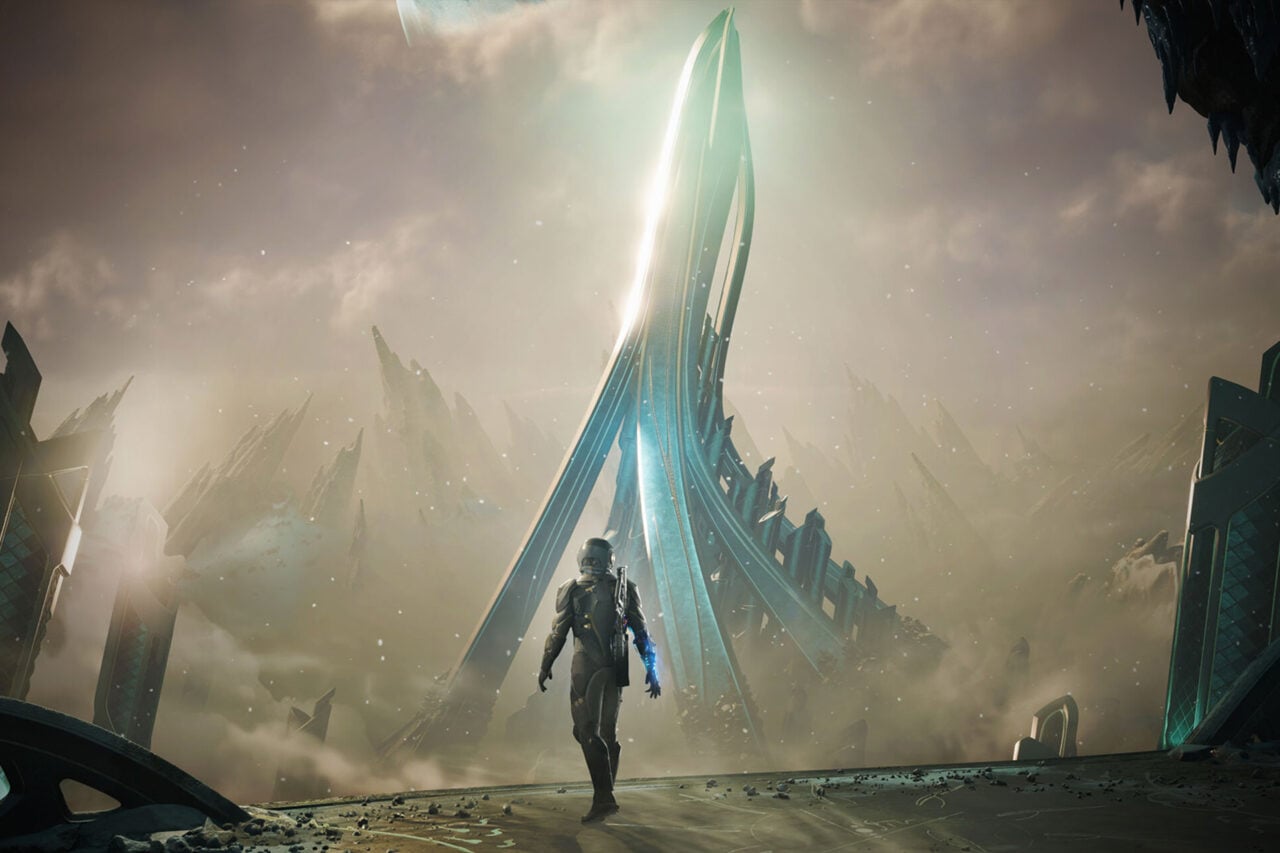
Compared to other sci-fi series like Halo or Gears of War, whose fourth entries felt afraid to shake things up too much, Andromeda finds a better way to acknowledge its past while carving its own path. It borrows from each prior game, but it’s especially focused on the first Mass Effect, whose RPG and exploration elements were gradually pushed out of its sequels. Driving around empty planets with the occasional combat encounter or squad chatter to break up the time was debatably fun back in 2007, and Andromeda makes an effort to recapture that original energy. Whatever the game’s faults, it succeeds at creating a sense of discovery that fits a sci-fi adventure story, either through the planets’ scenery or uncovering the secrets within a Remnant vault.
Another thing it succeeds at? Balancing the series’ dreams of being an action game and an RPG. The combat is the game’s most-praised element, and for good reason; it did away with Shepard’s classes in favor of a Profile system that gave Ryder passive bonuses when putting points into tech, biotic, or combat powers, or a mix of skills from all three groups. Combined with the jetpack and melee weapons, it feels consistently good and lets Ryder feel distinct while not abandoning what the series built its bones on.
The new approach to fights and conversations—Paragon and Renegade responses are out, now replaced with clearer labels like “emotional” and “casual”—underline how versatile Ryder’s meant to be. One quest may be a simple combat encounter or three, another might ask them to be an investigator or ambadassador. Similar to Dragon Age’s Hawke or Inquisitor, Ryder’s forced into being a Pathfinder after their father Alec dies early on, giving them an arc Shepard didn’t need to have. Eventually, they come into their own enough to warrant building another game around, but how they’re narratively important is awkward in a way BioWare otherwise seems to try avoiding.
Without the threat of annihilation hanging over everything, Mass Effect: Andromeda becomes lighter in a way earlier games couldn’t. Like Star Trek, it clearly loves space (see the score and its incredibly poorly aged Elon Musk shoutout), and you can really feel it trying hard to not tip over into the “colonization” aspect of sci-fi. Several Ryder responses are sure to emphasize that the Milky Way people are visitors in this new galaxy, and ensuring the Andromeda Initiative isn’t putting out the Heleus Cluster’s native Angara is a recurring thread. Even the eventual reveal that the Initiative are unwitting refugees sent to a new galaxy in case Shepard failed to beat the Reapers feels both organic and so they don’t come off as another threat to the Angarans, who’ve spent years with the invading Kett empire.
And yet, that self-awareness crashes into a meteor whenever Ryder’s commended for using their Pathfinder tech to solve problems that’ve stumped the Angara for years. Never has the franchise’s human focus hurt more than this game, as playing a non-human Pathfinder (or even just working with them more than once) might’ve made these moments considerably less weird and offered up some much-needed perspective. It’s a good example of how compelling and solid the game can be when it’s not tripping over its own feet, and how it would’ve benefitted from proper time and resources that EA just wasn’t keen on providing after a certain point.
For as maligned as Mass Effect: Andromeda is, it may also be key to understanding BioWare’s history. With hindsight, maybe the writers were trying to work some stuff out about the studio’s relationship with EA, given the Kett’s process of taking other species and converting them as a way of reproduction, equal parts ritualistic and exhausting on their resources. Likewise, it’s not hard to read into the overarching plot of people clashing over what to do after an initially dreamy pitch turned out to have a much more fraught and complicated reality than expected. And since they all spent 600 years in cryo to go on this journey, this is their life now.
BioWare was far from the only studio to struggle, but that’s not always on screen as it is here: despite the botched beginning and interpersonal beefs, the Tempest crew, Angara, and Initiative do eventually come together, both for their own sakes and the larger goal at hand. This is a messy game about and made by people trying to make the most with what they’ve got. For every person who left this project with justifiable resentment in their hearts, there were others just glad to get it out the door and hope they could do better next time, as an apology to both the players and themselves.
Luckily, the remastered Shepard trilogy was its own apology, so all BioWare really had to do going forward was learn from its mistakes. Despite a new lead taking the reins from Ryder, concept art and information about the recently canceled Mass Effect: Universe made clear Andromeda had a place in Mass Effect. While a nice surprise for fans of that game, it was also an important reminder that any series can still work with a less-than-stellar entry if its developers are given the opportunity—see Resident Evil or Final Fantasy among the many examples of this wave. After all BioWare dealt with and endured in the last decade, it’s a shame the staff wasn’t able to do as much better with either of their franchises as they wanted on their own, complete terms.
Want more io9 news? Check out the best movies and TV shows to stream this month and all the upcoming sci-fi, fantasy, and horror books that should be on your radar.