Muse, Meta’s new agentic AI platform will currently let you use 100 million tokens per week for free, according to a Threads post by Mark Zuckerberg. If you have no frame of reference for these kinds of usage limits, that might not mean much. Let me just tell you, it’s a lot.
In July, it emerged that Meta was looking to go into business as a cloud provider for other companies. Critics at the time said it was a sign that Meta had overbuilt data centers. A projection in April said Meta would rack up $145 billion in capital expenditure this year. The company’s free cash flow dropped an astonishing 91% from quarter one to quarter two of this year. It’s safe to say Meta is shoveling ungodly amounts of money into compute.
“As AI usage in our products and businesses continues to ramp, we continue to invest aggressively in infrastructure to meet the demand,” Meta CEO Mark Zuckerberg said on an earnings call last month.
Speaking as a talking head on CNBC back in March, Alex Kantrowitz, founder of something called Big Technology opined that while ChatGPT boasted 900 million weekly active users at the time, and while Zuckerberg was claiming that Meta’s services had 1 billion monthly AI users, it still doesn’t seem like these Meta AI users are seeking out AI. They’re bumping into it instead. “How many intentional AI users does Meta have?“ Kantrowitz asked rhetorically, adding “Nothing close” to what ChatGPT has.
So who in the world is using all of this Meta AI compute? On Tuesday, just after the launch of Meta’s agentic platform Muse, the answer to that question was me, on a free account, trying to waste as much compute as I could without spending a dime, and being quite astonished that I wasn’t even getting close to being cut off.
Personally, I have never tokenmaxxed, like Meta’s employees all too recently did when the company encouraged them for a few months to use as much AI compute as possible. My employer doesn’t pay for me to use unlimited AI, and I don’t have any pay-as-you-go subscriptions feeding tokens into an OpenClaw agent running on a Mac Mini in a dusty corner of my house. If you’re like me in all these ways, you may have never fired up an agent running on its own machine—or as the case may be with Muse, a virtual machine—and asked it to do busywork for you.
But Meta explicitly wants you to hand over your busywork to Muse. Meta’s Muse page implores users to “Take the busywork off your plate.” I don’t have any busywork that I trust an agent to do, so here’s what I did instead:
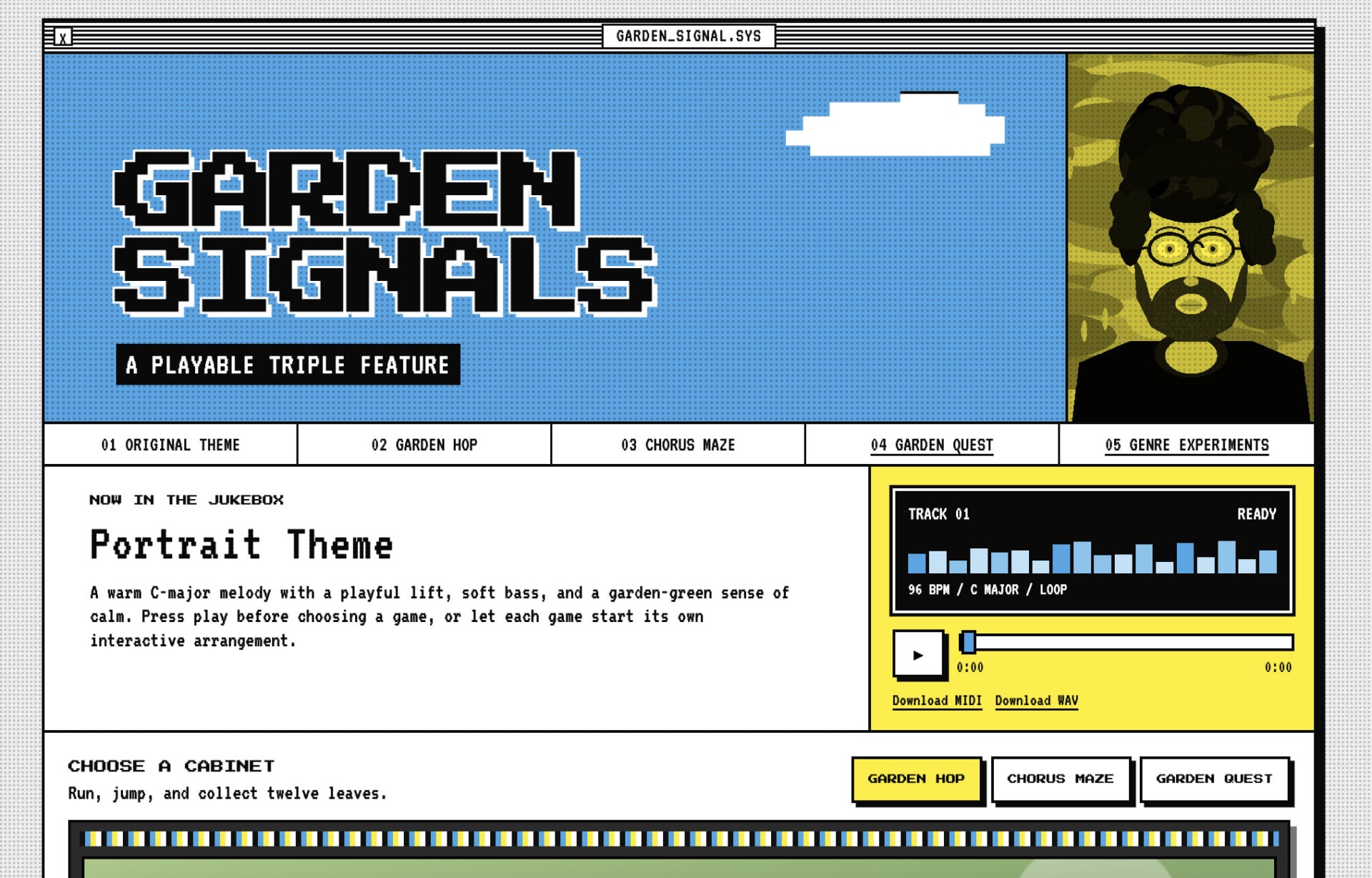
Starting small, I asked it to use MS Paint, or an equivalent to painstakingly redraw my author photo. It said it didn’t have any MS Paint equivalent pre-built into its Linux terminal, but it fulfilled my prompt anyway, in what sounds like the most annoying way possible: line-by-line as Python code. Here’s the drawing, which zaps me pretty hard for my hairstyle.

Ha. Ha. Ha.
Then I tried asking it to compose a melody based on how a human might feel about this drawing, program it with midi, and send me a playable version, which it did (You can download it here if you want. It’s called “Portrait Theme”).
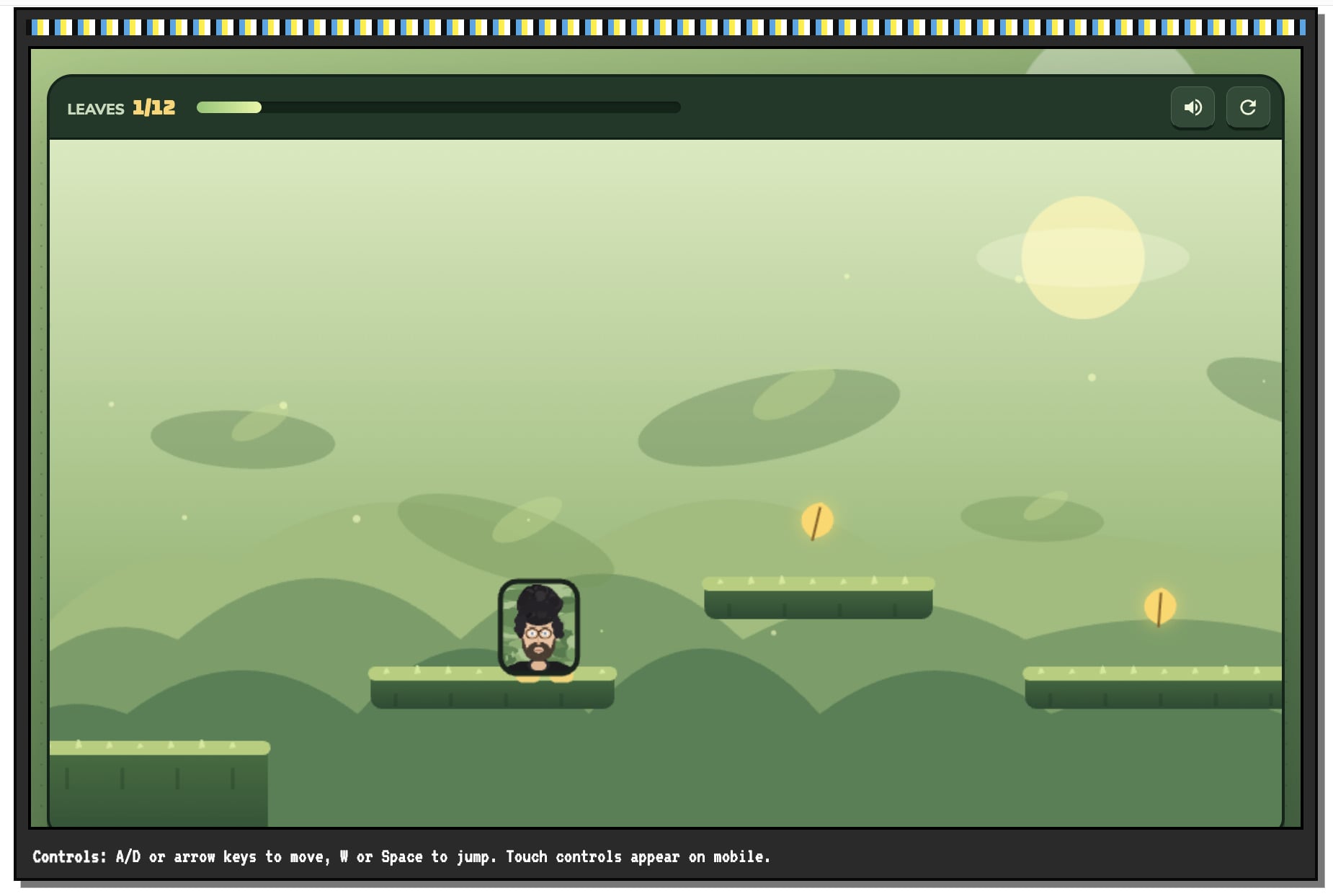
That snippet of ho-hum music gave me a ho-hum idea: make a side-scrolling game inspired by the drawing and the song. It built that.
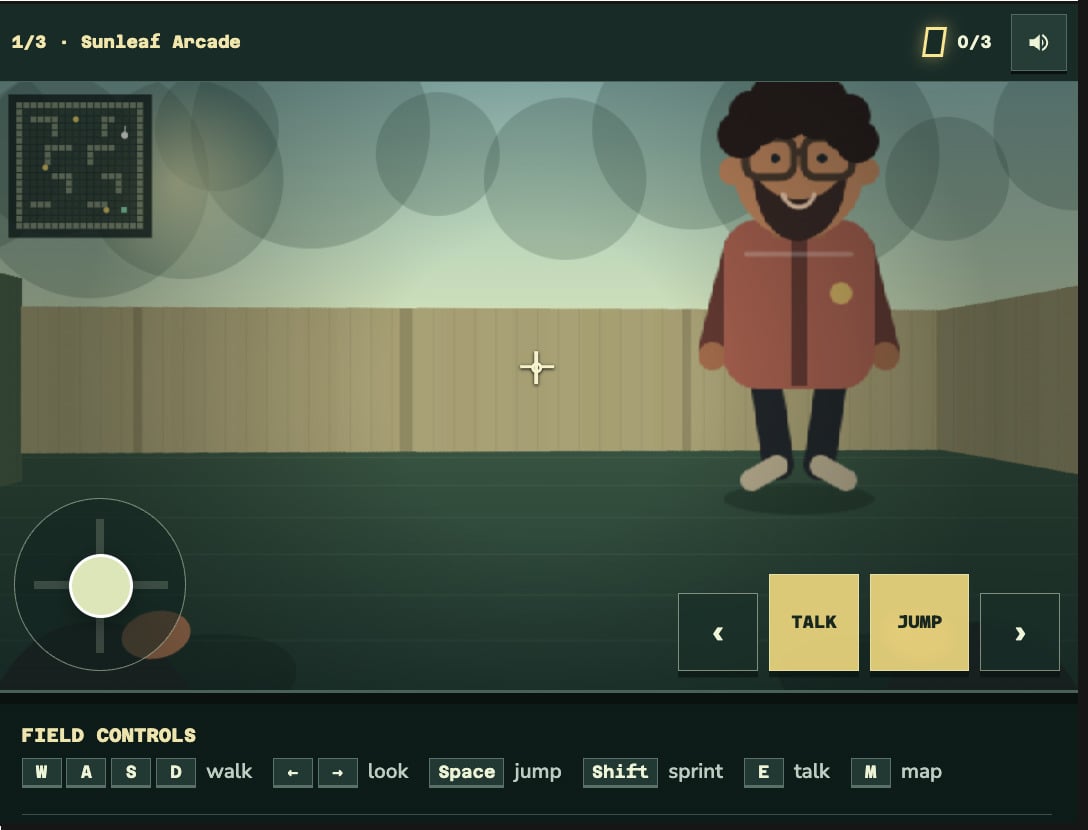
That done, I asked for an FPS variant. It made that too, with multiple levels and multiple versions of me as NPCs that have entire bodies, not just poofy-haired heads in boxes. The beard became a bit Amish.
Just asking for different kinds of rudimentary video games was getting a little old, so I asked it to plug the games into a website along with the drawing and the song, all tied together with a fittingly retro aesthetic. It named it “Garden Signals.” What you see below is a later version after a few tweaks:
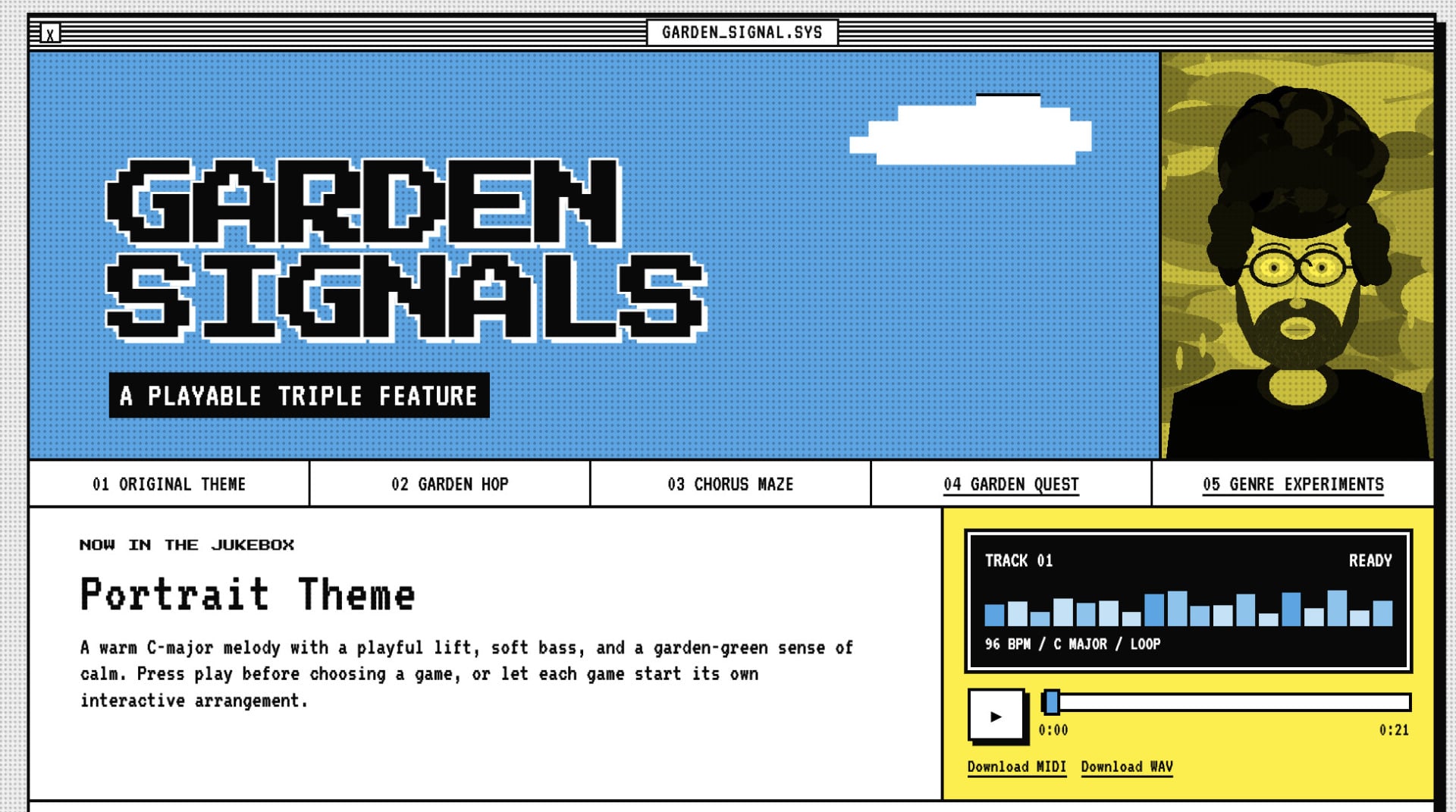
Wanting to burn through all my tokens as quickly as possible, I told it to come up with 50 different genre variations on my theme tune, and upload them all to a single page on the site where they could be played. It sorta did. To be honest, the “Genre Experiments” page on the Garden Signals site is full of the same uninspiring melody with slight tweaks, mostly the synthesized instrument the main melody is played on. The “Dubstep” variant isn’t all that distinct from the “Sea Shanty” variant. I will say that the “Chiptune” one sounds like chiptune.
In spite of the irritating lack of real variety, I was surprised—almost disappointed—at how quickly it dispensed with this assignment, so I asked it to make 50 unique animations that play each time one of the songs on the “Genre Experiments” page is played. None of them make any sense, but it made them.
At that point, I asked Muse how much of my free allotment of compute I had burned through. “You’ve used about 6% of your free weekly allowance, and it resets on September 15,” it told me, adding “You’re nowhere near getting cut off.”
So I asked it to create a more ambitious game. The third game is a third-person adventure game with true 3-D graphics, enemies, and a boss. It took a few tries to get something playable, but after some trial and error, it gave me “Garden Quest,” in which the player collects golden musical notes, and fights spiders, slugs, and, at the end, a boss called the Blight that’s sort of like a mix between a spider and a virus that expels a sort of energy wave and spawns enemies.
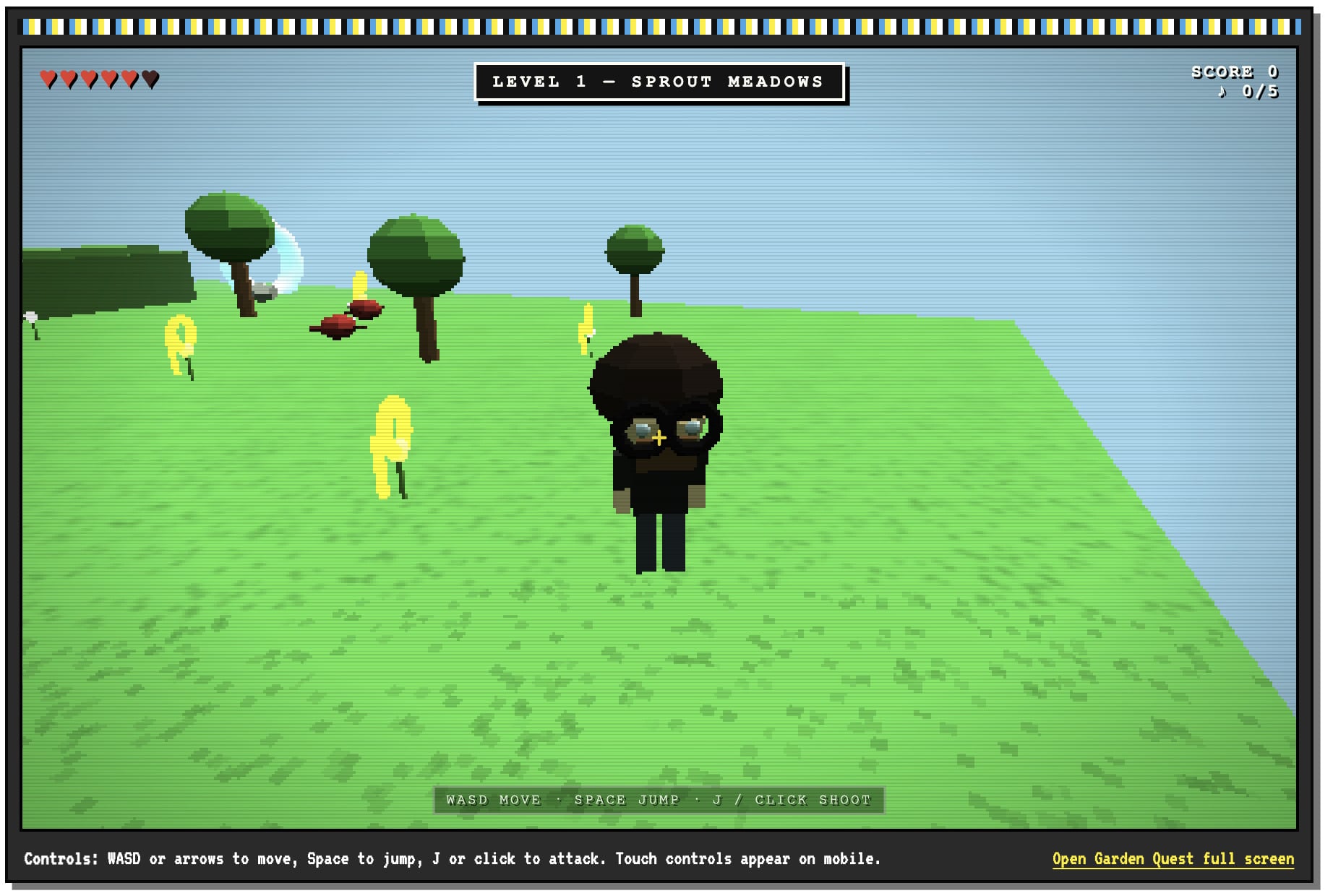
Muse incorporated it into the Garden Signals site. It was at this point that I realized these agentic systems don’t tend to be overly ambitious. If you really want to burn through tokens (and time for that matter) you have to hold their hands (or “hands”) through the process of producing something that actually works, rather than just letting them splatter out the bare minimum. Compared to the other assignments, Garden Quest took ages. And don’t get me wrong: it’s still a very bad game.
Then I asked it to build a fake bootable Mac that runs in my browser, with little applications—a paint program for instance. There should be a little “Games” folder, and inside should be all the games it has made. It did that. The Paint application works. It even has a little About This Computer popup.
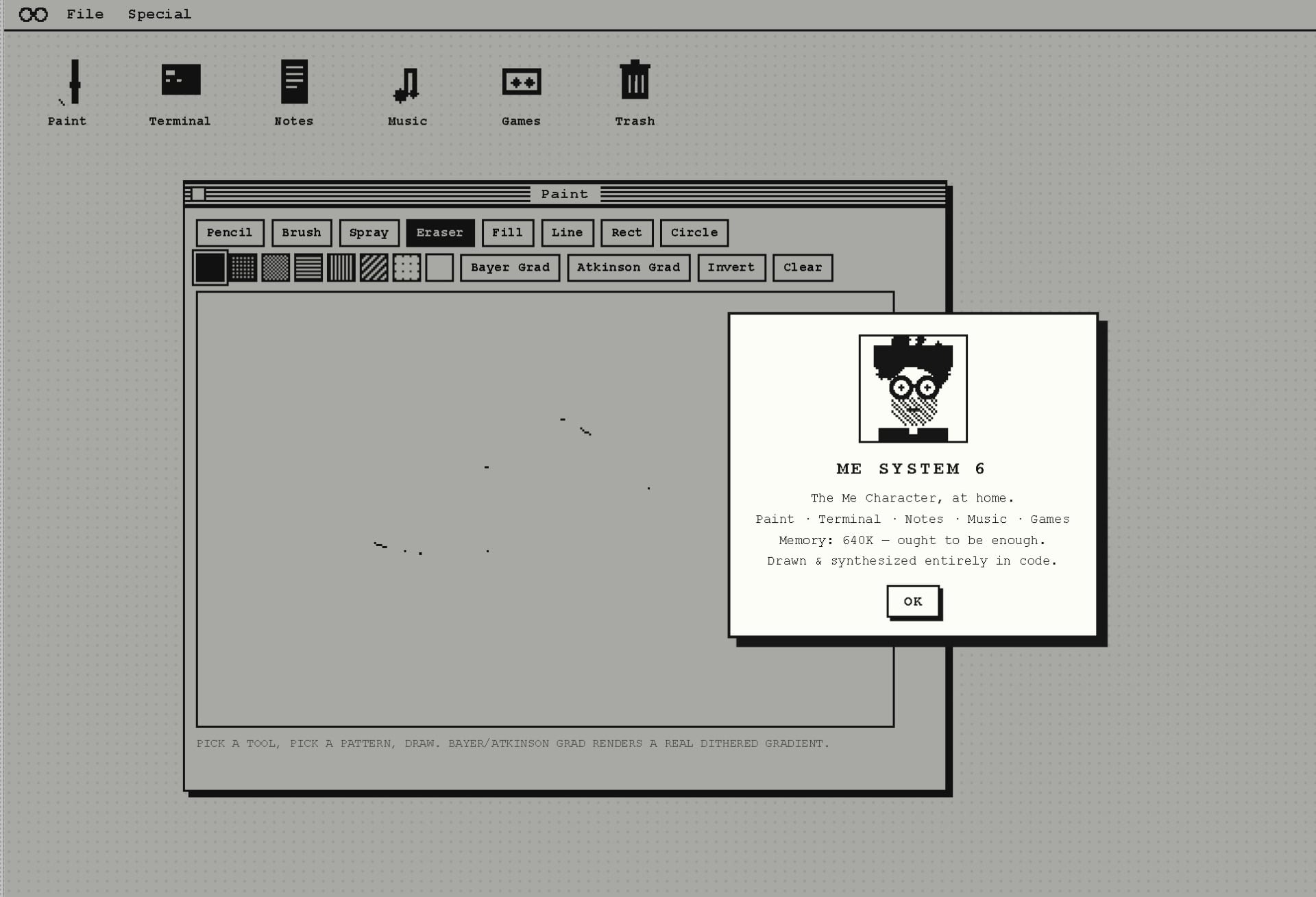
“You’re on the free plan with about 11% of your weekly allowance used, so you’ve got plenty of room,” it told me after it was done with that. I felt defeated.
My coding-related imagination is limited, and maybe a little stuck in the 90s, which is probably why I’m not all that inclined to vibe code productivity tools for myself. AI agents simply aren’t my thing.
So I don’t claim to have done anything productive with Muse, and I don’t currently see myself wanting to. What I was trying to do here was turn the token spigot on and see how much came out. Answer: So much it’s disturbing. None of this should be mistaken for a product review, just an illustration of the sheer volume of slop Meta is letting free users generate—that is until the price plan eventually changes. Meta spent a lot of money giving itself enough data center capacity to make all this possible. For now.