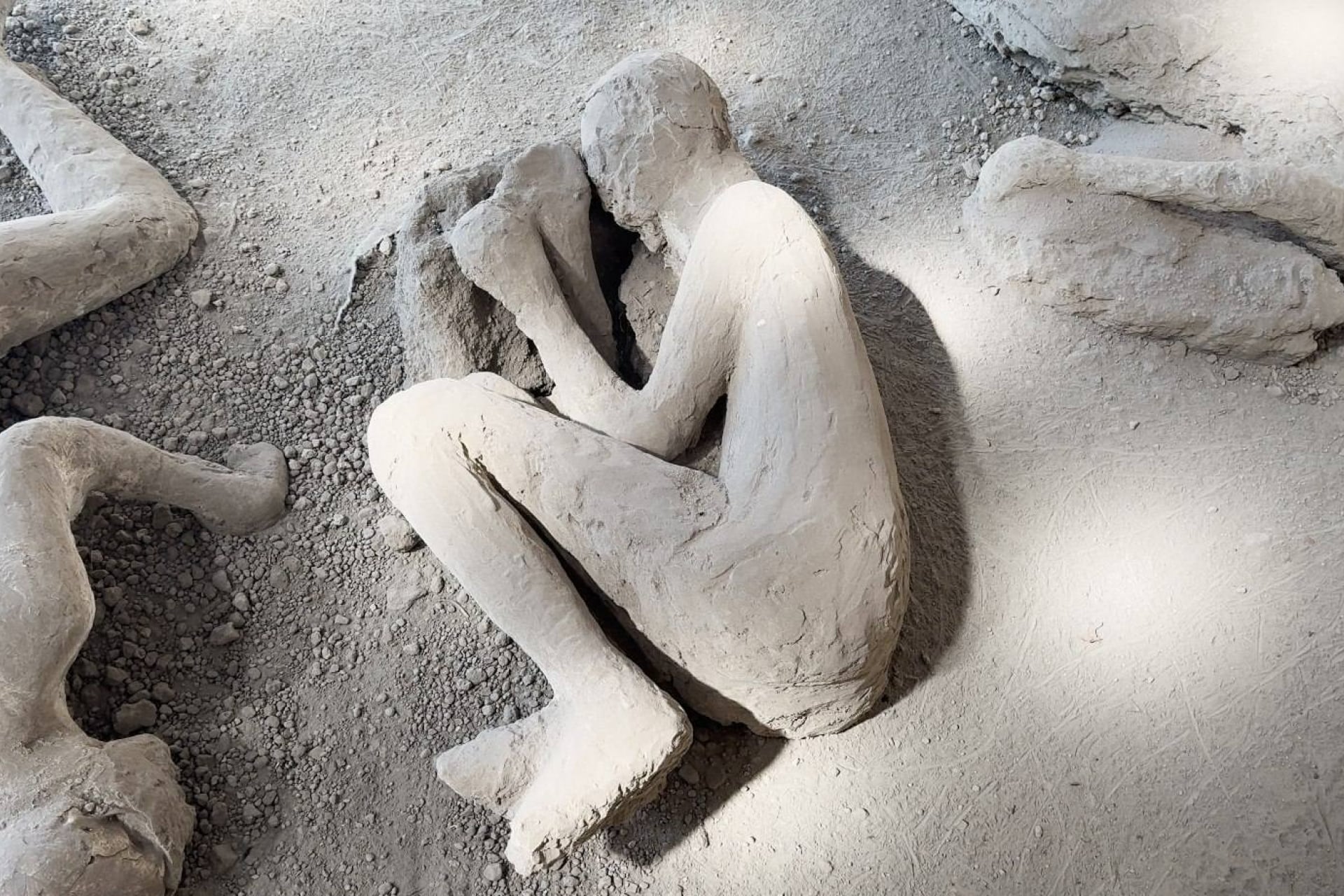
In 79 CE, Mount Vesuvius unleashed a destructive mix of fast-moving pumice, ash, and volcanic gas upon the Roman city of Pompeii. Many people in the path of these pyroclastic flows likely died of thermal shock, eventually leaving behind hollow forms buried inside volcanic ash as their bodies decomposed. With technological advances, scientists are now getting a much more detailed view of these long-decomposed bodies, including snapshots of their lives before the eruption.
In a recent statement, Italy’s Pompeii Archaeological Park reported the discovery of an individual who appears to have been a doctor in Pompeii. The person was initially found in 1961 during excavations of the Garden of the Fugitives, which preserved casts of around a dozen people caught in the pyroclastic cloud pouring out from Vesuvius. New diagnostic tests using X-rays, CT scans, and 3D reconstruction techniques revealed a small slab that experts determined likely contained surgical tools belonging to a physician.
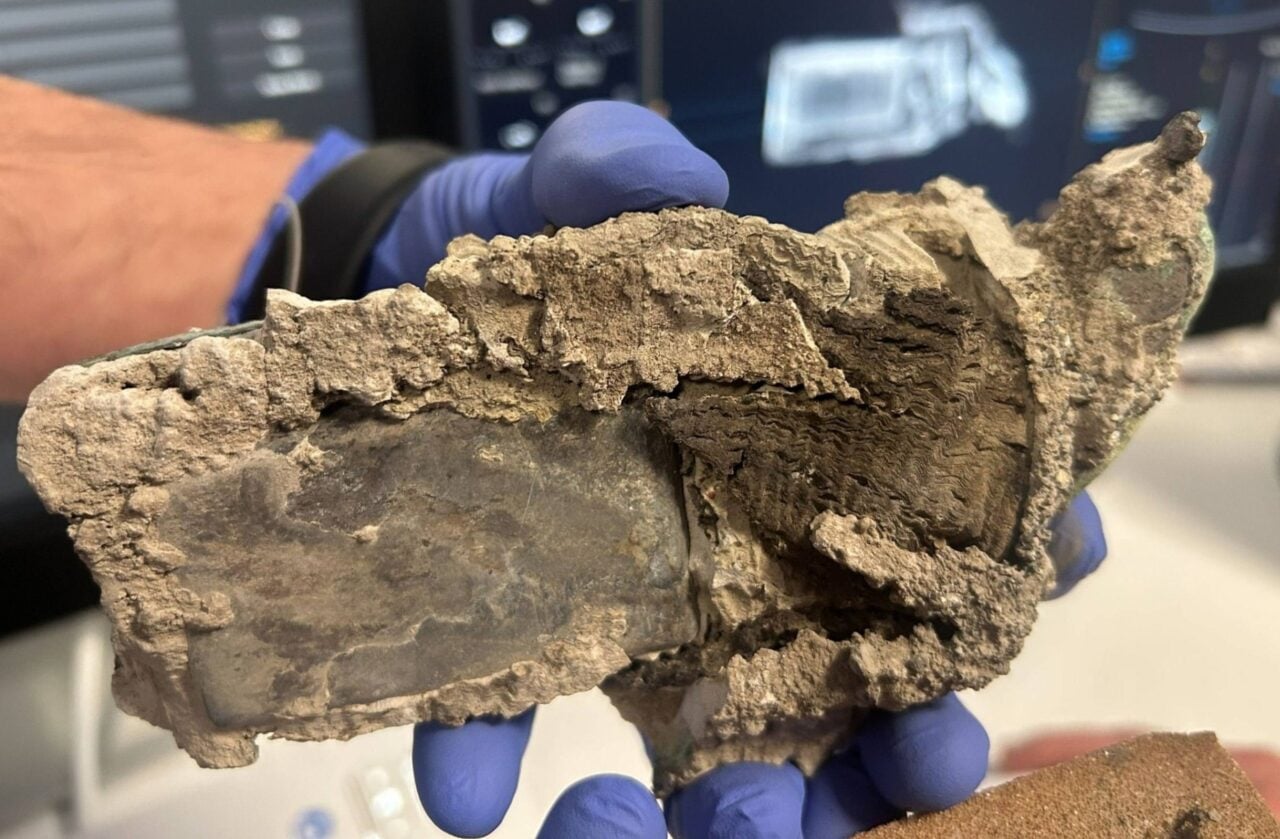
The results represent a “highly interdisciplinary effort that brought together archaeologists, restorers, physical anthropologists, archaeobotanists, numismatists, radiologists, diagnostic technicians, and digital modeling specialists, restoring not just an object, but a story of an interrupted life,” noted the statement, translated from Italian via Google Translate.
A devastated garden
The Garden of the Fugitives (Orto dei Guggiaschi) is a prominent archaeological site in Pompeii believed to be a local vineyard for wine production. According to Pompeii Archaeological Park, the fertile volcanic soil made the premises favorable for cultivating grapevines. So the vineyard was probably a lively hotspot for Pompeii’s residents—until, that is, the day Mt. Vesuvius decided otherwise.
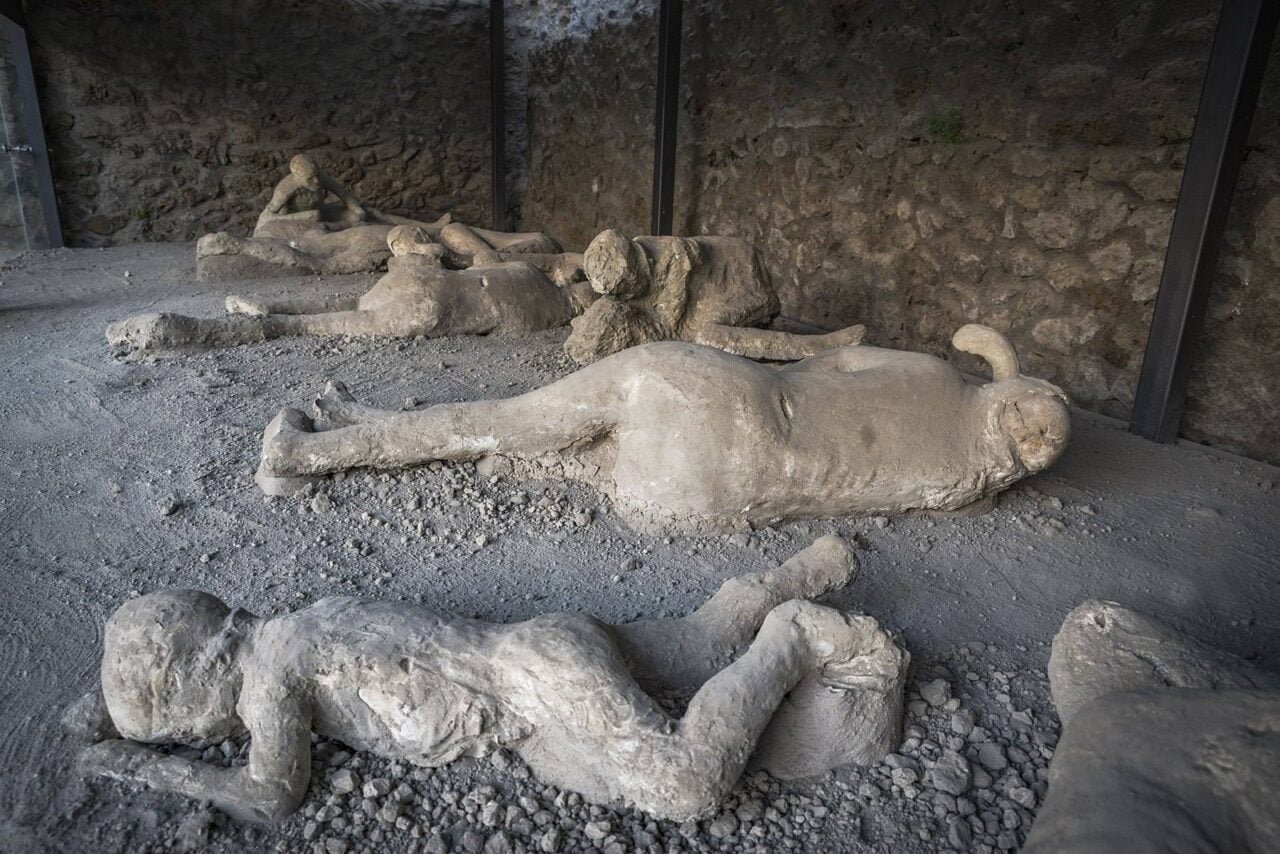
Excavations of this site began in 1748, but archaeologists obtained significant results around 1961. Initial investigations by filling hollow shells left behind by decomposed bodies found a diverse group of victims, including a woman carrying a toddler. In that sense, coupled with the rich archaeological composition of the site, the garden offers a “vivid and poignant window into the past,” the park noted.
And the doctor
More than 60 years since the garden’s first reveal, researchers dug deeper into the nitty-gritty details of the remains. Thanks to a combination of X-ray, CT scans, and 3D reconstruction techniques, scientists were able to analyze a curious case hidden inside the plaster cast of one of the victims.
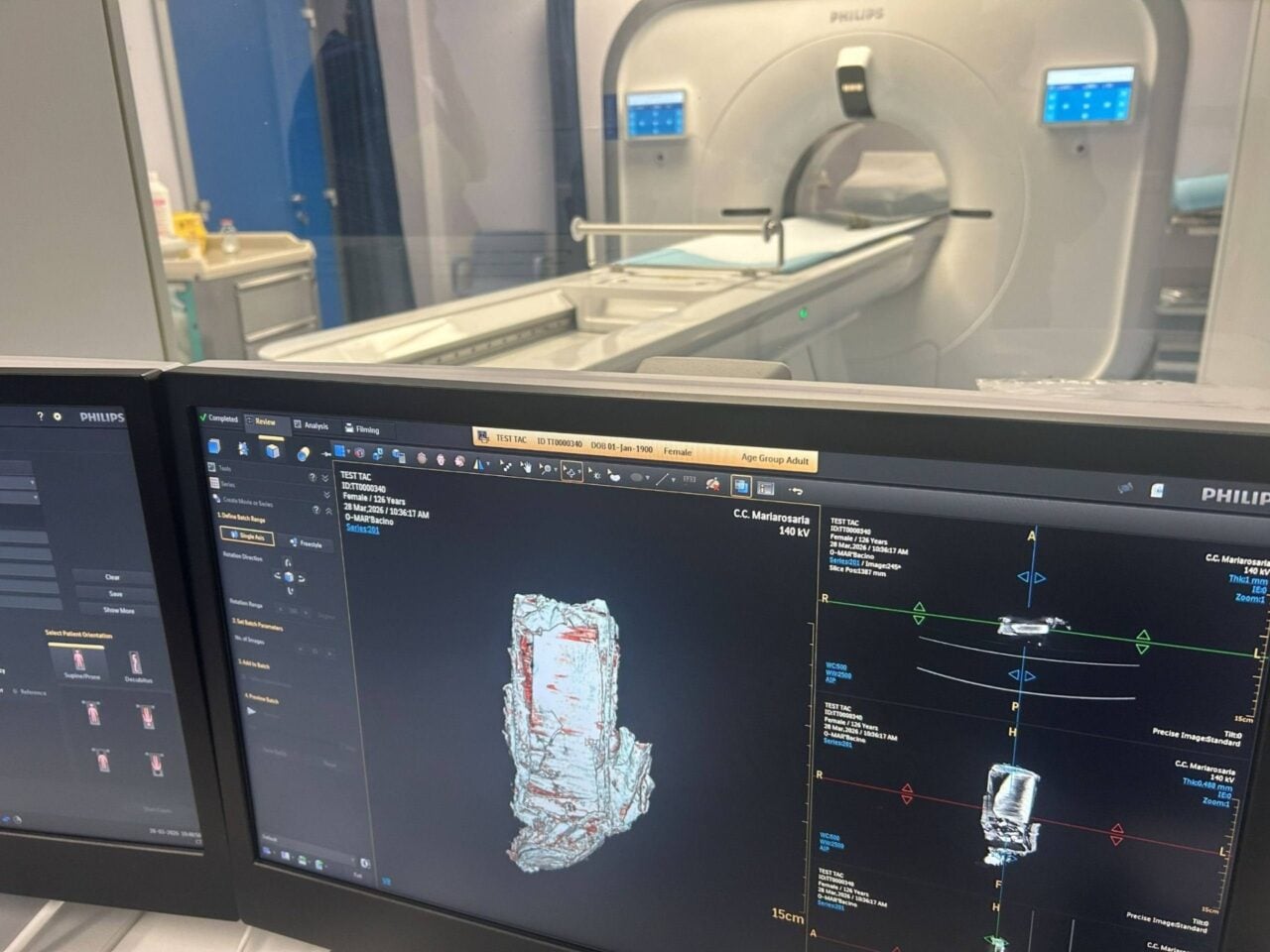
When researchers investigated the case with advanced imaging techniques, they identified a small slate slab and metal instruments that appeared to belong to a medicus, or a medical practitioner of the Roman Empire. The box’s mechanical structure was quite sophisticated, featuring a refined locking system with a toothed wheel. There was also a fabric bag containing bronze and silver coins.
Vesuvius truly caught Pompeii’s residents in the middle of their lives, and this new approach brings that reality into even sharper focus.
“This man took his tools with him to be ready to rebuild his life elsewhere, thanks to his profession, but perhaps also to help others,” Park Director Gabriel Zuchtriegel said in the statement. “We dedicate this small but significant discovery to all the women and men who continue to practice this profession today with a profound sense of responsibility and service to the community.”