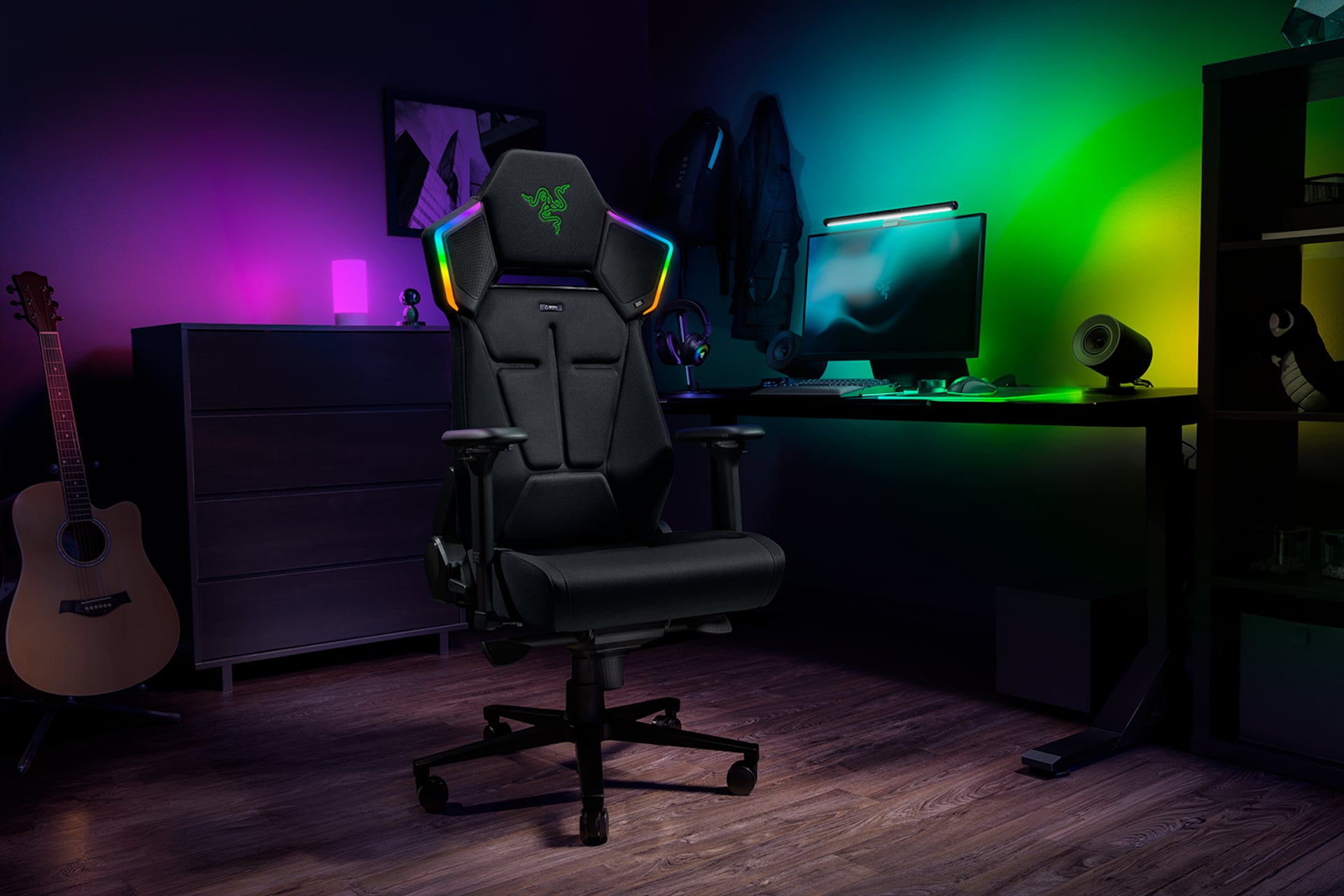
Razer’s next big black-and-green gamer chair is designed to make you hear and feel every in-game gunshot or the spine-rattling rumble of a speeding motorcycle. The Razer Soma Pro takes the same basic ergonomic design of the Soma Chroma from earlier this year but adds in back and bottom haptics alongside speakers built into the neck rest.
There are two new chairs filling out Razer’s Soma line, one called the Soma Sensa HD Haptics and the other a top-end throne, the Soma Pro. As the names suggest, the $500 Chroma is only coupled with the RGB strip that runs around the head rest. The step up from that base chair loses the lights but gains the Sensa HD Haptic suite. That $570 version includes six actuators positioned around the space for your lumbar that vibrate and rumble during your gaming sessions. The $1,000 Pro chair combines the RGB and haptics and brings the whole suite together with front-facing speakers positioned just behind your ears.
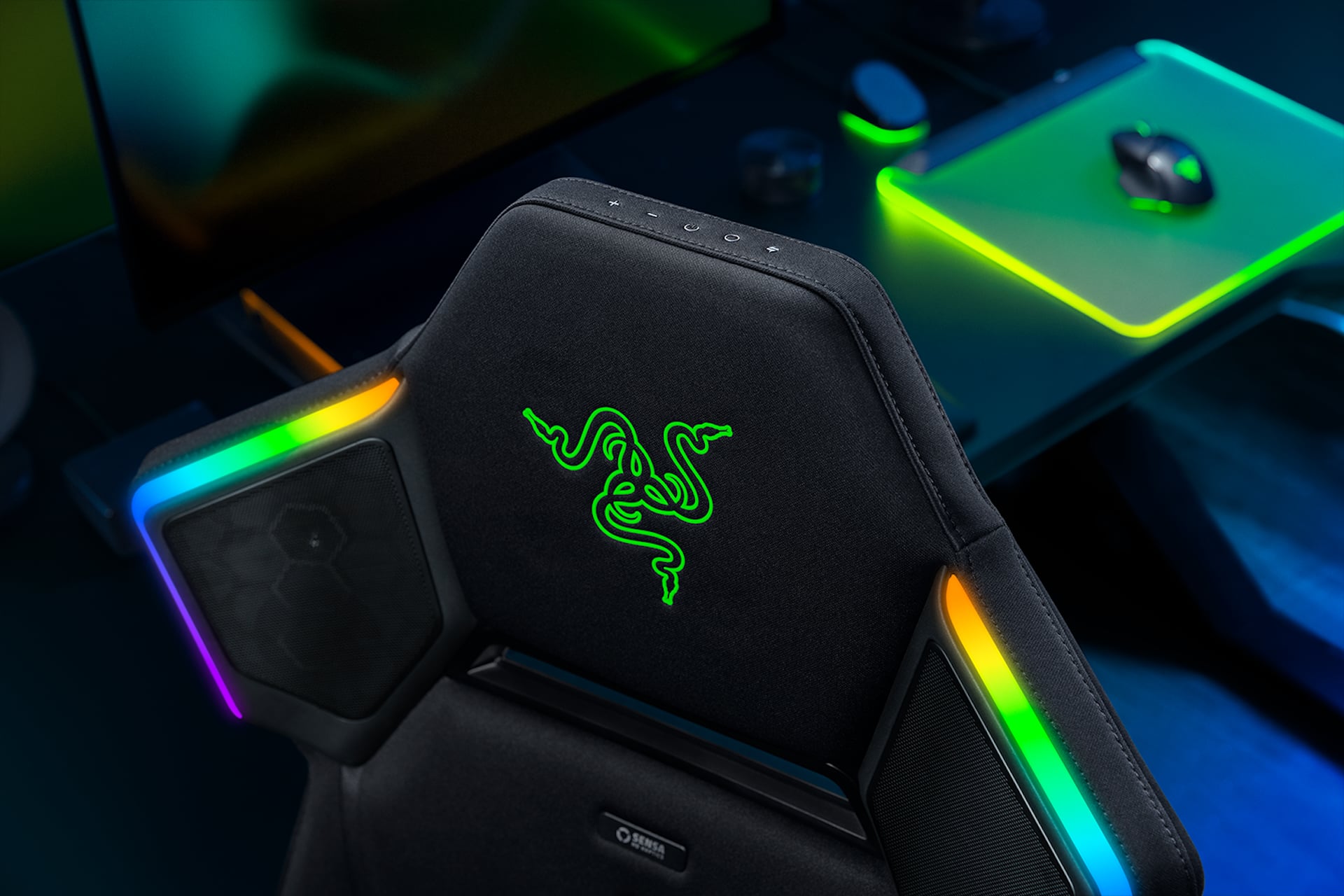
Us lucky folk at Gizmodo already had the chance to sit in a prototype version of this chair at CES 2026, back when it was dubbed “Project Madison.” In essence, the Soma Pro combines a Razer Freyja haptics cushion and a Razer Clio neck rest speaker into a single seat. All these “immersive” bits of tech actually make more sense together rather than separately. Instead of wrangling several products across Razer’s disparate suite of Synapse and Chroma software, you can control the sound and haptics on a singular device.
In terms of game support, Razer promotes that there are more than 100 titles that support the company’s Sensa HD Haptics. What that means is these games have special vibrations tied to in-game actions, like casting a spell in Final Fantasy XVI or casting… bullets in 007: First Light. Like the Freyja, the tech-filled chair will also drive the various haptic sensations based on in-game audio. In my experience, this can cause oddities where you may occasionally hear a deep, bassy voice of an NPC in your spine. On the other hand, this mode is awesome for players looking for more seat rumble in their racing games.
As for sound, we hope the Soma Pro presents better immersive audio than the Clio did last year. Razer claims the Soma Pro supports THX Spatial Audio, and you can also connect other external speakers to offer a kind of deskbound surround sound.
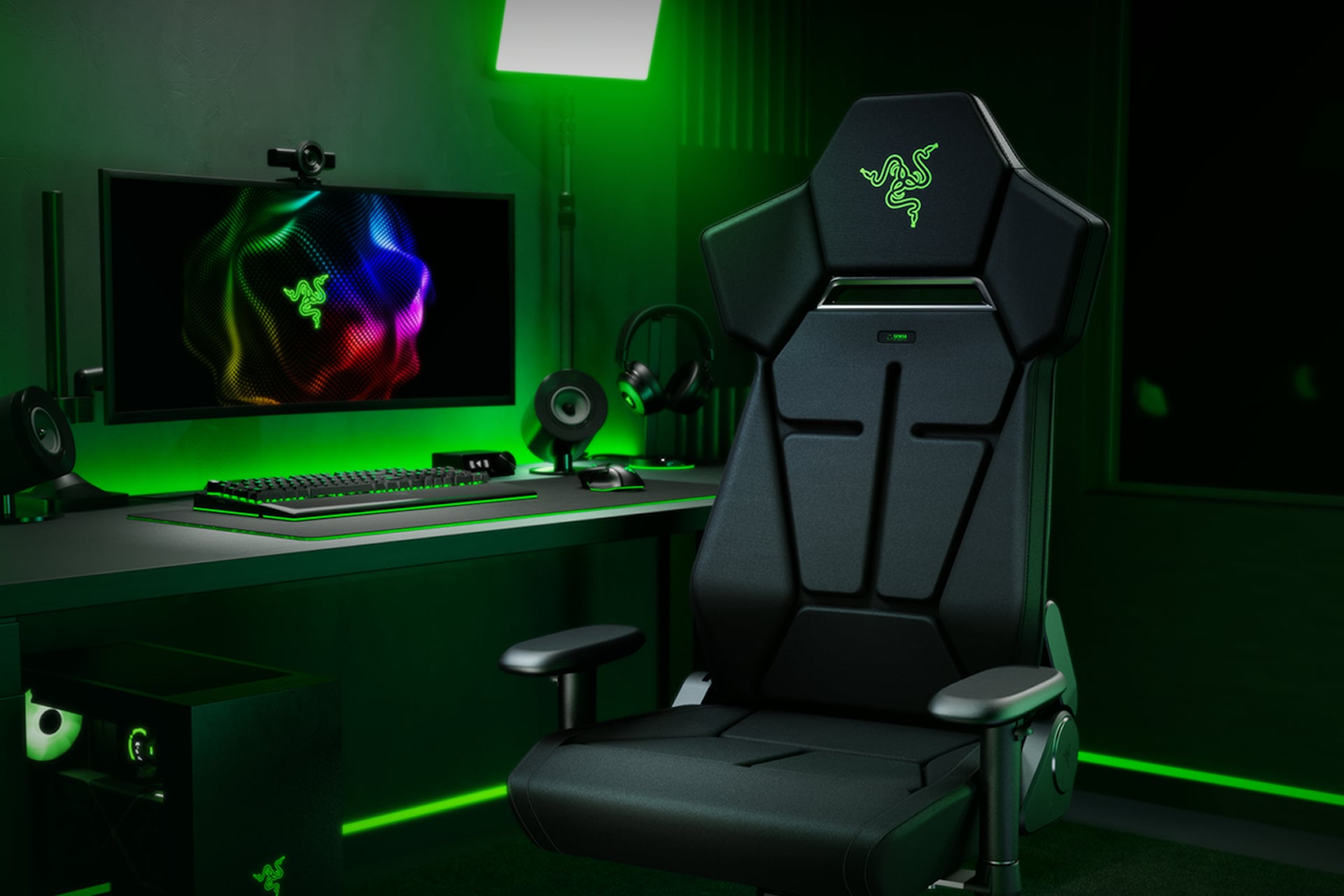
All this is powered using a USB-C cable you’ll need to plug into a wall outlet or power bank. If it’s the latter, you’ll need to source a pretty beefy bank, at least based on our own experiences. The Soma Chroma expects users to supply their own external battery pack to run the chair’s RGB lights in the headrest. A smaller, 10,000mAH battery pack didn’t seem to do the trick; we needed a larger 25,000mAH brick to get the lights working.
As awkward as it could be to actually use, I still heavily enjoyed the Freyja, even though I knew at the time it was a niche kind of product built for a very specific type of gamer. That’s why the $570 chair seems to be more up my alley, since it doesn’t include any of the unnecessary RGB or the obscene $1,000 price tag of the Razer Soma Pro. Either way, it’s a steep cost for the sake of rumbling your butt during your late-night gaming sessions. But let’s face it, some gamers wouldn’t dare put a price on “immersion.”