We liked… the writing
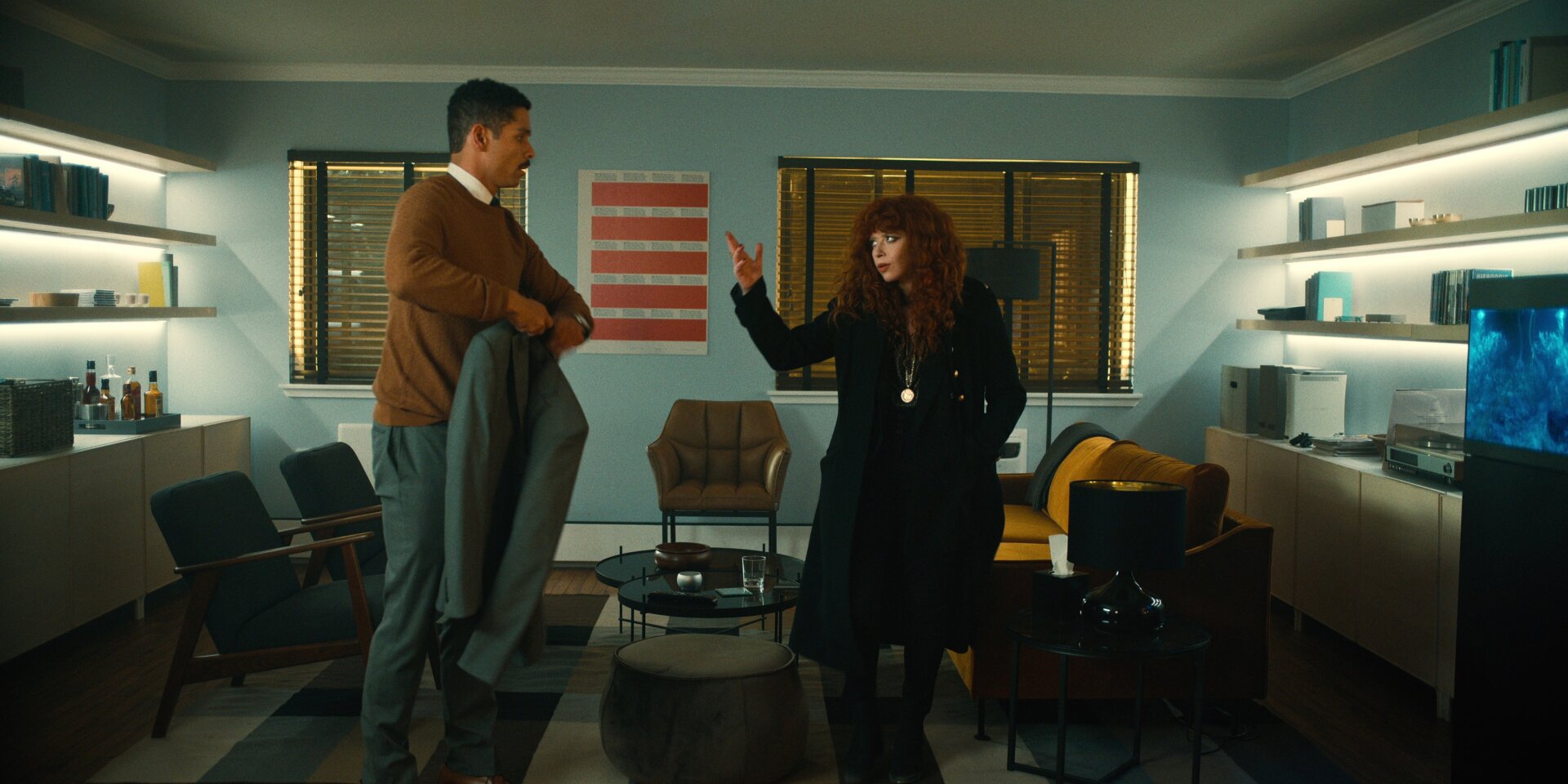
It takes a lot of planning to create a story about time-loops, as season one was structured in such a way that makes satisfying sense; with season two’s shift to time-travel, the attention to detail had to be even more impeccable. Fortunately, not only does Russian Doll’s second season take Nadia and fellow traveler Alan (Charlie Barnett) on wild journeys into the past via New York City’s subway system, introducing multiple timelines to keep track of, it does it in a way that feels seamless and comprehensible for the audience, even when time is crumbling around the characters in the story itself.
It is also very cool to see a story that focuses so squarely on women’s lives. Mostly this means the generations that swirl around Nadia: her mother Nora (Chloë Sevigny), her grandmother Vera (Irén Bordán), her godmother Ruth (at different ages, Elizabeth Ashley and Annie Murphy)—as well as her best friends Maxine (Greta Lee) and Lizzy (Rebecca Henderson). But even Alan’s subplot is mostly centered on his grandmother, Agnes (Carolyn Michelle Smith), since when Nadia and Alan hop on their time-travel trains, they journey to the past to witness events by “becoming” their female family members.
Also, on a more superficial level, Russian Doll is just jam-packed with quips, one-liners, and unexpected pop-culture references. Nadia in particular is a master of zingers, no matter what situation the show tosses her into. Even when her “when the universe fucks with you, you let it” attitude becomes a challenging characteristic (we’ll get to that in a few more slides), she consistently dishes out wry, dry humor, helped along by impeccable delivery and her gruff New York accent.