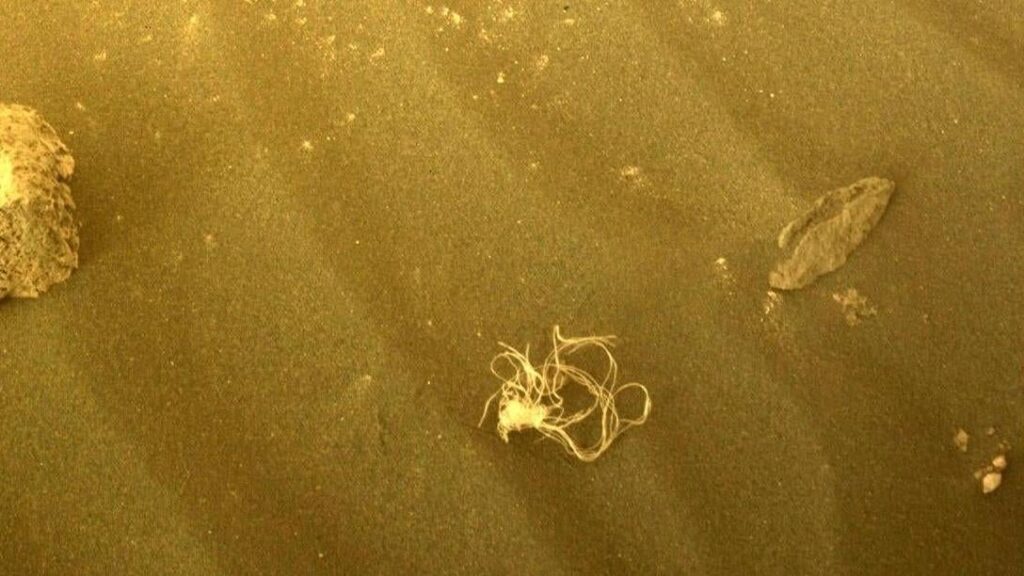

A wiggle here and a rotation there have fixed the Mars rover’s pebble problem.
The collision will mark the first time that our space stuff has unintentionally reached the lunar surface.
The researchers suspect a globular cluster contains an elusive intermediate-mass black hole.
Latest estimates suggest the mission could last upwards of 20 years—nearly twice as long as initially hoped.
The observatory has been traveling for nearly a month to reach the second Lagrange point.
The sunlight-propelled NEA Scout will investigate a little-known asteroid class, with a planned launch later this year.
China claims the debris came to within 48 feet of its satellite, but the true distance may be impossible to know.
The Space Force mission seeks to deliver a pair of surveillance satellites to geosynchronous Earth orbit.
The $10 billion telescope is nearly at its destination in deep space.
Photo-bombing Starlink satellites are increasingly complicating ground-based observations, especially those made during twilight.
China's Yutu-2 lunar rover has discovered some interesting features of the far side of the Moon.
Don't worry—the rock is over a million miles away and poses no threat to Earth.
Debris is temporarily stopping the rover’s rock-sampling mission.
Discovered in Antarctica in 1984, the meteorite kindled a debate that’s been raging for decades.
Only a small handful of exomoons have ever been detected, none of them confirmed.
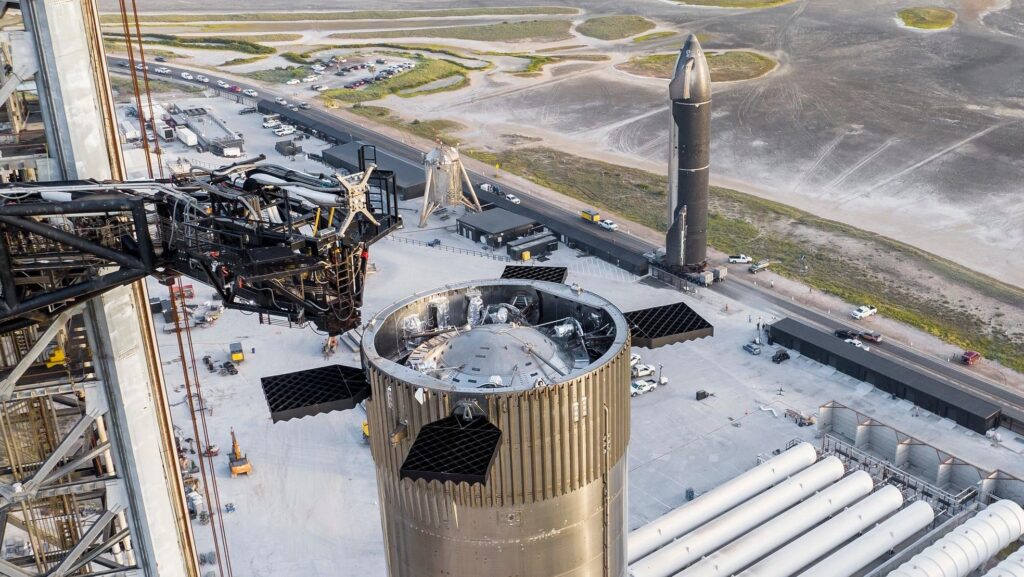
The 469-foot-tall launch and catch tower is being put through tests at SpaceX’s Texas launch facility.
The probe's solar panels are covered in dust, which could spell trouble for the mission.
The Local Bubble is probably the result of millions of years of stellar explosions.
A European space telescope observed what appears to be an oblong world.
The Mars rover is dealing with some debris that stopped its sample collecting process.