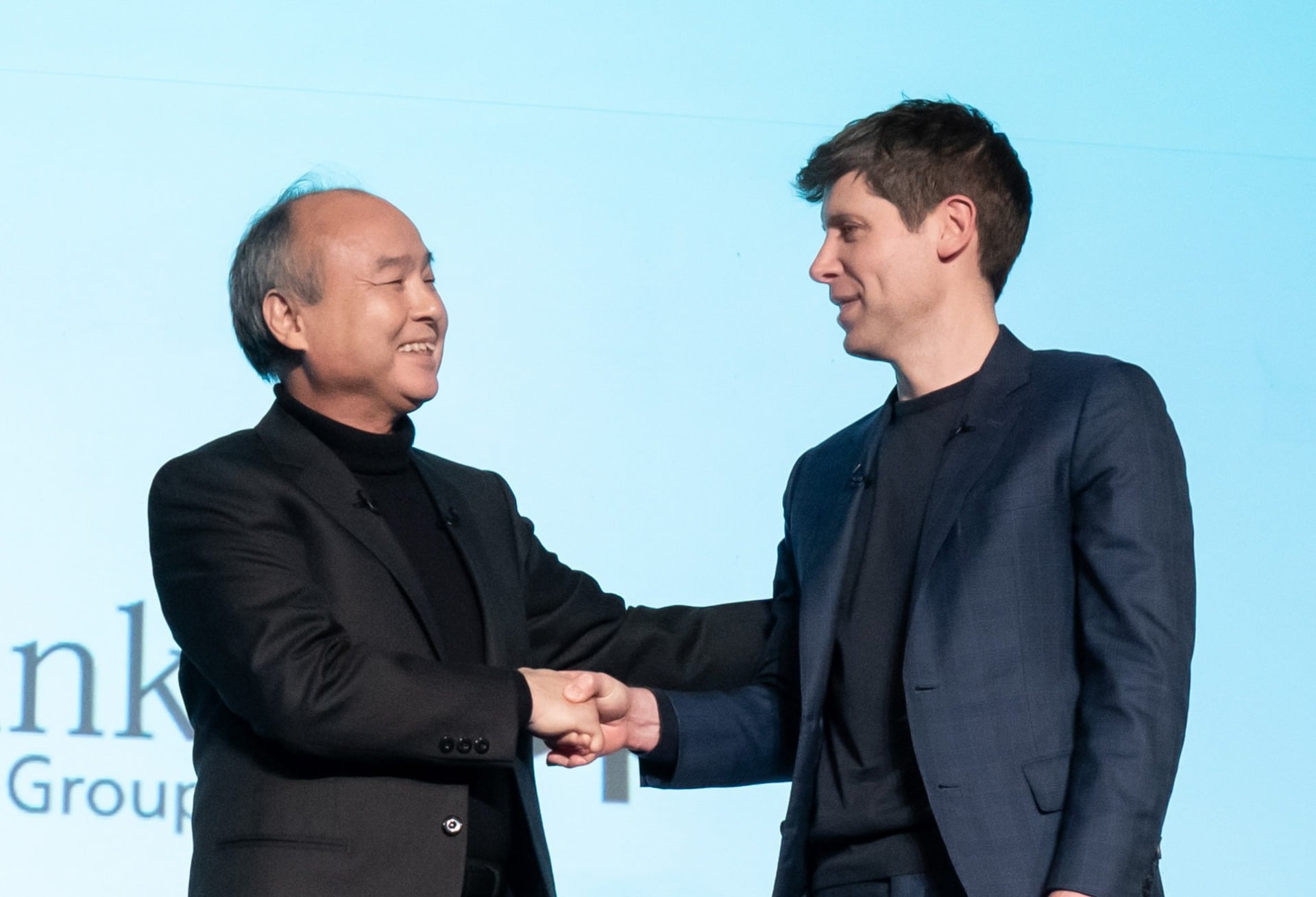
Softbank founder and CEO Masayoshi Son is Japan’s undisputed king of tech VC, but his personality contrasts sharply with the image you probably have of U.S. based tech investors. Descriptions from people who know him make him sound gentle and soft. He talks often about being sad and crying when things aren’t going well.
Judging from a new report from Bloomberg, it sounds like insiders at Softbank are worried he’s about to do some of his worst crying in years. Recent turbulence at OpenAI has stakeholders apparently telling Bloomberg that Son may have been too trusting of OpenAI CEO Sam Altman, just as he was once too trusting of WeWork’s disgraced founder Adam Neumann.
That would not be good, because Softbank’s stake in OpenAI totals about $60 billion.
The story goes that Masayoshi Son was the world’s richest man for three days in 1999 or possibly 2000, and then the Dot-Com Bubble burst and he had to build fresh from a measly low-ten-figure net worth. Some of this may be apocryphal, but it’s important to Son’s personal mythology.
The next chapter in the Son story is that a wise investment of Son’s from around the time of the Dot-Com Crash would vindicate him. Son gambled on Chinese tech conglomerate Alibaba—and its charismatic founder, Jack Ma, and that bet eventually paid off enormously—described as a 4,000-fold increase shortly after Alibaba’s IPO in 2014. This second triumph made Son look like a prophet once again.
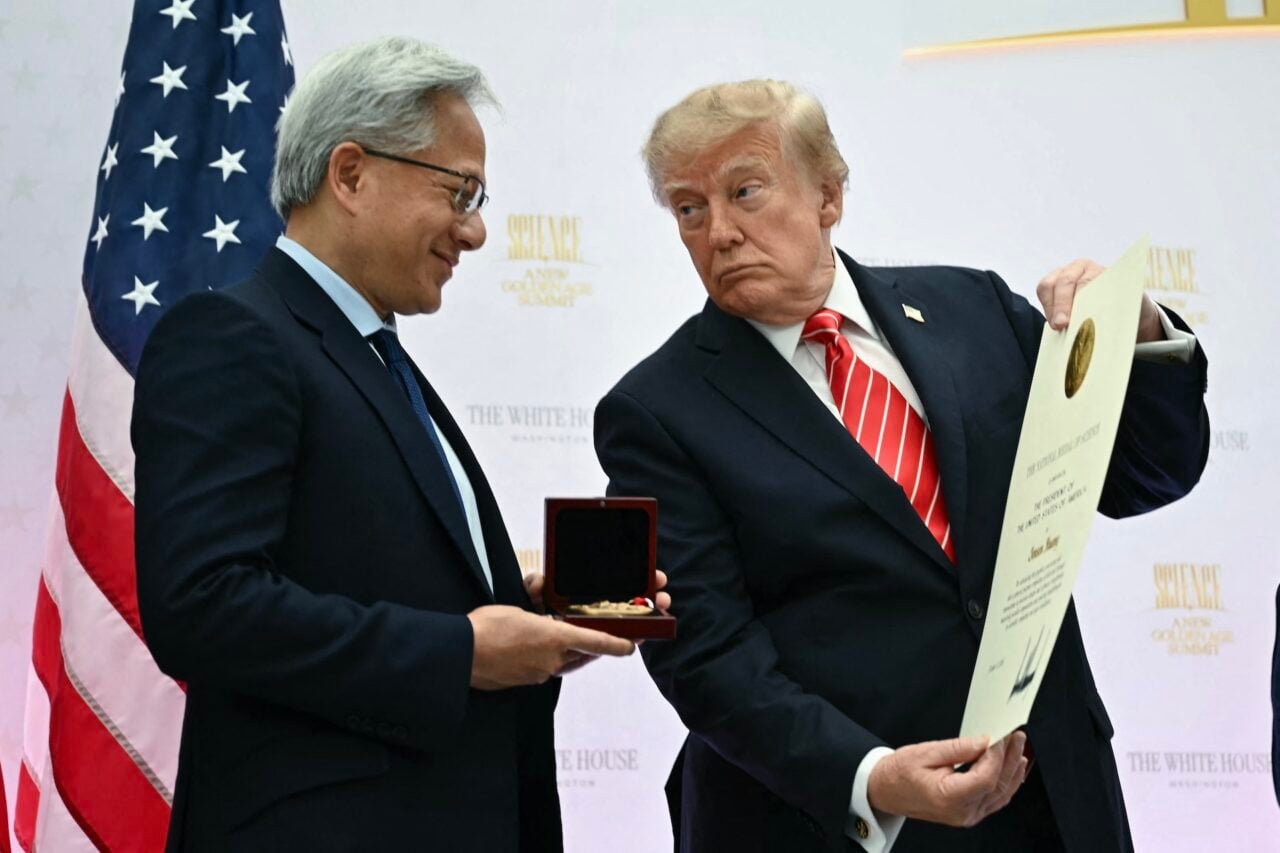
Here’s a video of Nvidia boss Jensen Huang feeding the Son legend:
Son blubbers melodramatically in the video because he famously had to unload his Nvidia investments to invest in OpenAI. As Bloomberg notes, Son didn’t get to be what you would call an early investor in OpenAI, even though he wanted to be.
Son’s interest in OpenAI materialized during a dark, tearful few years for Son. He had developed what he would later characterize as “love” for WeWork founder Adam Neumann. SoftBank poured $16 billion into WeWork, only for the company to essentially collapse, and for Neumann to step down as CEO. WeWork became a writedown for SoftBank in 2020.
“I overestimated Adam’s good side,” Son said of Neumann in 2019, according to the New York Times. Regarding “his negative side,” Son said, “in many cases, I turned a blind eye, especially when it comes to governance.”
Son said in 2023 that in the years following the WeWork debacle, he had an existential crisis, and also became fascinated with ChatGPT, according to Fortune. “There were times when I felt a real emptiness,” he reportedly said at one meeting. He also apparently said, “The tears didn’t stop for days.”
But when he worked with ChatGPT, he “really felt great because my idea was praised as feasible and wonderful.” When he got to the other side of his depression, he wanted to become an “architect” who would “design the future of humanity.”
In Son and Altman’s own telling, according to Fortune, Altman first pitched Son in 2017, and Son rejected him. But Son was won over in 2019, around the time OpenAI was first making headlines with its GPT models. Son says he got AGI-pilled at that point, and that he said of Altman’s AGI ambitions, “I believe you. I want to invest,” adding “From there I was a believer. I never doubted.”
Softbank only started investing in OpenAI when the company already had a global profile. It invested $500 million in 2024, about $30 billion in 2025, and about $30 billion earlier this year.
Many have doubted Altman in recent years. The OpenAI board famously doubted him a great deal, at least during the time when they briefly fired him. The reporting in an April New Yorker article—much of which was anonymously sourced—cast doubt on Altman’s trustworthiness as a leader. If some of Bloomberg’s other reporting is true, OpenAI could also soon be dethroned by Anthropic as the world’s most valuable AI company.
All of this may augur poorly for the future of Softbank’s OpenAI investment, described by Bloomberg as its “largest investment to date in a single private company.”
In summarizing the concerns of anonymous sources close to Softbank, Bloomberg writes, “Son tends to fall hard for founders and to wholeheartedly embrace their aggressive expansion plans.” Bloomberg’s insiders apparently also have concerns that Altman is undervaluing Son as a visionary leader and treating him like an inferior partner—as exemplified by Son not being granted an OpenAI board seat. Some of these insiders apparently fret that Son’s infatuation with Altman comes from what Bloomberg summarizes as regret over not getting into AI sooner, and “a desire to secure his own legacy.”
None of this may matter. Softbank maintained to Bloomberg that it has “a high level of conviction” in Altman and OpenAI. The two companies, Softbank says, have “built a strong strategic partnership grounded in a shared view of where AI is headed and what it will require at global scale.”
Softbank’s profits were up by $32 billion in its most recent earnings report, Bloomberg notes, adding that much of that profit was coming from OpenAI’s valuation as it continues to skyrocket. Then again, Bloomberg also notes that shares in Softbank are currently down 20% from an all-time high late last year.