When galaxies merge
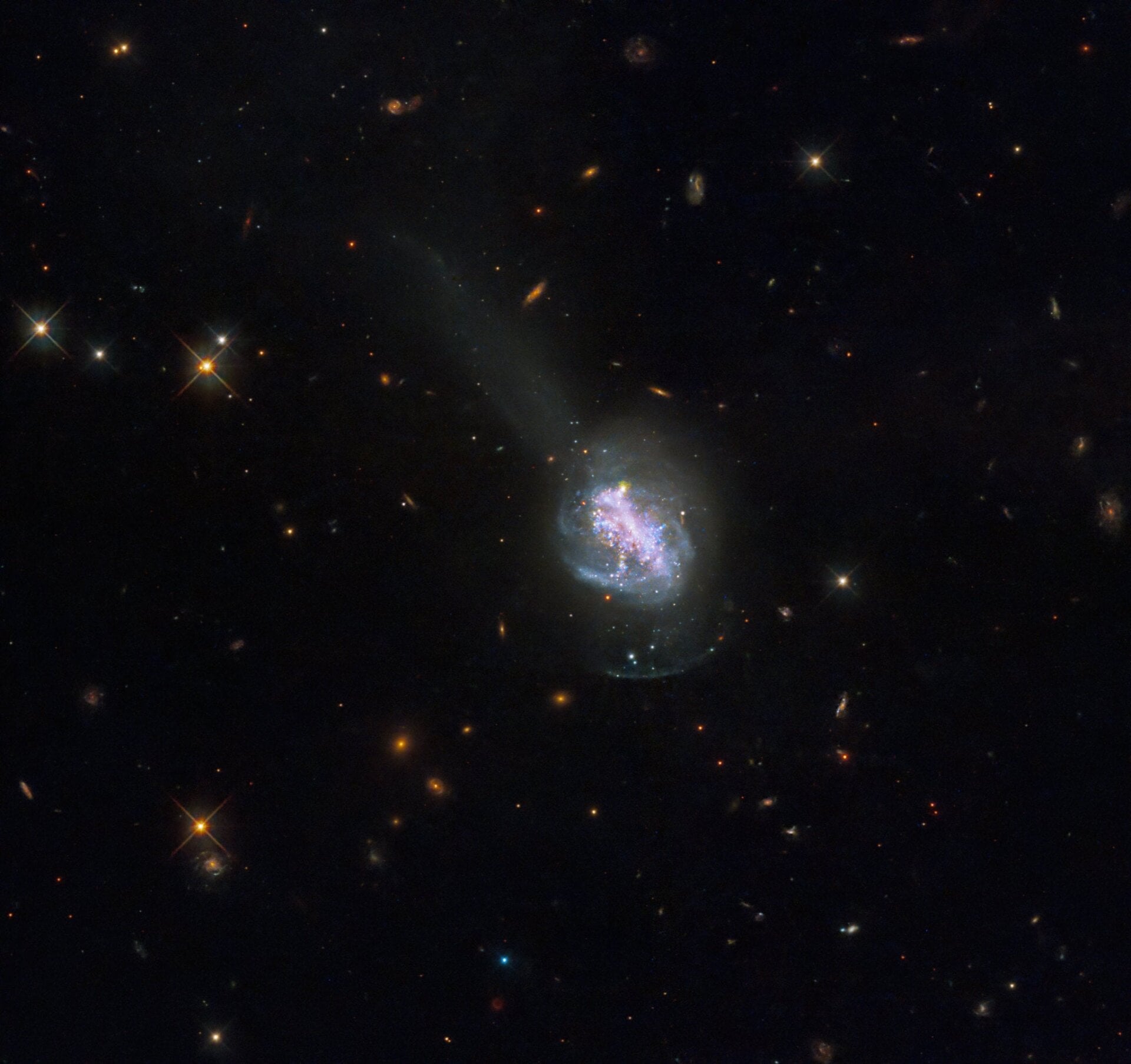
Hubble’s greatness is on display again with this image, showing ESO 185-IG012, a luminous blue compact galaxy. Known as BCGs they’re “nearby galaxies that show an intense burst of star formation,” NASA says. And they’re “unusually blue in visible light, which sets them apart from other high-starburst galaxies that emit more infrared light.” Astrophysicists study BCGs because they offer insights into early galaxies, helping them to better understand galaxy formation and evolution from billions of years ago.