NASA is getting serious about its plans to develop a lunar base, announcing a slew of missions bound for the Moon to help lay the groundwork for the habitat’s infrastructure.
During an event held on Tuesday, NASA revealed four companies assigned to building rovers, landers, and drones as part of the first Moon base infrastructure and exploration missions. The earliest missions may launch as soon as this year, while the rest are planned ahead of the anticipated astronaut landing on the Moon.
“Every mission, crewed and uncrewed, will be a learning opportunity as we return to the lunar surface, build the infrastructure to stay, and master the skills required to live and operate in one of the most demanding and dangerous environments imaginable,” NASA Administrator Jared Isaacman said in a statement.
Leaving to stay
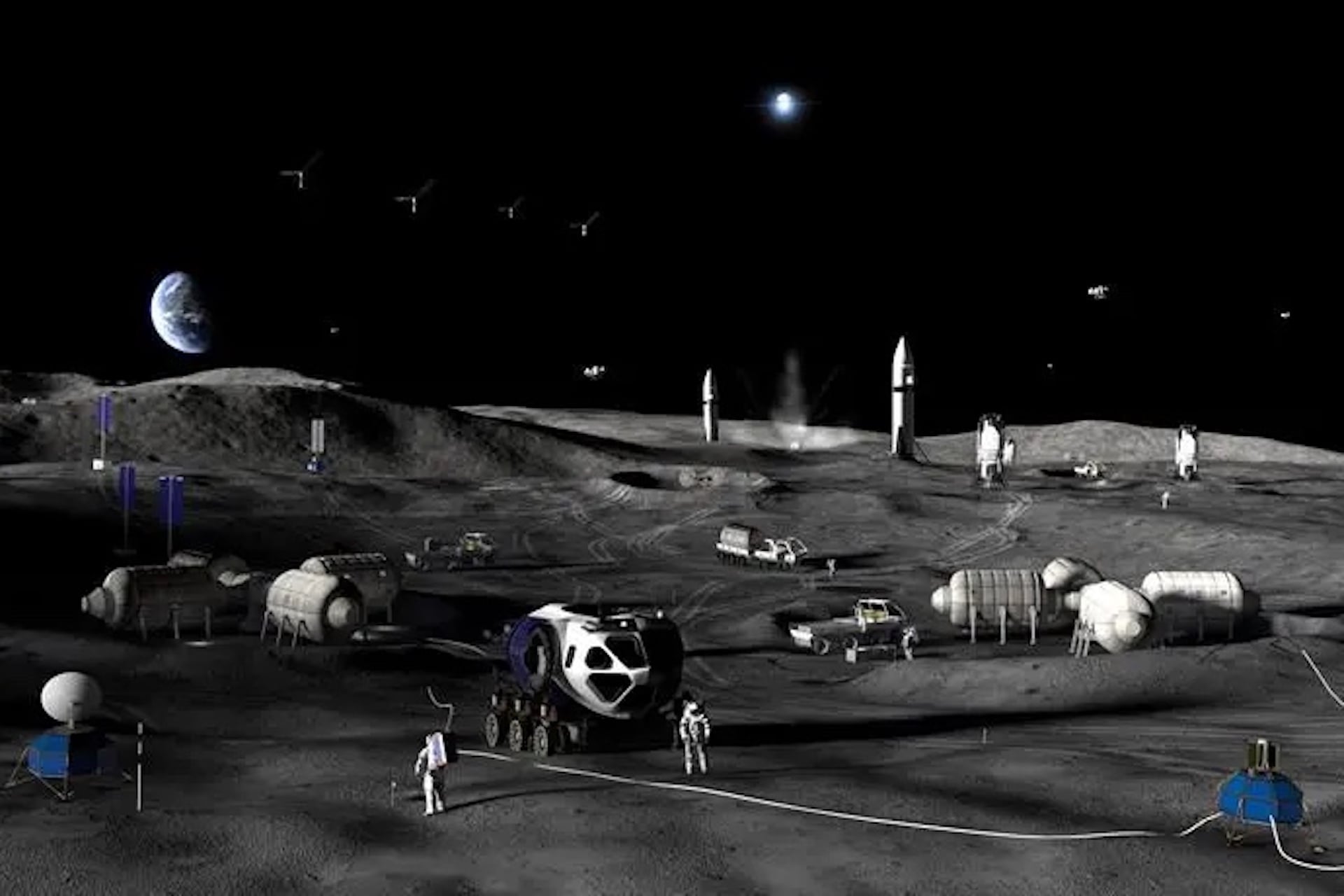
As part of the ongoing Artemis program, NASA is heavily focused on building a permanent base on the Moon within the next decade. The agency is aiming to launch uncrewed missions to the Moon on a regular basis to lay down the infrastructure for the lunar base, starting with three missions planned for later this year.
NASA will use Blue Origin’s Blue Moon Mark 1 Endurance lander to deliver a suite of instruments to study the lunar surface ahead of the Artemis 4 Moon landing to help reduce risk for future crewed missions.
Later this year, Astrobotic’s Griffin lander is set to deliver more than 1,000 pounds of cargo to the Moon’s south pole, including Astrolab’s FLIP rover. The rover will also be used to study ways to mitigate the risks that lunar dust poses to vehicles. Another mission planned for 2026 will use Intuitive Machines’ Nova-C Trinity lunar lander to deliver Lunar Vertex, a rover designed to study a magnetic anomaly known as lunar swirls.
NASA awarded Astrolab $219 million and Lunar Outpost $220 million in firm-fixed-price contracts for each company to develop a lunar terrain vehicle (LTV). The vehicles are meant to be simplified versions of concepts that the companies had pitched last year, with NASA hoping that the vehicles can be ready for launch sooner and are cheaper to operate. The LTVs are designed to operate autonomously on the lunar surface, as well as be driven by astronauts.
This initial set of missions is the first of more than a dozen missions that will be announced this year, according to NASA.
But wait, there’s more
During the event, NASA also shared an update on its MoonFall program, four drones designed to hop across the Moon’s surface and survey hard-to-reach areas. While MoonFall is being developed at NASA’s Jet Propulsion Laboratory, the agency has selected Firefly Aerospace to build the spacecraft that will transport the drones from Earth orbit to the Moon. The targeted launch for MoonFall is 2028.
After launching the initial batch of payloads to the lunar surface, NASA is aiming to secure a spot on the Moon to build its base. The agency is looking to establish a semi-habitable infrastructure by 2032. The final phase of NASA’s plan will run from 2032 to 2036; that’s when the agency hopes to build habitats for long-duration human missions on the lunar surface.
NASA is ramping up its Artemis timeline, with plans to land astronauts on the lunar surface in 2028 and possibly do it twice that same year. In late February, Isaacman revealed NASA’s plan to launch an additional mission in 2027 to attempt a rendezvous between the Orion spacecraft and commercial landers in Earth orbit before using them to land astronauts on the Moon. The test flight will involve either Blue Origin’s lander and SpaceX’s Starship or both landers.
The accelerated Artemis timeline is ambitious, but it largely depends on the readiness of NASA’s commercial partners to deliver their various vehicles on time before astronauts are scheduled to set foot on the lunar surface.