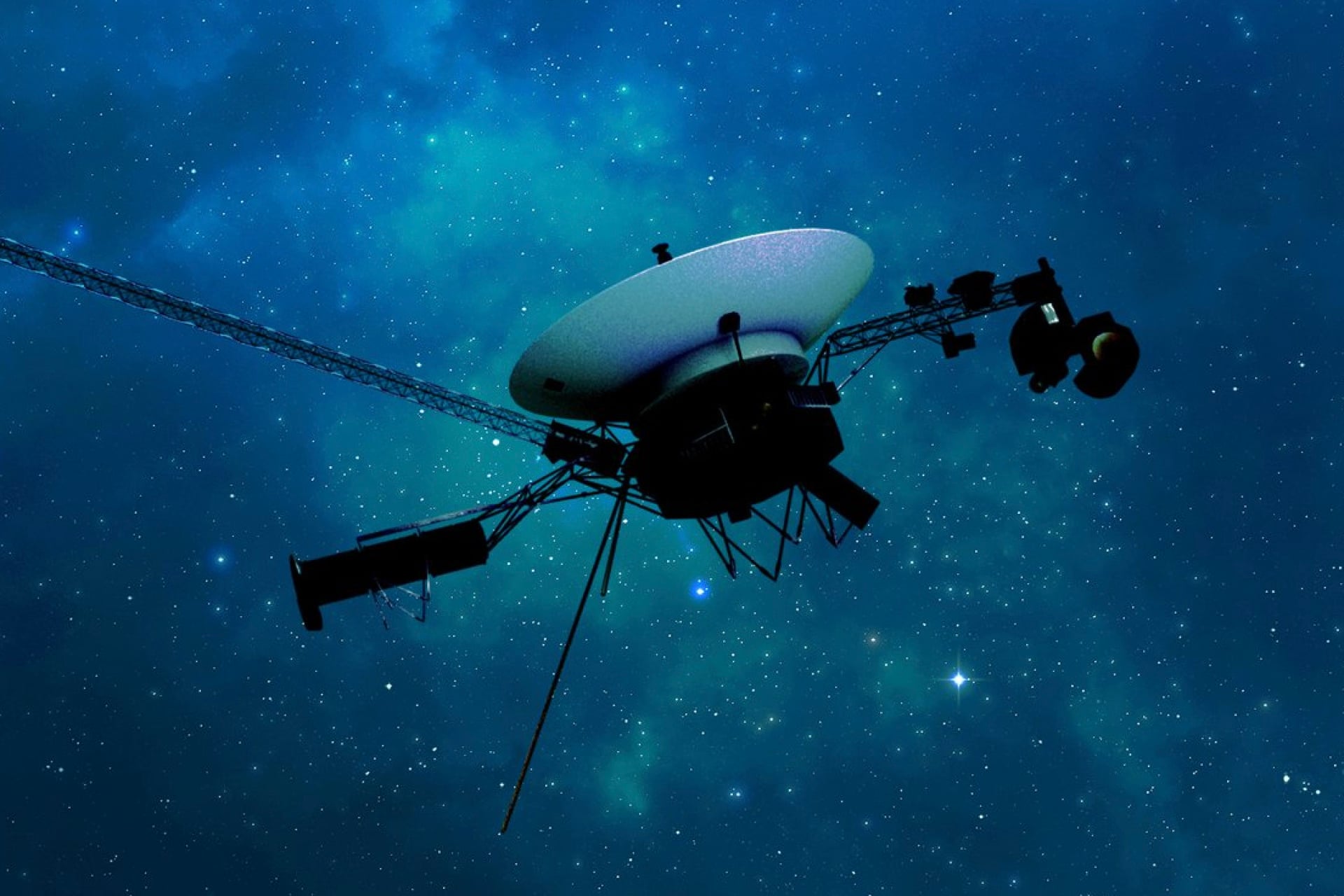
Blitzing through interstellar space at over 35,000 miles per hour (56,000 kilometers per hour), NASA’s Voyager 1 probe is now over 15 billion miles (or about 24 billion km) away from Earth. And the U.S. space agency’s Jet Propulsion Lab just north of Los Angeles is working hard to make sure it keeps going for just a bit longer.
On Tuesday, Voyager mission engineers at JPL announced that they have successfully executed a critical power-saving hack on the spacecraft’s sister probe, Voyager 2. They’re calling it the “big bang,” a delicate toggling on and off of Voyager 2’s key components, in pairs of three, across a coordinated sequence—conserving energy without disastrously freezing the probe’s fuel line or its critical hardware out in the inhospitable cold of deep space. In essence, the scheme makes a virtue of the fact that the Voyagers, both launched in the late summer of 1977, are relics (respectfully) of midcentury electronics: Thanks to good old-fashioned waste heat, practically every instrument onboard these probes can be canily used to help to keep the craft warm.
Voyager 2 was closer to Earth and had more power to test this stunt on. But, now, according to NASA’s Voyager mission manager Kareem Badaruddin, JPL hopes to repeat this hat trick again on the farther out Voyager 1.
“This is the most important thing we’ve done on the Voyager spacecraft in decades,” Badaruddin told Scientific American on Friday. “I don’t want to jinx it, but this ‘big bang’ test has gone remarkably smoothly.”
Hot pursuit
Both Voyagers run on modest nuclear power plants, thermoelectric generators that convert heat produced by the natural radioactive decay of plutonium-238 into electricity. But, as that plutonium isotope decays toward its 88-year half-life, less and less heat is being emitted, losing each Voyager craft about 4 watts of power per year.
JPL’s “big bang” maneuver switches off two of its heaters and one old-school, eight-track tape recorder used by Voyager’s digital Data Tape Recorder (DTR) system while carefully switching on two other heating units and one of the craft’s onboard propulsion systems. The move saves the probe almost 10 watts per year without losing any essential hardware to the cold.
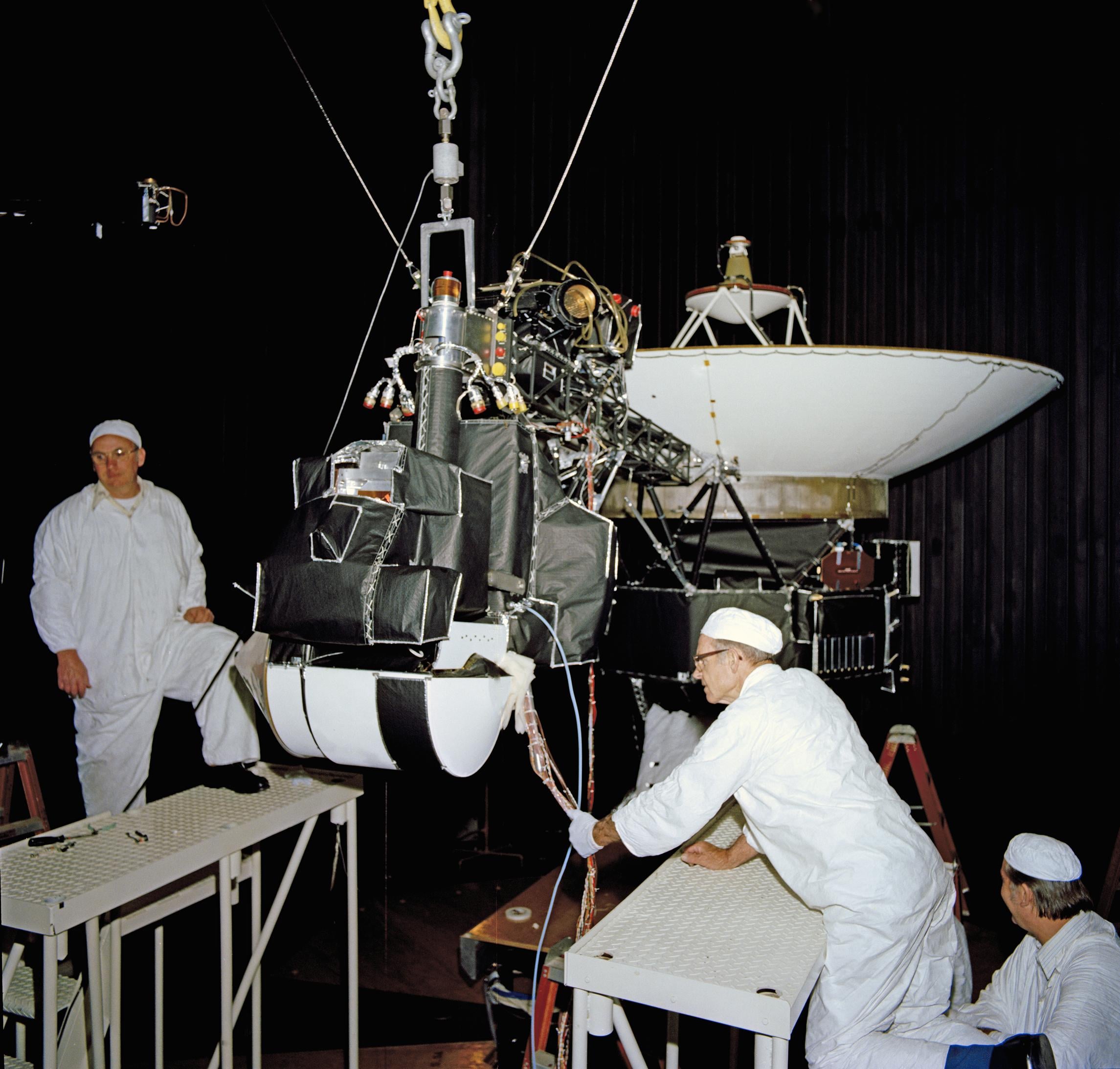
Both Voyager probes launched with 10 instruments apiece, with plenty being natural candidates for powering down much earlier in their lifecycle given that these devices had already served their purpose during the crafts’ “Grand Tour” of the planets in our solar system.
NASA’s Voyager team hopes that its energy savings from the “big bang” might help run one additional instrument on Voyager 1, the Low-energy Charged Particles experiment (LECP), which helps measure the particle density of interstellar space. LECP had to be powered down on Voyager 1 this spring to prevent the probe’s own system reset from taking over.
“Voyager 1 still has two remaining operating science instruments—one that listens to plasma waves and one that measures magnetic fields,” as Badaruddin, who is also a systems engineer at JPL, noted in a NASA announcement this past April. “They are still working great, sending back data from a region of space no other human-made craft has ever explored.”
One light-day away from home
If it makes it to this November, Voyager 1 will hit a historic milestone, passing one light-day’s distance from Earth, which you’re welcome to think about as either merely a small fraction of one light-year or as a staggering 173 times the distance between Earth and the Sun. Past this point, it will take messages over 24 hours to reach Voyager 1, so long as it manages to stay online.
In 2022, Suzanne Dodd, a project manager for Voyager at JPL, told a NASA livestream audience that she thought Voyager 1 would “definitely” make it to its 50th anniversary next year on September 5, 2027.
If NASA gets “really lucky,” as Dodd told Space.com that same year, Voyager 1 “might be able to go out to the 2030s.”