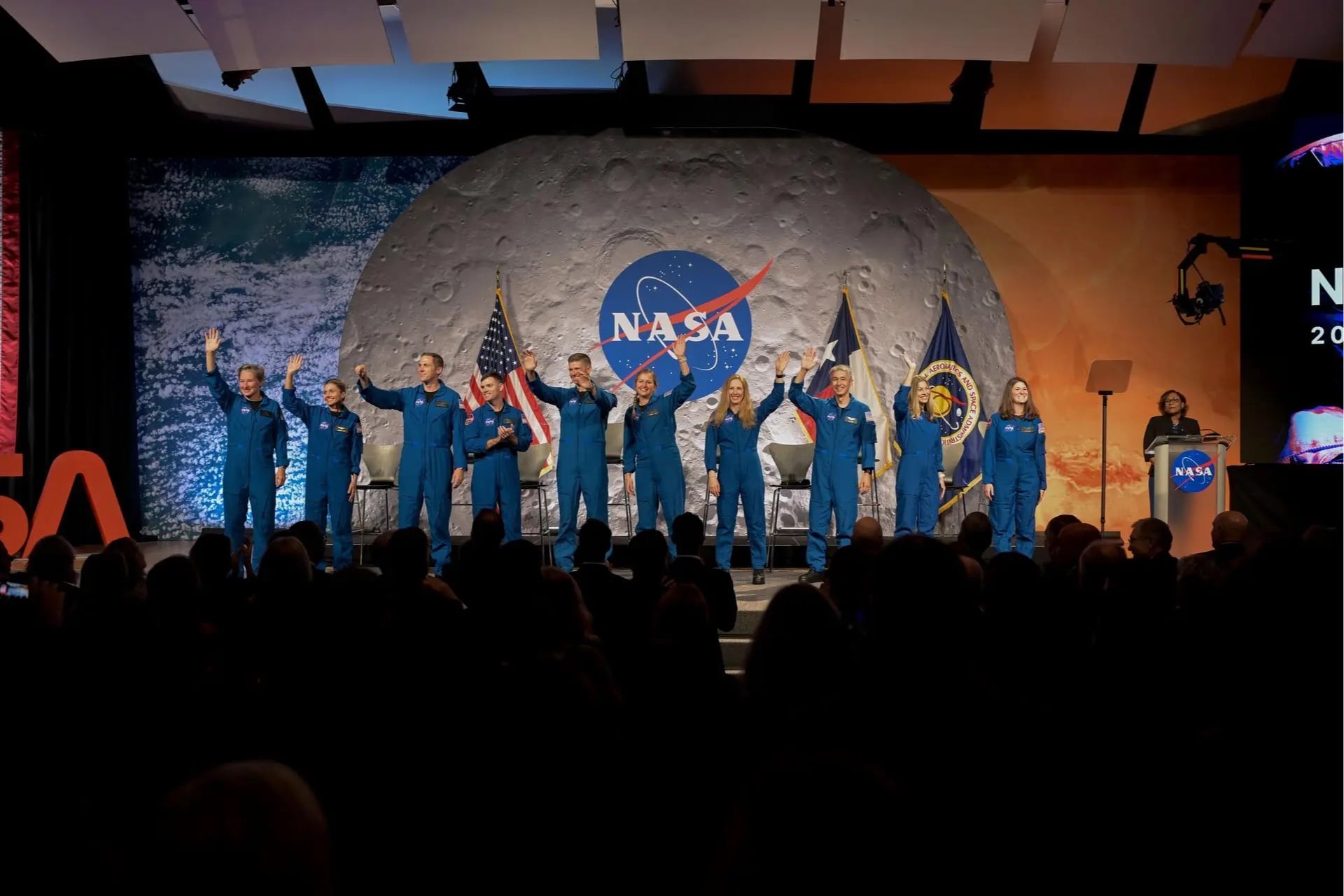
If you’re itching to fulfill your For All Mankind dreams by living on the Moon, you’ve got under a month to apply to be part of NASA’s Artemis program and do just that. The U.S. space agency announced yesterday that it “is looking for the explorers who will help write the next chapter of human spaceflight.”
If you feel you’re up for it, you can apply on NASA’s website. The agency said in an announcement that those who are accepted “will join NASA as America returns to the Moon, builds the Moon Base, and lays the groundwork for the first crewed missions to Mars.” They will “train to operate on the lunar surface, live and work beyond Earth, and take on missions that will push the boundaries of human exploration farther than ever before.”
Not just anyone can join. Among NASA’s many requirements are that applicants be U.S. citizens with a STEM field master’s degree, including in “engineering, biological science, physical science, or computer science from an accredited institution.” The window to join isn’t a big one; those interested have until 11:59 PM EST on December 3, 2026, to submit an application. NASA will select its new crop of space-farers in “late 2027.”
As for how the new astronauts will survive on the Moon, NASA revealed in a separate announcement that it has opened bidding to eight companies for contracts for “future lunar surface delivery missions,” which would be part of the second phase of its Commercial Lunar Payload Services (CLPS) program. The list includes SpaceX, Blue Origin, and Lockheed Martin Space. Absent is Boeing, whose Starliner program has been plagued with issues.
CLPS 2, as NASA refers to this new phase, “is a 10-year, multiple-award, indefinite-delivery/indefinite-quantity master contract with a combined maximum value of $10 billion.” Companies that win the bidding will “will provide lunar delivery services, including managing, building, and operating landers that transport NASA science, technology, and infrastructure payloads to the Moon.”
The announcement comes a day after SpaceX CEO Elon Musk posted that he expects government contracts to fall to roughly 5% of SpaceX’s revenue within a year. That seems pessimistic in light of NASA’s announcement. Then again, the U.S. government’s makeup will be quite different after a historic election that will, in January, see the balance of power dramatically shift toward Democrats and away from the Musk-friendly Republican party he spent around half a billion dollars trying to keep in power.