South Lake Tahoe Faces Major Risks
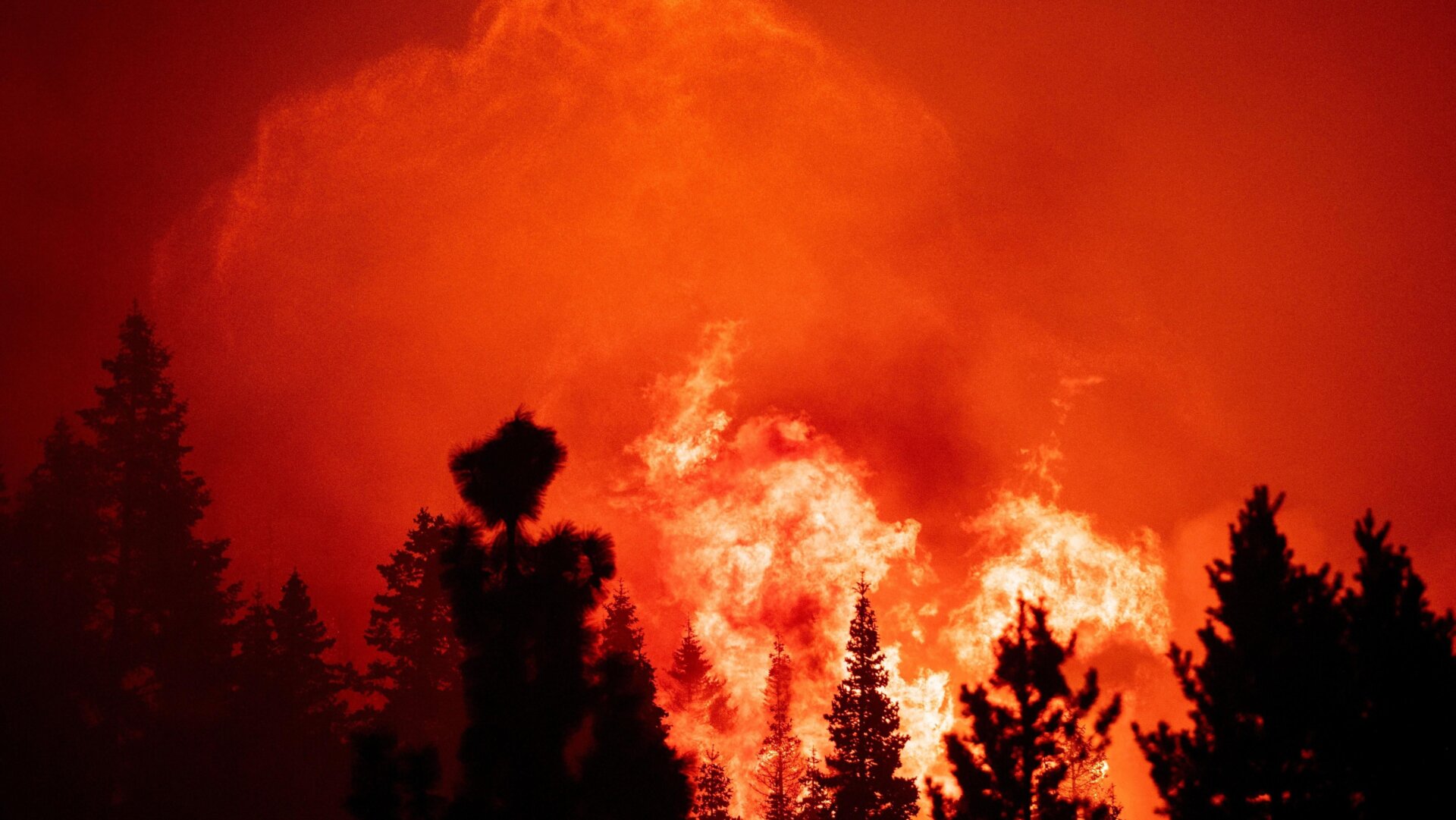
Conditions on Sunday night were brutal, but Monday could prove even worse. Red flag warnings are in place across the Sierras with winds expected to gust to 35 mph (56 kph) amid single-digit humidity. That’s about as catastrophic as fire conditions can get, and in part why local officials decided to evacuate South Lake Tahoe. There are a staggering 18,347 structures in the fire’s path.
The fire entered the Tahoe basin late on Monday morning local time, becoming the second fire to ever climb over the top of the Sierra Nevada, California’s tallest mountain range. This formerly unprecedented fire behavior has now happened twice this year when the Dixie Fire, California’s largest single fire ever recorded, did the same.
California and other western states have faced increasingly dire wildfire weather. A mix of the climate crisis, decades of fire suppression, and infrastructure prone to igniting fires have made forests more prone to explosive wildfires.
Watching a fire crawl into the Tahoe basin raises uncomfortable questions about how safe mountain towns are in the face of these trends, and shows the monumental effort needed to ensure those that continue to live there are afforded some protection.