After decades of searching, astronomers may have finally stumbled upon the first moon known to exist beyond our solar system—and it's an absolute giant.
The youngster is less than 3 million years old, and raises questions about how planets form from the cosmos' dusty ether.
The newly identified three-body system has a problem, and it’s not aliens—it’s that in about 20 million years, the stars are expected to merge and explode.
Webb data suggests a massive dust cloud observed 20 years ago around Beta Pictoris was caused by a cataclysmic asteroid collision.
The discovery of this rare world offers a glimpse into the distant future when our Sun swells up into a red giant star.
The collection of 126 newly discovered exoplanets features extreme environments and ones that could potentially harbor life.
Gliese 12 b, a Venus-sized world located just 40 light-years away, presents a promising target for studying planetary atmospheres and potential habitability.
The Webb Space Telescope has uncovered a nearby rocky planet with a volatile atmosphere.
How would the chaotic alien world from the series' virtual reality game look in real life? We spoke to the show's science advisor to find out.
Green is a sign of life on Earth, but other habitable planets could be teeming with purple microbes that we should be able to detect with telescopes.
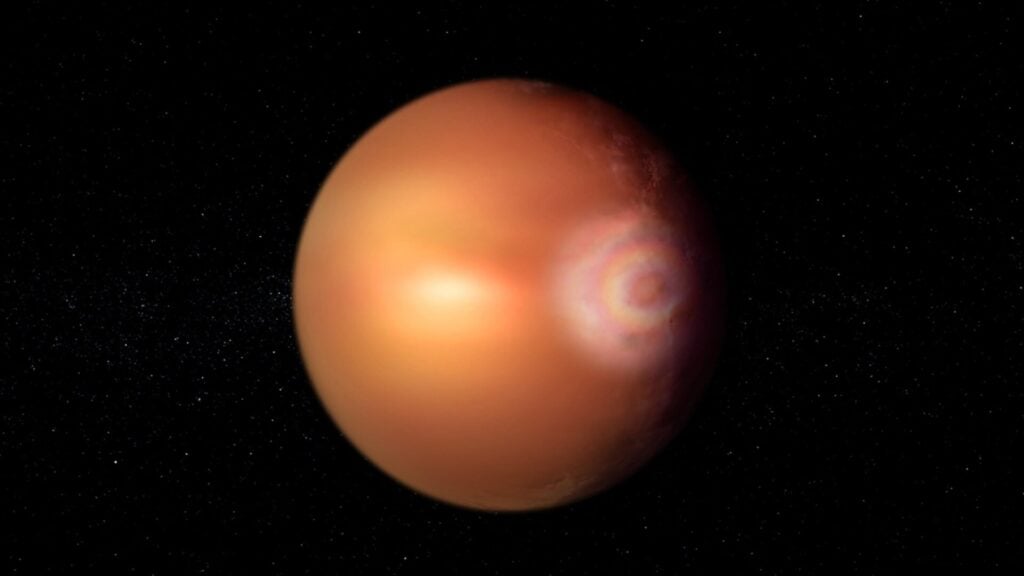
The Cheops satellite detected the rainbow-like phenomenon on an exoplanet for the first time.
The transiting world is Earth-like…but roughly 500° Fahrenheit.
New research suggests some exoplanets shrink over time due to intense core heat, potentially solving the mystery of the galaxy's missing planets.
Webb Telescope's exploration of distant exoplanets' atmospheres is revealing unprecedented, extraordinary details, showcasing its remarkable capabilities.
Dimethyl sulfide is only known to be produced by living things on Earth, but the signature requires further investigation.
This ten-second animation shows about three quarters of the planet’s complete orbit.
An intimate view of a young star over 5,000 light-years away could have implications for our own solar system.
Astronomers say it's the first piece of evidence to suggest that a pair of planets can share the same orbit.
An international team of astronomers has discovered a late-stage star that harbors a planet it should have devoured.
Another TRAPPIST world looks to be atmosphere-less, indicating that worlds like our own may be unique.