Scientists identified an iron-rich mineral on the surface of Mars that suggests the planet’s surface may be more dynamic than we thought.
A deceptive difference having to do with Earth's and Mars's gravity may be the reason why NASA's rovers get stuck in the otherworldly sands.
The helicopters will scout the Martian surface to help prepare for a human landing on the Red Planet.
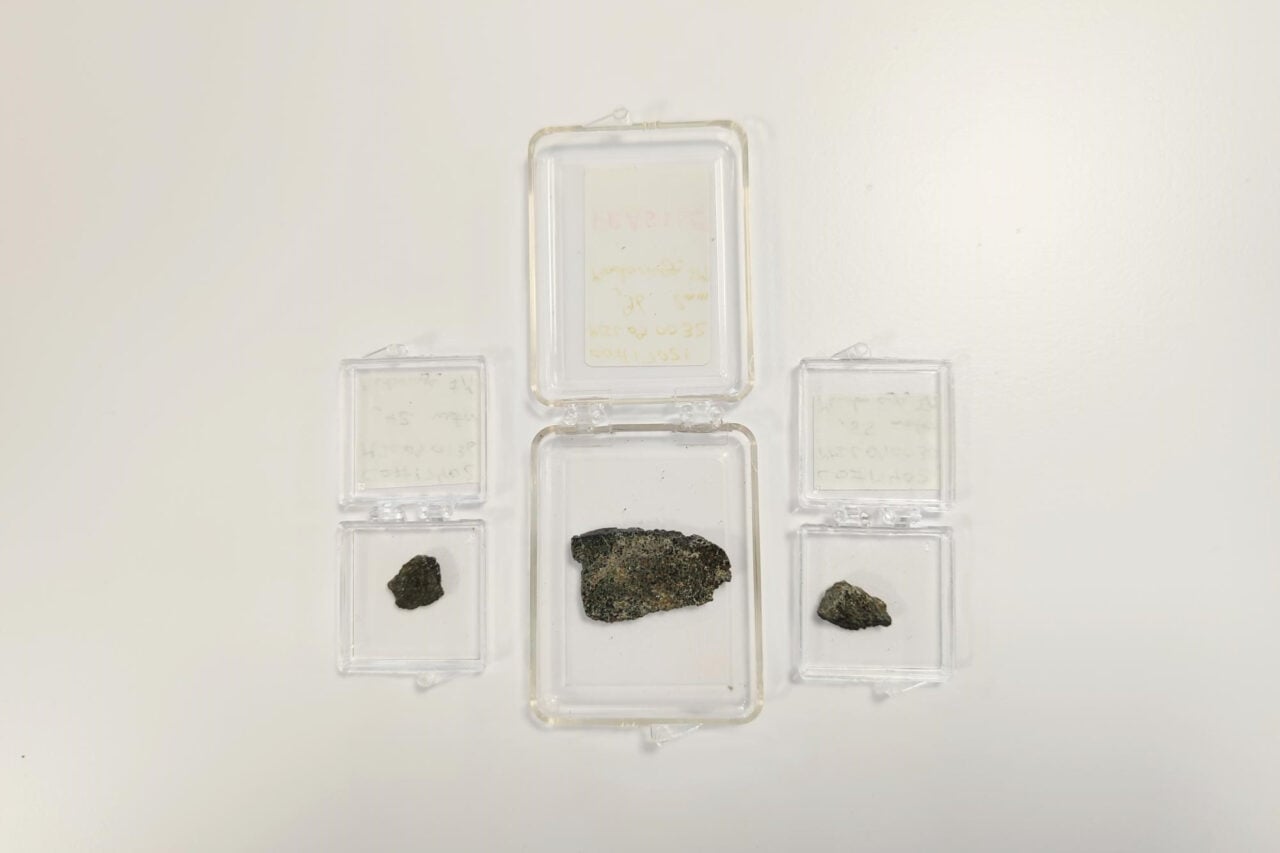
Meteorite NWA 16788 traveled roughly 140 million miles to get here, crash-landing in the Sahara Desert.
NASA may be forced to cut funding for three orbiters used to communicate with spacecraft on Mars.
Is automation a tech project or a political one?
The researchers posit that the volcano could have supported conditions favorable for life in the once-watery Jezero crater.
One of Mars' tallest volcanoes peeps over a thick layer of clouds, in Odyssey’s first picture of Arsia Mons peering over the Red Planet's horizon.
After back-to-back failed attempts, Starship managed to reach space during the ninth test flight, but fell short on several key goals.
Scientists have been arguing about the origin of strange streaks on Mars since the earliest missions to the Red Planet.
Scientists used cameras aboard NASA's Perseverance rover to capture unprecedented views of the Red Planet's green glowing sky.
The agency's shift of focus could mean turning to SpaceX's Starship for a mission to Mars in 2026.
The Martian robot dug up evidence that supports Mars' habitability in the past.
Mmmm, dusty.
Researchers exposed two lichen species to Mars-like atmospheric conditions for five hours—and one performed impressively.
The ESA probe spotted the moon while en route to witness the aftermath of NASA's asteroid deflection test.
Researchers identified underground sedimentary layers on Mars similar to coastal formations on Earth.
The Red Planet, as it’s often called, has a distinct hue, and a new theory about this coloration could have implications for our understanding of Mars' evolution.
The iridescent cloud reveals new clues about ice formation in the Martian atmosphere (no little green men, sorry).
Engineers developed an engine prototype which could reach unprecedented speeds, cutting down interplanetary travel time.