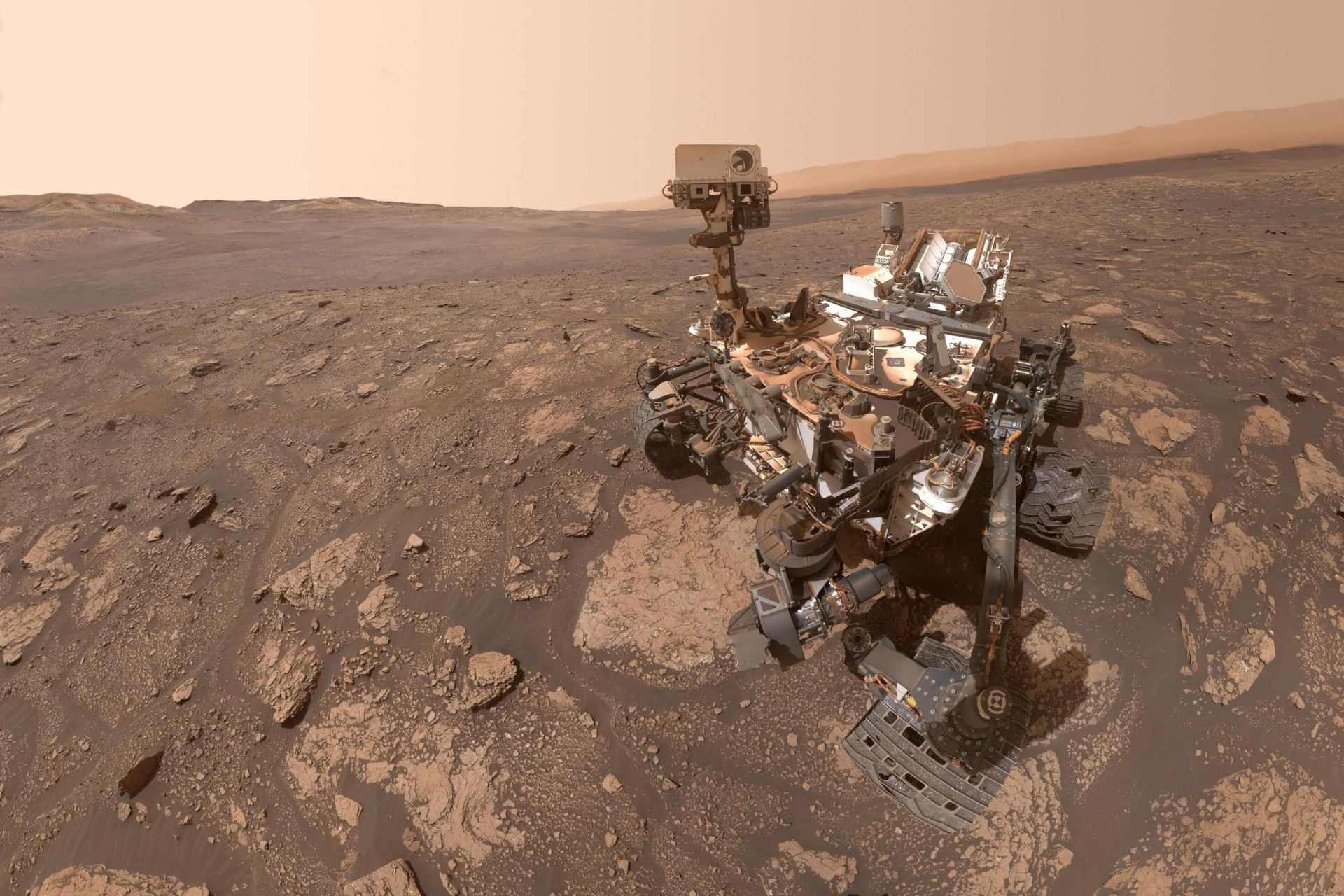
NASA’s Curiosity Mars rover has spent more than 13 years exploring the 3.5-billion-year-old Gale crater, slowly climbing a central mound known as Mount Sharp. Satellite data suggest this formation may contain evidence of an ancient Martian ocean—and where there was once water, there may have been life.
A study published Tuesday in the journal Nature Communications found exciting new evidence to support that hypothesis. Using a rover-enabled chemical experiment that had never been performed on another planet before, researchers detected more than 20 organic molecules in clay-rich Martian sandstones.
The findings add to a growing body of evidence that suggests Mars wasn’t always a desolate red wasteland. Scientists believe some of these newly detected molecules may have been ingredients for life on Earth, raising questions about whether similar chemistry could have once supported life on Mars.
“We’re learning more about the recipe of what was available on Mars, and whether it was the right recipe for life,” lead author Amy Williams, an astrobiologist, geobiologist, and associate professor at the University of Florida, told Gizmodo. “We don’t know yet, but we’re building that story with this kind of data.”
Spotting ancient organic chemistry on Mars
-
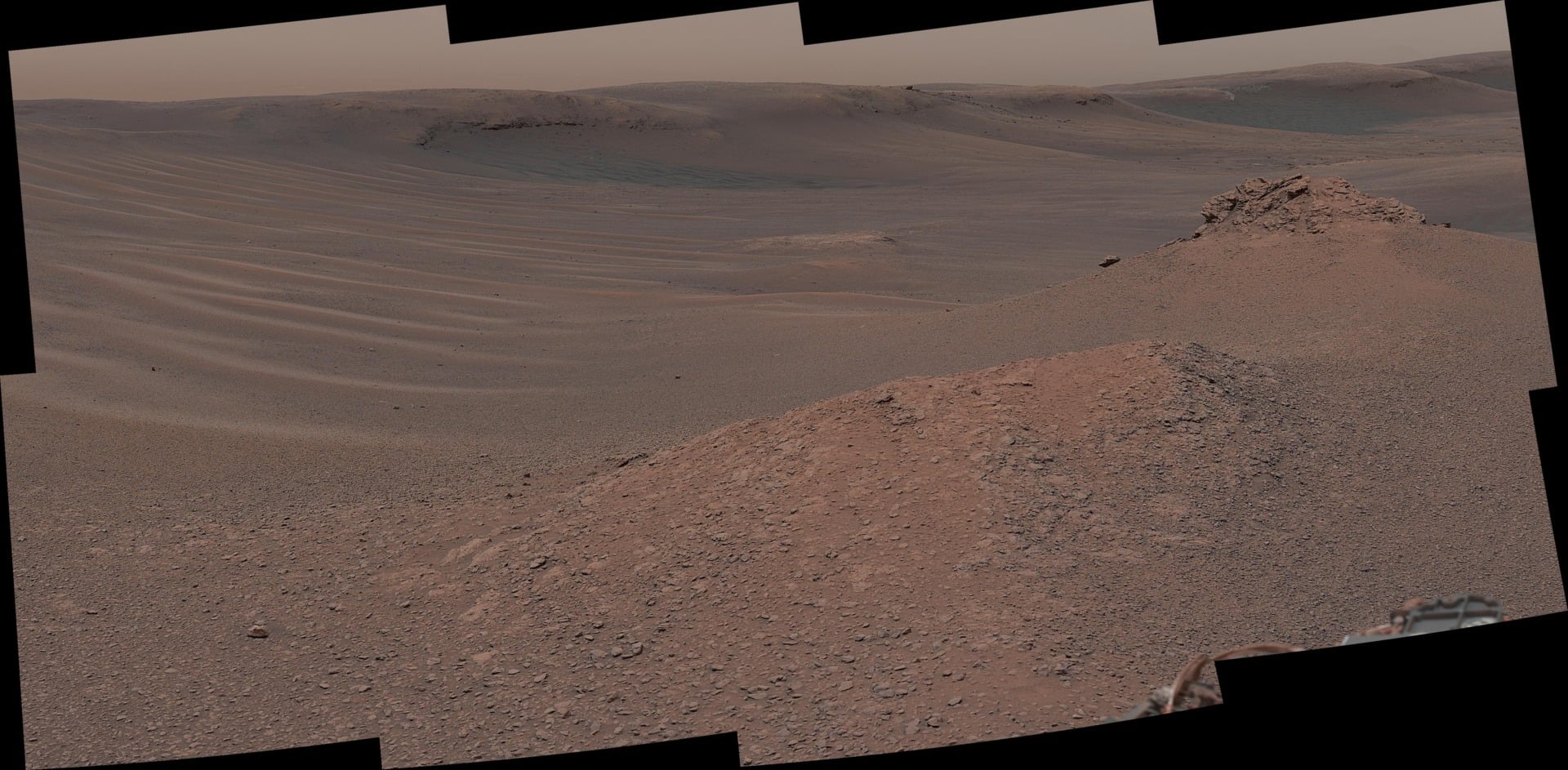
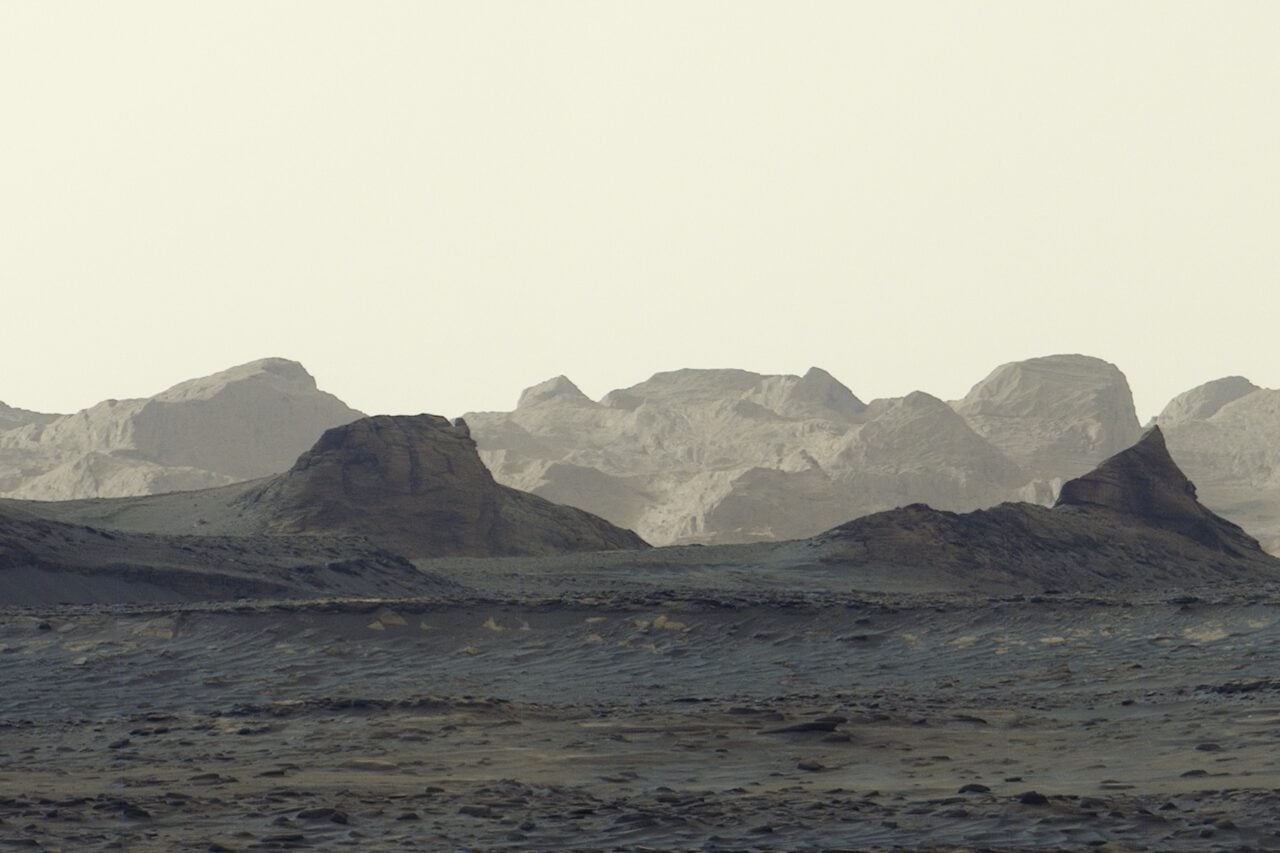
The Mast Camera on NASA’s Curiosity Mars rover captured this mosaic as it explored the “clay-bearing unit” on Feb. 3, 2019, where it took samples that contained diverse organic molecules. © NASA/JPL-Caltech/MSSS
Based on orbital data, Williams and her colleagues knew that parts of Mount Sharp that have preserved evidence of water also contained clay minerals. This helped them locate places to search for organic molecules, as clay is made up of charged particles that readily bind to organic matter and preserve it.
“The goal was to find a place that would have a good amount of clay minerals to perform this experiment, because we only had two opportunities to perform the experiment on the rover, so we were trying to get it as right as possible,” Williams explained.
That experiment used a chemical called tetramethylammonium hydroxide (TMAH) to break apart larger, more complex organic molecules inside rocks collected by Curiosity. This is not how the rover typically analyzes geological samples. Normally, it drills into the rock, puts the drill fines into a cup, and heats them until they turn into gases. This technique, called evolved gas analysis, allows researchers to identify the various materials in the sample based on the temperature at which they turn to gas.
Using TMAH instead can be beneficial, according to Williams. This chemical can break apart larger, more complex molecules that might otherwise be too big for Curiosity’s instruments to detect. However, the rover only carries two cups of the TMAH chemical, which is why Williams’s team had to plan and carefully choose the most favorable location. Their study site was located in the Glen Torridon region of the Gale crater.
Fortunately, the experiment was a success. Among the 20 different organic molecules they detected was benzothiophene, a large, double-ringed, sulfurous chemical that likely originated from the interstellar medium of the infant solar system, according to Williams. Her team was the first to confirm its presence on Mars. Interestingly, benzothiophene is often delivered to planets by meteorites, which is how Earth likely received its life-giving molecules.
-
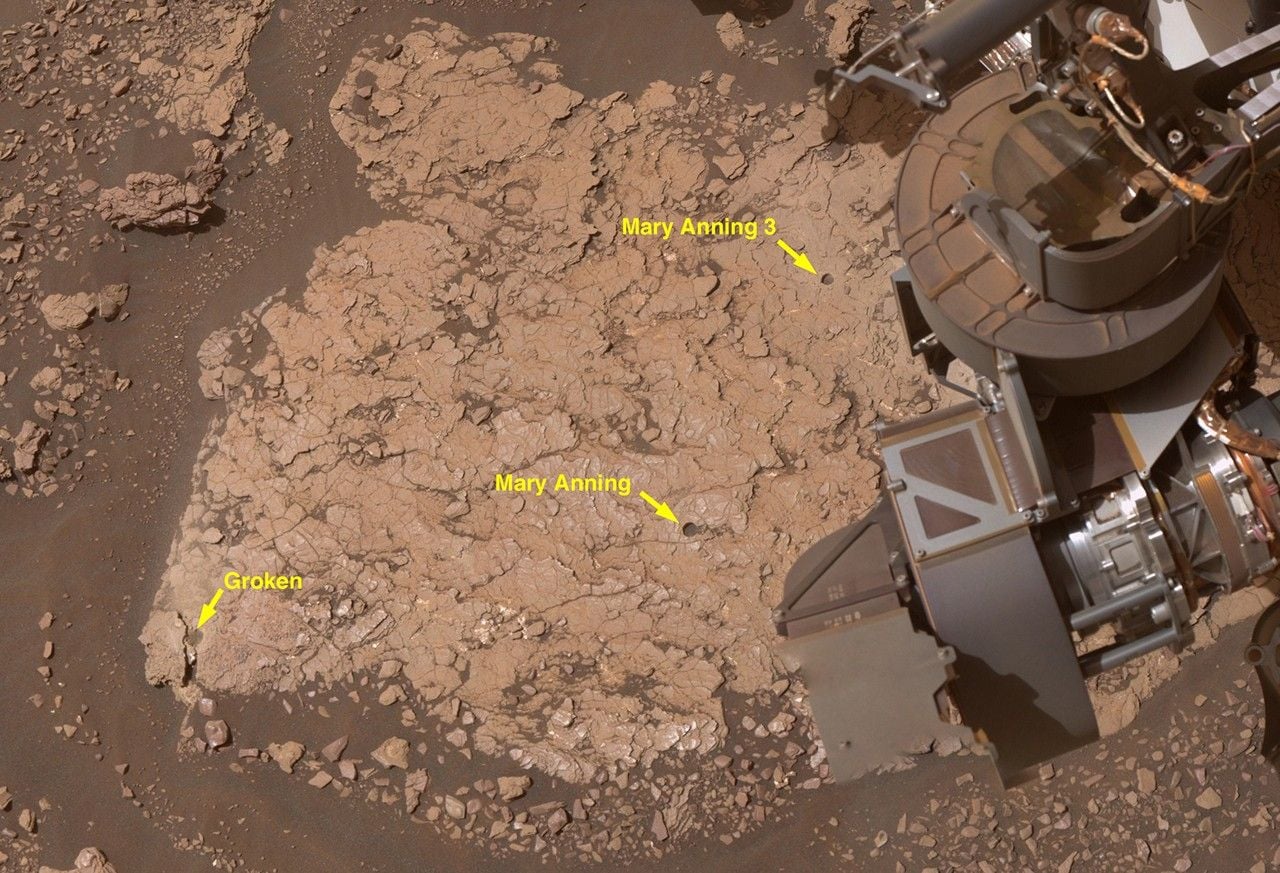
The sample locations where Curiosity snagged three samples of drilled rock at this site on its way out of the Glen Torridon region © NASA/JPL-Caltech/MSSS
Curiosity detected a nitrogen-bearing molecule that looks similar to an indole—one of the many precursor molecules that play a role in making DNA. While Williams and her colleagues did not get perfect confirmation of it, it was an exciting discovery.
“We don’t have DNA, we don’t have nucleobases, but it’s the first time we’ve seen a nitrogen heterocyle like this on Mars, and it’s exciting to see the [precursory], component building blocks for life as we know it,” Williams said.
Deepening the search for life off-Earth
The in-situ detection of these organic molecules is promising, but actually confirming whether life once existed on Mars will require more evidence.
“If you want to feel really confident in the detection of life beyond Earth, I think you need a lot of corresponding lines of evidence to come together to support that interpretation,” Williams said.
Returning Mars samples to Earth would allow researchers to run analyses that NASA’s rovers aren’t capable of, helping confirm the true nature and origin of these organic molecules. Samples collected by NASA’s Perseverance rover were originally supposed to return to Earth in the early 2030s, but the mission has been effectively cancelled due to timeline and cost overruns.
Williams and her colleagues will still learn plenty from sifting through the mountain of data they gathered with Curiosity. Now that they have validated the TMAH analysis technique, it will play an important role on future missions, including the European Space Agency’s Rosalind Franklin Mars rover and NASA’s Dragonfly mission, which will send a rotorcraft to explore Saturn’s moon Titan. Both missions are currently set to launch in 2028.
“It’s exciting to run the very first experiment that will hopefully set the stage for incredible discoveries to be made,” Williams said. “And who knows what next-generation instruments and experiments will help us to dig deeper into the history of these planets.”