The idea of trapping a dirty coal plant’s carbon emissions at the source and storing it underground may sound like the solution to our climate problems. In practice, it’s proven all but completely unfeasible, but that hasn’t stopped the government from plunging money into it.
A recent report from the Government Accountability Office found that the federal agencies have spent more than $1 billion dollars on mostly failed projects. What’s more, the report found that officials kept on funding projects that weren’t hitting important milestones, spending hundreds of millions of dollars on pilots that never got off the ground.
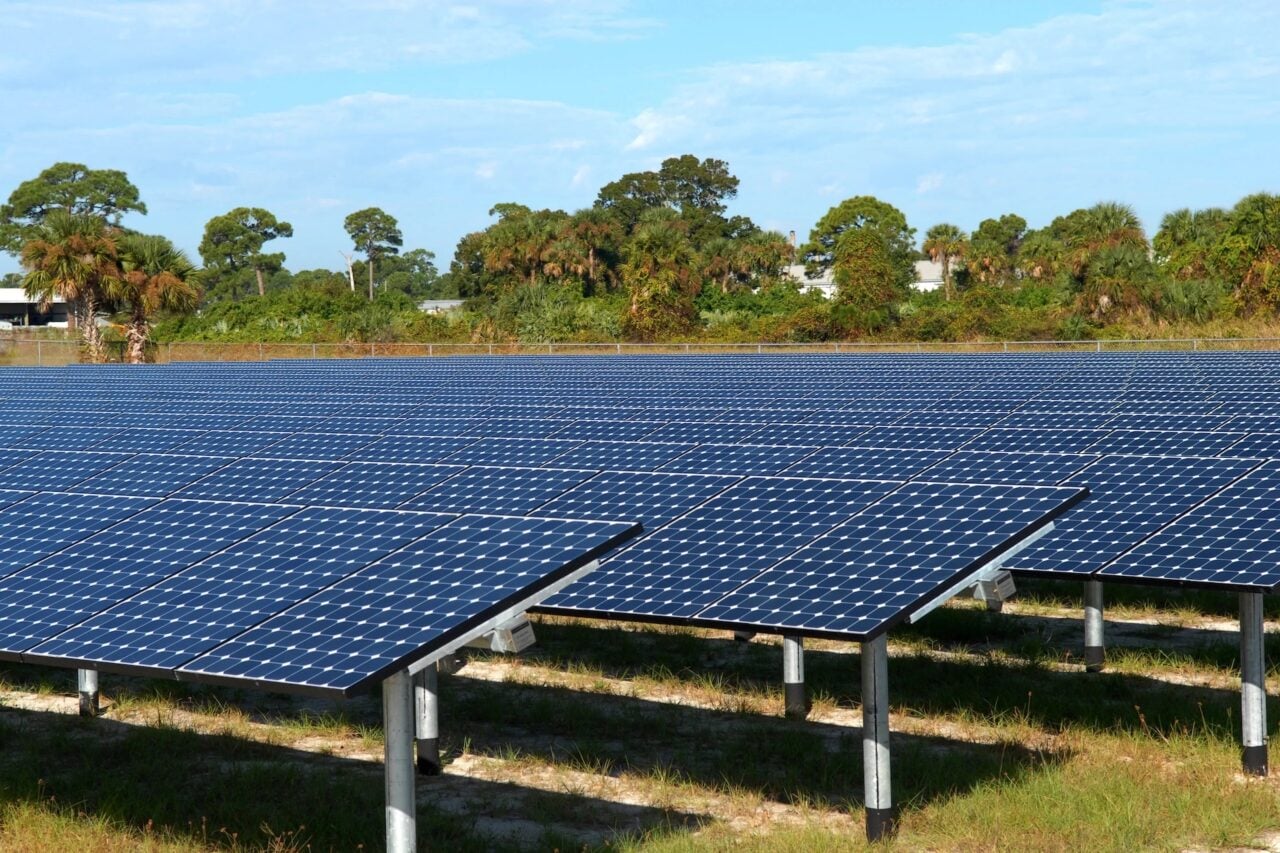
While carbon capture and storage, or CCS, may sound great in theory, it’s consistently proven to be far more complex and expensive in practice compared to cutting emissions like winding down fossil fuel use and installing renewables. CCS has proven especially problematic when linked with coal plants, which are among the dirtiest ways to generate electricity and increasingly cost more to run than other forms of energy.
“You’ve not only got to prove the technology, you’ve got to prove it works over the long term, and it’s got to be economic,” said David Schlissel, a director at the Institute for Energy Economics and Financial Analysis. “The best way to do carbon capture is don’t produce carbon in the first place.”
The report, released by the Government Accountability Office (GAO) late last month, finds that the Department of Energy has invested $1.1 billion in 11 CCS projects since 2009. Those projects include a mix of industrial plants and coal-fired power plants.
The eight coal projects the DOE funded received $684 million, yet only one ever came online. The one “successful” CCS project to come out of all that investment was the Petra Nova plant, which closed in 2021 after just four years of operation. Petra Nova’s CCS technology required so much extra energy to run that its owners created an entirely separate natural gas plant just to fuel it. The carbon dioxide pulled from the plant’s emissions was also used to drill for oil, essentially negating the climate benefits. Two of the three industrial projects eventually got up and running, but that’s hardly a track record to bank on CCS being scalable at the levels needed to keep carbon dioxide out of the atmosphere.
A lot of this abysmal success rate with coal projects has to do with market forces turning against coal, the report found. It simply didn’t make financial sense for some of the partners the government chose to keep their proposed facilities running with the added costs. But the report also found a whole host of problems with the way that the DOE went about providing money for these coal projects. The report found that the DOE rubber-stamped funding for coal projects in less than three months, as opposed to the year-long review process given to industrial CCS facilities.
What’s more, in the case of four of the coal projects backed by the DOE that received almost $472 million in funding alone, senior DOE leadership instructed staff to bypass cost controls set by the agency itself in order to keep it from being at risk financially. The agency repeatedly shifted various financial requirements for these four projects, essentially reordering paperwork to keep funding going, despite the projects repeatedly missing key milestones. This scuzzy math ended up costing the DOE more than $300 million in funding than it had originally planned for these project. Worse still, none of them ever ended up getting off the ground.
That $1.1 billion figure is a lot, but it’s not necessarily an enormous amount to spend on an emerging technology that’s appeal looked a lot different a decade ago, when much of this money was being earmarked. A separate Congressional report published last October found that the DOE has spent a much larger $7.3 billion on “CCS-related activities,” which includes research, since 2010. It doesn’t necessarily mean the government shouldn’t invest in high risk, high reward technologies. But the GAO report makes clear there are smarter ways to decide what to fund and the importance of accountability, particularly when it comes to ensuring that money goes to technologies that can deliver tangible carbon emission cuts.
“If we were having this conversation 10 years ago, seven years ago, one of the questions you’d undoubtedly ask me is, are there cheaper alternatives?” Schlissel said. “My answer back then would have been, in the future, renewables will be less expensive than carbon capture. Since we’re talking today, my answer is renewables are less expensive than carbon capture.”
But there are some important lessons to be learned for the future—especially given the shortcomings the report documents about how the DOE jumped to provide funding for dubious projects, and how quickly other types of technology are growing. The government is currently ramping up investments in CCS as well as other carbon dioxide removal; the infrastructure bill passed in November earmarks $2.5 billion for CCS demonstration projects, the biggest carve out for the technology to date. But that doesn’t mean CCS technologies will all of a sudden become common.
“It’s not like going to Home Depot and pushing the big cart around, and saying, ‘oh, here’s a carbon capture technology,’” Schlissel said. “You’ve got to design it, you’ve got to build it, you’ve got to test it. You’re talking about testing technologies that are not going to be commercially viable for years, if ever. And as the price of renewables goes down, that’s going to be harder.”
Without changes to how it considers funding projects, the GAO report found, “DOE is at risk of expending significant funds on CCS demonstration projects that have little likelihood of success.” In other words, we could have many more high-profile, expensive failures on our hands if the government doesn’t proceed with caution.