No matter your politics, election seasons can be disorienting. The tsunami of aggressive ads and spammy texts is enough to make any smartphone owner chuck the thing into a river and crawl into a cave on some remote hillside for a few weeks. But this year’s midterms have been particularly mind-liquifying, thanks to an unrelenting bombardment of AI slop ads.
AI-generated propaganda isn’t new. You may remember the “What if?” ad the Republican National Committee released ahead of the 2024 election, depicting a dystopian future in which migrants overwhelm the U.S. border and crime forces San Francisco to shut down. Even after securing his second presidential term, Trump has frequently posted AI-generated images to social media depicting himself as a strong and ruthless leader.
But the campaign season that (mercifully) just ended featured AI ads on an unprecedented scale. According to an October report from the Wesleyan Media Project, a research group tracking political marketing efforts, total campaign spending on AI-generated ads during this election cycle surpassed $187 million, compared to under $50,000 that went towards AI ads during the 2024 election season. The most recent figure, the report noted, was “almost surely lower than the actual level of spending given that many ads do not contain disclaimers and some instances of AI use are difficult to determine with the human eye alone.”
LA is worth saving. Vote Spencer Pratt. pic.twitter.com/GpQpnfsuJe
— Charles Curran (@charliebcurran) May 5, 2026
The WMP identified a total of 289 AI-generated ads aired during this year’s midterms, the vast majority of which (82%, equalling a total of about $169 in spending) were funded by Republican candidates or their allies, while 13% were aired by Democratic campaigns (the remaining 5% came from other parties). As you could probably guess if you’ve seen any of those ads, they didn’t exactly blaze a trail to victory.
Like the Trump campaign’s anti-Biden ad, some of the AI-generated ads shared on social media and elsewhere in the months leading up to Tuesday’s midterms depicted dystopian visions of reality tailor-made for the MAGA universe, where the Left is portrayed as a gang of negligent and sometimes psychopathic criminals. During his bid to represent Oregon’s 5th Congressional District, Republican candidate Jonathan Lockwood went full Pizzagate with an AI-generated ad showing his Democratic opponents laughing maniacally before a Satanic altar and chasing three light-skinned, blond children. “No one’s sons or daughters are safe under Tina Kotek and Janelle Bynum,” the official Facebook page for Lockwood’s campaign wrote in a May 11 post featuring the ad, referring to Oregon’s governor and representative for the 5th Congressional district, both incumbents—and both of whom were reelected on Tuesday.
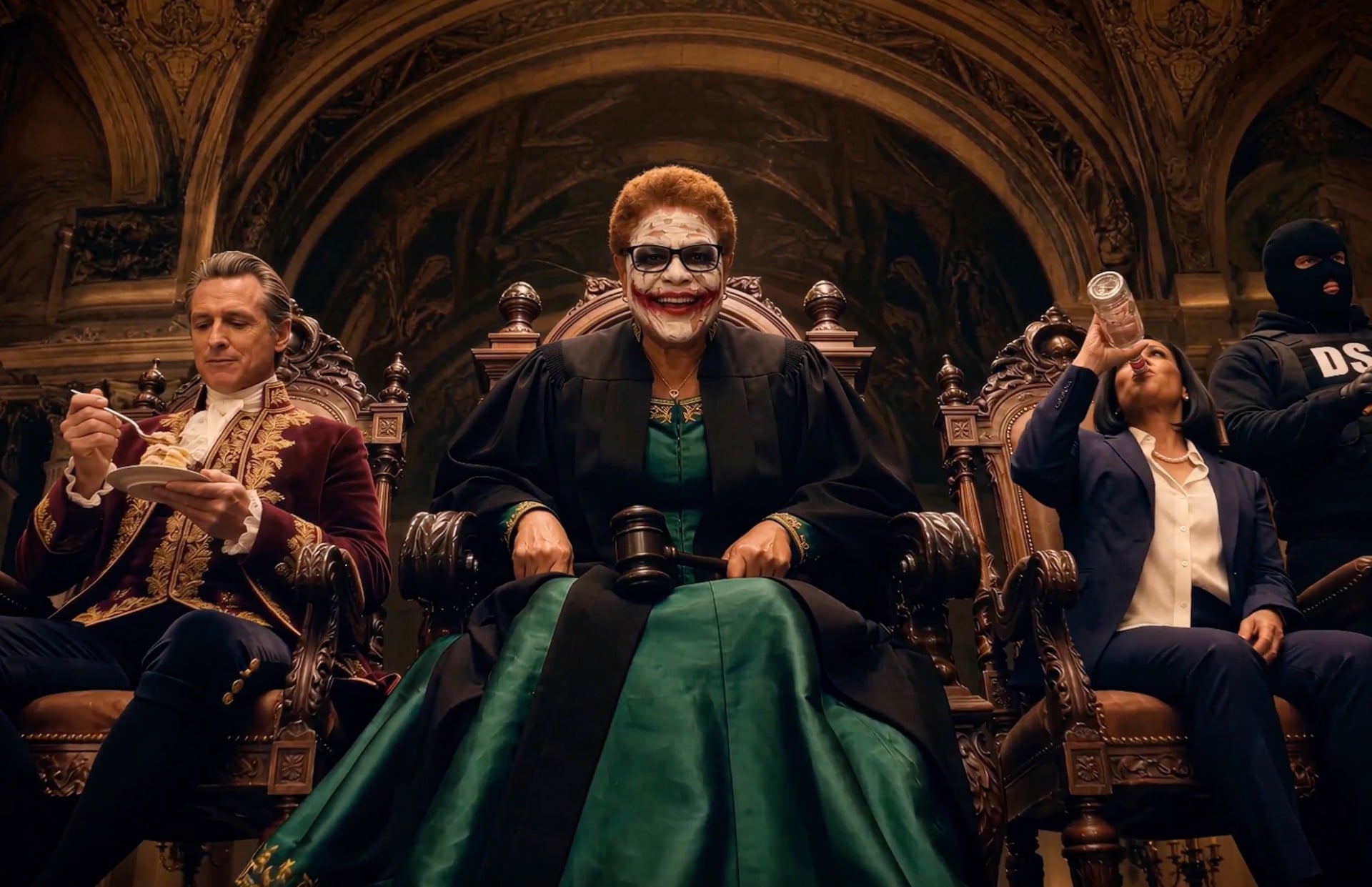
That same month, filmmaker Charles Curran posted an AI-generated video—which at the time of this writing has well over five million views—supporting former reality TV star Spencer Pratt’s bid for the mayorship of Los Angeles. Pratt is shown as a Batman-like superhero saving the city against a cake-eating Gavin Newsom, incumbent LA mayor Karen Bass (whose face in the ad is painted like Joker), and a liquor-guzzling Kamala Harris. Pratt reportedly reposted the video to his own X account. About a month after Curran first shared the video, Pratt lost LA’s primary election to Democratic city councilmember Nithya Raman. (Raman had a narrow lead over Bass at the time of this writing, but the final result had not yet been called.)
Other Republican candidates tried to appeal to voters through humor, though no more successfully. An AI-generated reelection campaign ad for incumbent Republican senator Michael Lee depicted his Democratic opponent Jessica Bichler as a cartoonish caricature of new-agey liberalism. Bichler, who teaches yoga and owns her own studio, is shown in the ad literally tied in knots like a deformed pretzel, smiling a big dopey smile. Lee was clearly taking a page from the Trumpian playbook by coining an alliterative and demeaning nickname for his opponent: “Bonkers Bichler,” the ad is titled. (Unlike most of the slop ads aired in this year’s election season, the anti-Bichler video included a disclaimer, which seemed geared towards making the whole thing seem like a harmless prank: “You guessed it! AI was definitely used to generate these silly video clips.”) Bichler defeated Lee 53% to 47%, according to the Carolina Journal.
The examples go on and on. While Republicans and their supporters weren’t the only ones who released AI-generated ads in the period leading up to Election Day, it’s hard to look at the Left’s historic midterm sweep and not see a nationwide rebuttal of the AI industry and the idea, so widely espoused by the political Right, that it should be completely devoid of regulation. Whether they were meant to scare people or make them laugh, these ads clearly didn’t resonate with an American electorate, which has also now made it resoundingly clear they have no desire to live anywhere near AI data centers.
Don’t expect Trump or the Republican Party to ditch AI-generated propaganda so easily, though. It may not have struck much of a chord with voters this time around, but that doesn’t mean politically motivated deepfakes will be abandoned as a means of shaping public opinion—just that the tactics for using them will need to be improved. When the AI slop ads start to roll around again in 2028 (barring some new law prohibiting them), we may look back on the ones from this year’s midterms in much the same way that we do on the horribly disfigured AI-generated videos of Will Smith eating spaghetti: experimental preludes to something much more subtle and effective.