Lunar Orbit
Earth revolves around the Sun, and the Moon around Earth, but objects can also circle the Moon, creating yet another kind of Earth-related orbit. Lunar orbit, also known as selenocentric orbit, was supremely useful during the Apollo era, as the command and service module spun around the Moon while dispatching astronauts to the surface. NASA’s Lunar Reconnaissance Orbiter has been in lunar orbit since 2009, taking spectacular images of the natural satellite’s cratered terrain.

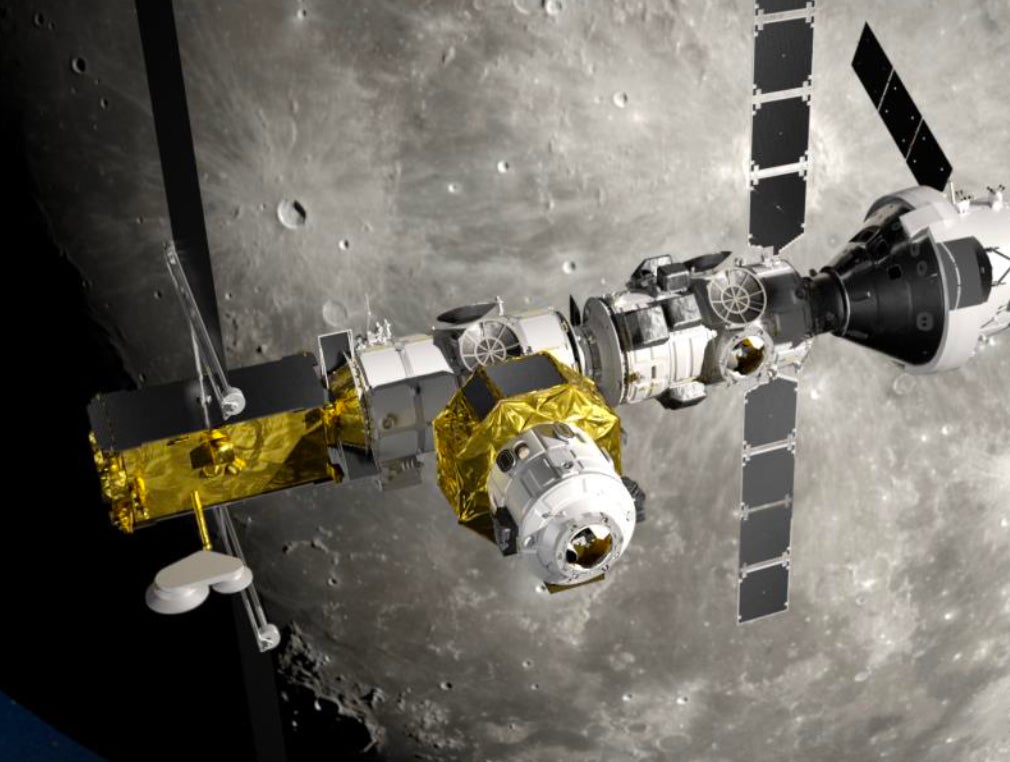
Like Earth, the Moon also has its distinct orbits (the NASA graphic above provides a quick overview). As part of the Artemis program, NASA and its partners are planning to build a space station, called Gateway, in a special lunar orbit known as a near-rectilinear halo orbit (NRHO). This highly elliptical seven-day orbit would bring Gateway to within 930 miles (1,500 km) of the lunar north pole during its closest approach. Spacecraft in NRHO will take advantage of neutral gravity points between the Earth and Moon, as it will require less fuel to remain there. NRHO is also ideal in that it will provide the lunar outpost with a continuous line of sight to Earth.