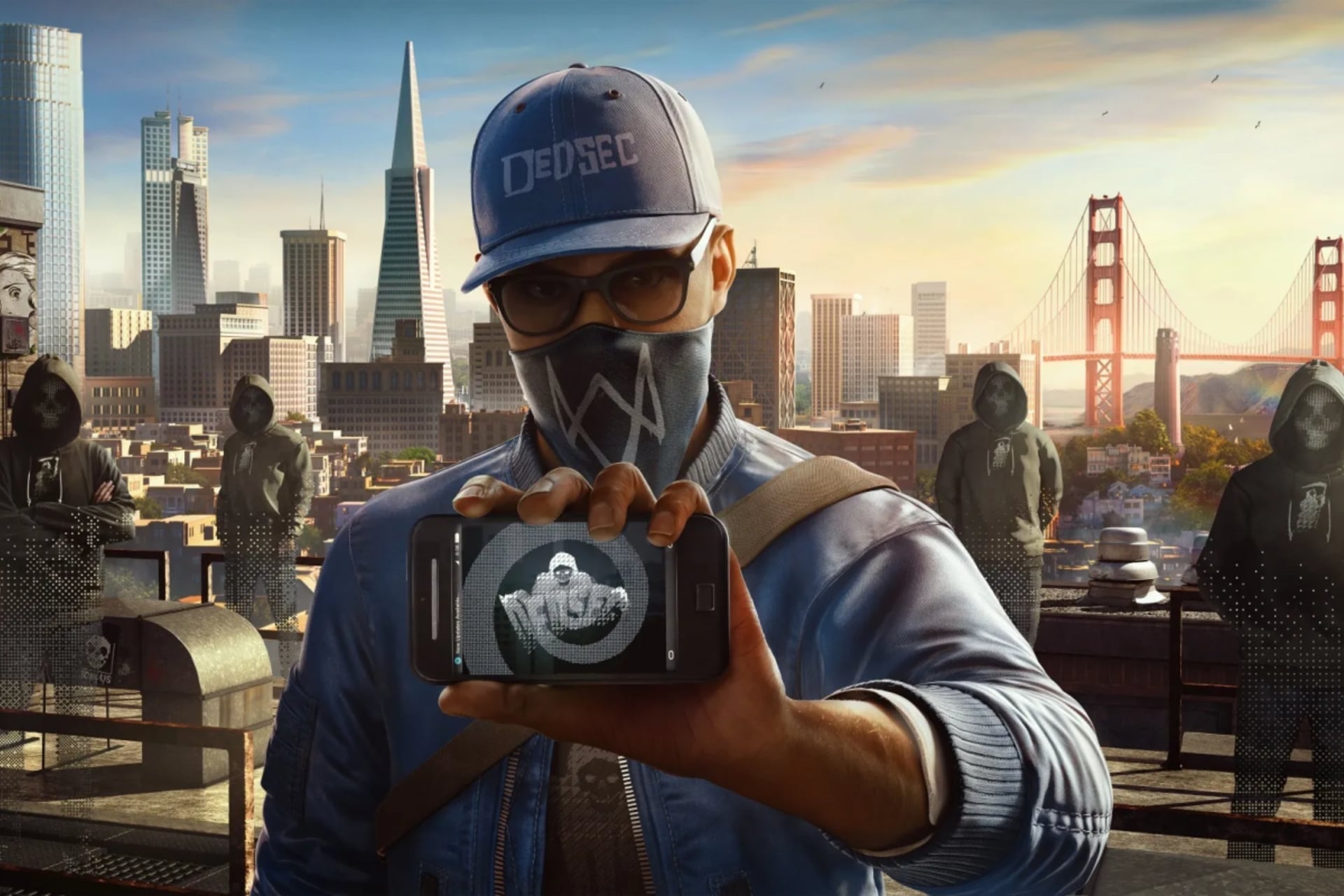
When it comes to video games, second impressions matter almost as much as the first. There’ve been many major franchises with decent beginnings whose immediate sequels helped those franchises take off and feel like the developers’ fuller vision. Examples are plentiful, but one of the most interesting is Watch Dogs, Ubisoft’s spin on Grand Theft Auto with the core mechanic of hacking anything or anyone through your phone.
That first game didn’t fully live up to its potential in 2014, but it sold well enough to warrant a followup in Watch Dogs 2. Released for PC, Xbox One, and PlayStation 4 on November 15, 2016, the sequel remains the short-lived series’ most definitive entry, largely thanks to the world changing around it. As the game opens, San Francisco hacker Marcus Holloway has joined the local hacktivist group DedSec, who aim to reveal the harms within the ctOS computing network recently adopted by the city. And how do you make the masses aware of the tech sector’s increasing corruption? With one viral social media campaign after another.
In practice, this isn’t anything groundbreaking—you gain followers from doing missions and activities, and never do anything to lose them—but the framework makes the game immediately stand out from its predecessor. Put bluntly, the DedSec crew is continually, joyously shitposting to make San Franciscans woke, with main missions often ending on DedSec telling viewers to “do what you will” with the secrets that’ve just been disclosed to them. These include Marcus stealing a high-tech car from a movie set and helping its lead actor get out of a religious cult, exposing shady tech practices, or embarrassing a pharmaceutical CEO looking to own the single copy of a musician’s upcoming album.
Not exactly subtle, even by whatever standards you grade Ubisoft or triple-A games writing. (And this is before you notice the main bad guy’s named “douche,” by the way.) If there’s anything that makes Watch Dogs 2 forgivable in this context, it’s a general consistency about who narratively deserves whatever DedSec’s cooked up. For as enjoyably disposable as this all is, there’s a very real concern, if not anger, at what 2016-era big tech was becoming and the people that profited from letting it happen. Tech giants’ desire for nothing but effusive praise has only grown in the last decade, and in that sense, the game hasn’t lost a step in delivering schadenfreude from orchestrating events where the punchline ends in their public humiliation.
Years of big tech backlash and the recent election blue wave in America indicate the world may catch up to Ubisoft Montreal’s writers, who probably didn’t intend (or want) their game to remain as potent for so long. When the game’s not shouting about broad dangers of tech and information control, Watch Dogs 2 occasionally zeroes in on more specific topics and shows how it can be more thoughtful than expected. That one of Marcus’ allies is a Black trans woman is notable, even more so when she shrugs off her surgery being weaponized against her and otherwise gets to exist in the world without any punchlines about that part of her life.
By the same token, it’s impressive when Marcus and fellow hacker Horatio infiltrate the Google stand-in the latter works at, cracking jokes about the company’s dismal amount of Black staff and making you wish the game was a two-hander starring them both. In general, Marcus has managed to hold up well as a character, and given the first game’s ugliness with its Black cast, Ubisoft did a surprisingly good job in crafting him. Dude’s just fun to be around and has the kind of charisma that makes a lead compelling to watch in movies the game’s trying to emulate. For all intents and purposes, he feels like an everyman who just happens to be Black, something that works for and against the narrative.
There’s only a handful of moments where the game actually acknowledges Marcus’ race, which likely explains his jarring in-game ability to call false reports on people despite his backstory of predictive algorithm falsely pinging him as the suspect in a robbery. Or, in the narrative’s biggest pitfall, killing Horatio midway through the game and robbing it of an ongoing Black perspective that neatly compliments Marcus’. And it’s a shame that he’s just here to die, because compared to the first game, the cast really works here, and things are at their strongest when the DedSec crew are vibing with one another. Too bad those vibes are soured thanks to a sacrificial lamb whose death can’t “justify” the lethal playstyle it feels the game wants out of you going forward or even warrant a mention in the remaining story.
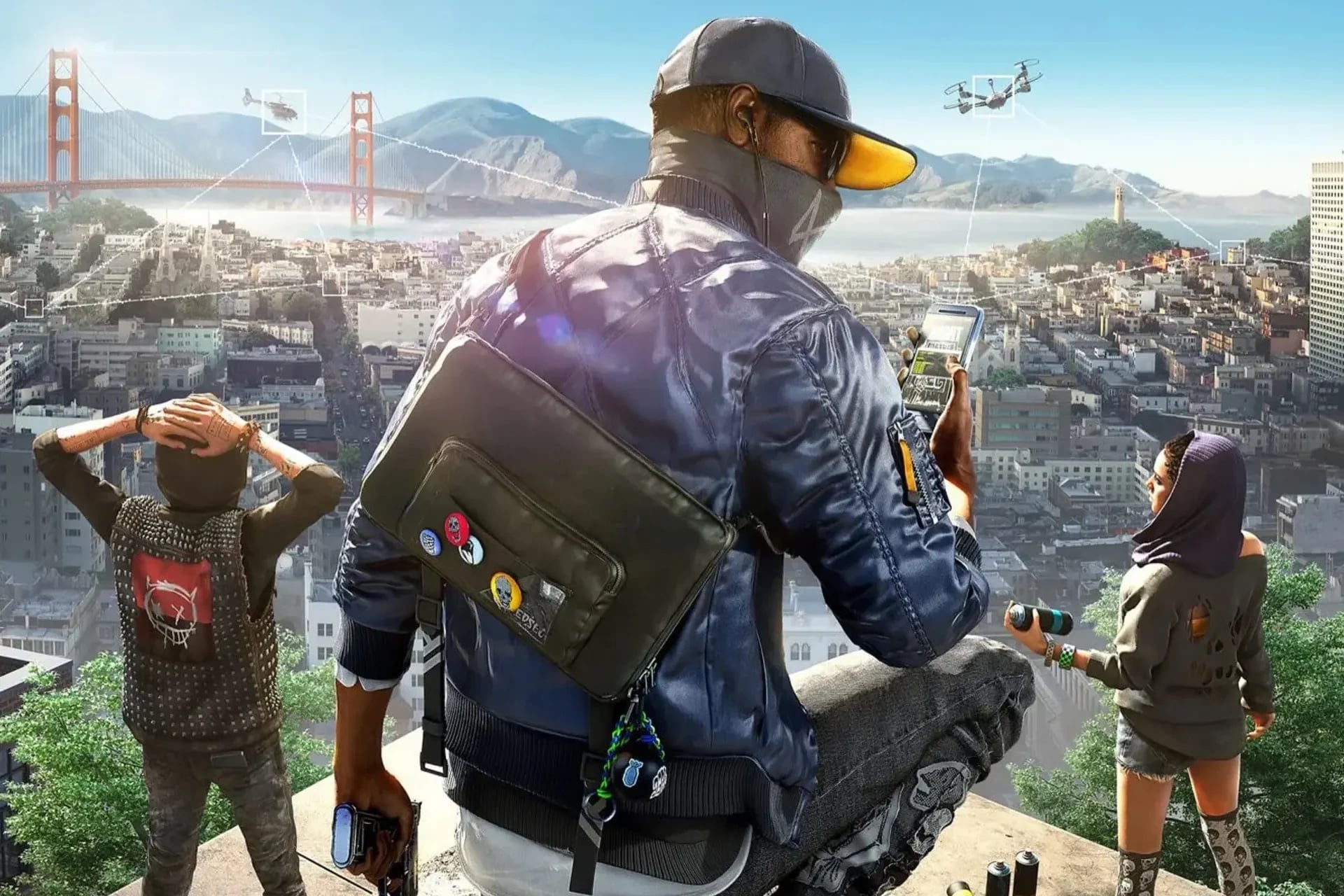
Maybe there’s a world where Ubisoft Montreal built on Marcus and his DedSec gang’s adventures with a sequel that tried for a do-over on Horatio in some respects. Instead, the series continued with 2020’s Watch Dogs Legion, whose big concept was making nearly every citizen in its cyberpunk London recruitable for a DedSec resistance group. Definitely ambitious, the game continued to explore how tech’s become intertwined with business, politics, and crime. But randomized citizens as the stars naturally scuttles the narrative’s intended beats, hence Ubisoft using DLC to bring in named, specific characters like Aiden and Wrench from the first two games.
With an alleged Legion re-release on the horizon and wherever that movie’s supposed to be, it wouldn’t surprise if Ubisoft started flirting with a Watch Dogs revival. Given the publisher’s last few tries at reviving dormant IP and its habit of undermining its staff or putting them in no-win situations, who knows how that would go. Still, our relationship with tech and its creators makes it fun to wish the series could continue its power fantasy of taking some folks down a peg, even if it’s just their fictionalized counterparts.
Want more io9 news? Check out the best movies and TV shows to stream this month and all the upcoming sci-fi, fantasy, and horror books that should be on your radar.