Doctor by Zoom Call (1925)
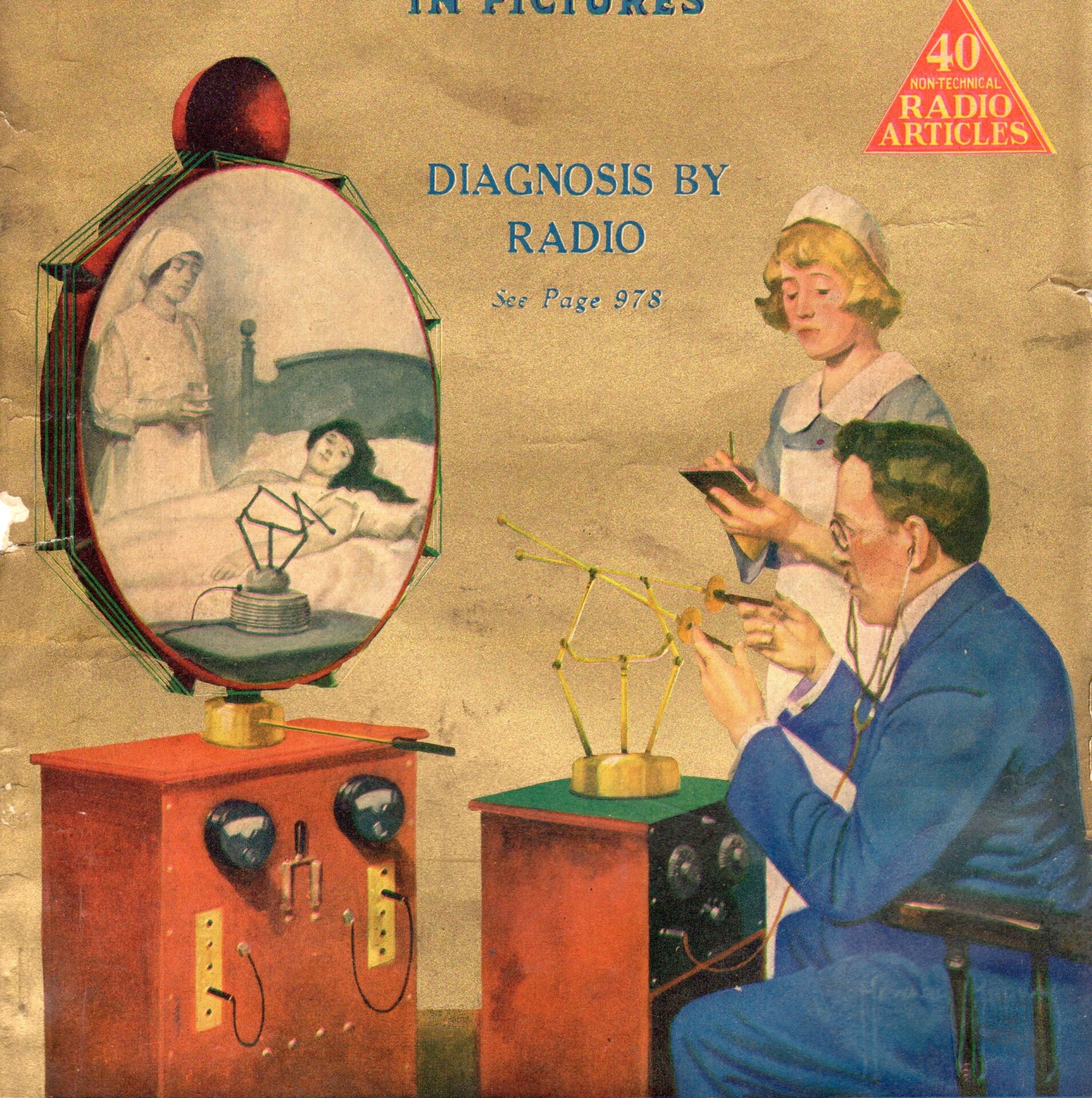
Telemedicine entered the mainstream in the early 2020s thanks to a global pandemic that pushed a lot of our lives online. And while remote surgery is still largely the work of science fiction, Gernsback imagined a device in 1925 that would make a doctor’s visit possible from great distances way earlier than others dared.
Gernsback called his invention the “teledactyl” and it would allow medical doctors to inspect patients using a television device and remote-controlled arms that were on the other side of the line.
From the February 1925 issue of Science and Invention:
The Teledactyl (Tele, far; Dactyl, finger — from the Greek) is a future instrument by which it will be possible for us to “feel at a distance.” This idea is not at all impossible, for the instrument can be built today with means available right now. It is simply the well known telautograph, translated into radio terms, with additional refinements. The doctor of the future, by means of this instrument, will be able to feel his patient, as it were, at a distance….The doctor manipulates his controls, which are then manipulated at the patient’s room in exactly the same manner. The doctor sees what is going on in the patient’s room by means of a television screen.
Gernsback even imagined the doctor experiencing the kind of bio-feedback that serious thinkers wouldn’t even be talking about for literal decades:
Here we see the doctor of the future at work, feeling the distant patient’s arm. Every move that the doctor makes with the controls is duplicated by radio at a distance. Whenever the patient’s teledactyl meets with resistance, the doctor’s distant controls meet with the same resistance. The distant controls are sensitive to sound and heat, all important to future diagnosis.
And given the fact that TV tech wasn’t even successfully demonstrated until the following year, this idea was well and truly ahead of its time.